

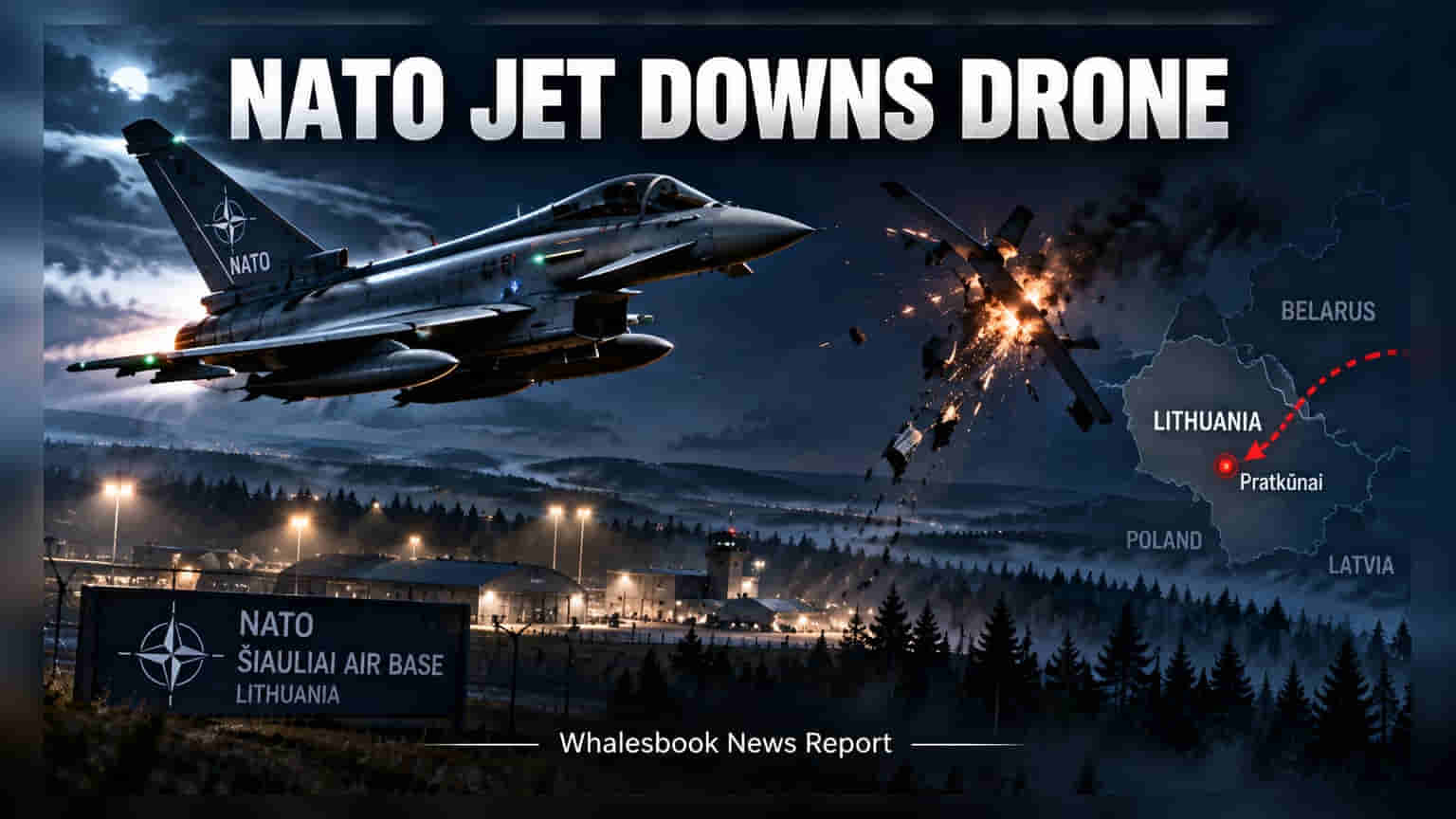
Italian NATO fighter jets intercepted and destroyed an unidentified drone near the Lithuanian-Belarus border on September 15. The incident has heightened security concerns in the Baltic region, serving as a reminder of the geopolitical risks that often influence global market sentiment and commodity prices.
In a significant security event, NATO fighter jets operating in Lithuania intercepted and shot down an unidentified drone early on Tuesday, September 15, 2026. Italian Air Force Eurofighter Typhoons, currently stationed at the Šiauliai Air Base, neutralized the aerial object near the village of Pratkūnai in the Kaišiadorys district. This marks the first time such an action has been taken within Lithuanian airspace, highlighting the growing intensity of border tensions in the Baltic states.
Authorities are currently analyzing the recovered wreckage to determine the drone's origin and purpose, including whether it was carrying explosive materials. The drone reportedly crossed the border from the direction of Belarus, a route that has been a focal point for security agencies due to ongoing regional volatility. While no ground damages or casualties were reported, the incident has triggered an immediate security alert across the area.
Market and Investor Context
For investors, geopolitical incidents of this nature are important as they often serve as early indicators of instability that can impact global markets. When security risks rise in conflict-prone regions, market participants typically shift their focus toward defensive assets. This includes a heightened interest in commodities like crude oil and gold, which are traditionally viewed as safe havens during times of international tension. Disruptions in supply chains or geopolitical uncertainty often contribute to volatility in these markets.
While this event is specific to the Baltic region, the global defense sector is frequently monitored during such times. Increased security threats across Europe may lead to higher defense spending and renewed government interest in surveillance and counter-drone technologies. Investors often track policy shifts and military budget allocations that might arise from prolonged regional instability, though the direct impact on specific equity markets depends heavily on the scale and duration of the conflict.
Risks and Monitoring
The primary risk for global stability is the potential for rapid escalation. As NATO continues its Baltic Air Defence mission, the frequency of such incursions creates a resource-intensive environment for military forces. The ongoing war in Ukraine remains the central driver of this instability, with concerns regarding accidental navigation errors or electronic warfare interference causing drones to drift into neighboring territory.
Investors and market analysts will likely watch for official statements from NATO and local governments regarding the drone's origin. The next important update will be the forensic analysis of the wreckage, which could dictate the diplomatic and military response. Any evidence of intentional provocation could intensify regional pressure, impacting broader risk sentiment in the coming days.