

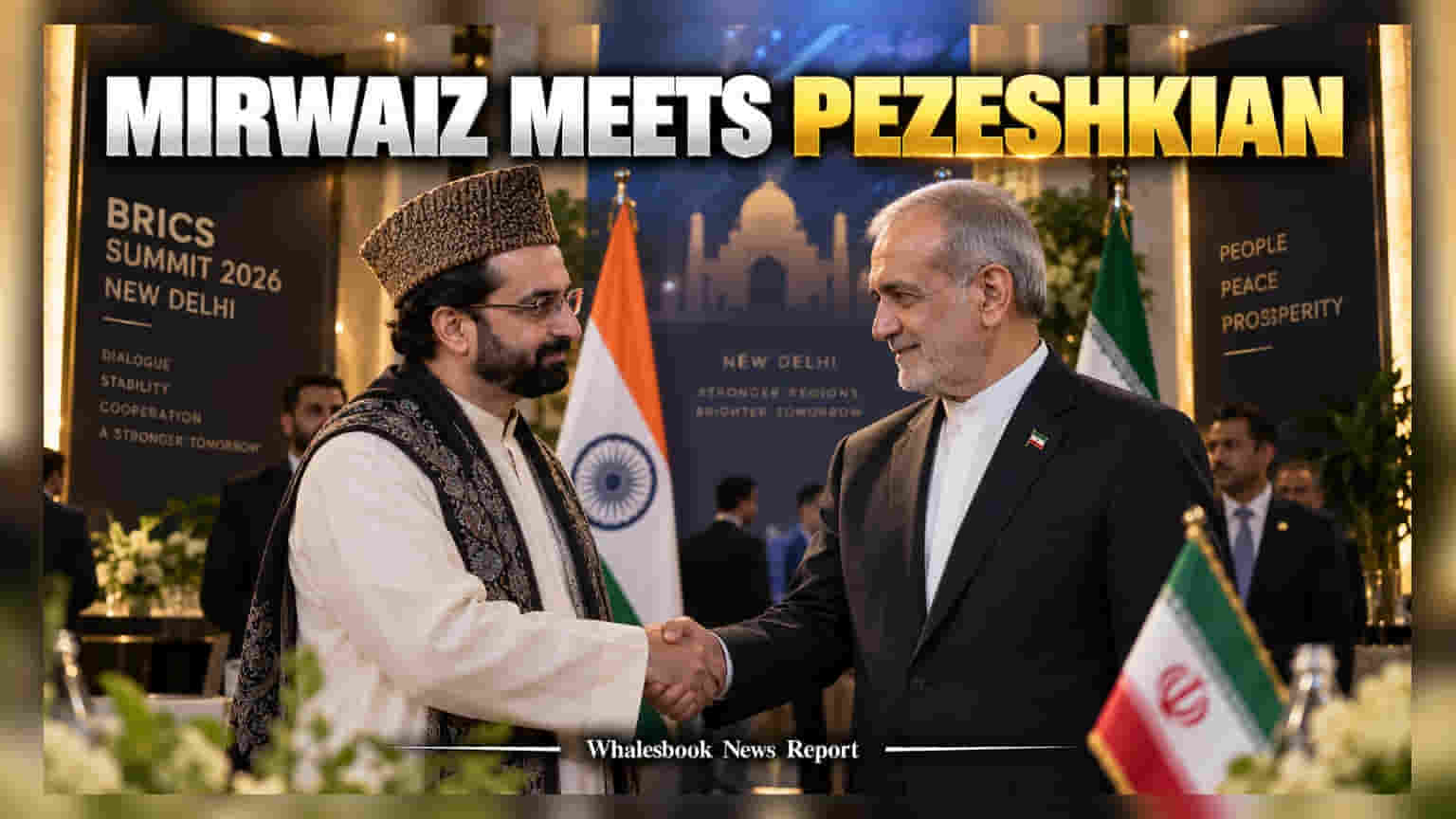
Kashmir’s chief cleric Mirwaiz Umar Farooq held a rare meeting with Iranian President Masoud Pezeshkian during the BRICS Summit in New Delhi. The engagement highlights shifting political dynamics in Jammu and Kashmir, a region where regional stability remains a critical factor for investor sentiment and local business sentiment.
Kashmir’s chief cleric, Mirwaiz Umar Farooq, participated in a diplomatic interaction with Iranian President Masoud Pezeshkian during the latter's visit to New Delhi for the 2026 BRICS Summit. The event, hosted by the Iranian Ambassador, brought together various religious and intellectual leaders, marking a notable moment in regional political engagement.
For observers of the Indian market and regional policy, this meeting is significant due to the broader implications for stability in Jammu and Kashmir. Since the constitutional changes of 2019, the region has been a focal point for infrastructure development, tourism growth, and administrative policy updates. Consequently, any shift in the political landscape—particularly involving prominent regional figures who have been less active in the public sphere in recent years—is often watched as a barometer for long-term stability.
Contextually, the engagement is notable given the regulatory environment surrounding the cleric’s former political organization. The Awami Action Committee, which is led by Mirwaiz, has faced a ban under the Unlawful Activities (Prevention) Act since March 2025. This administrative status, along with the broader legal framework governing political activities in the region, makes such public appearances rare and reflective of evolving diplomatic and internal policy interactions.
From a business and investment standpoint, the stability of Jammu and Kashmir is a key variable. The government has focused on expanding the tourism sector, increasing digital connectivity, and attracting private investment to the region. Events that signal changes in diplomatic discourse or regional political equations are often analyzed for their potential impact on the continuity of these development projects. While this meeting was primarily a diplomatic and religious interaction, it serves as a reminder of the complex geopolitical factors that can influence the operating environment in sensitive border regions.
Investors and policy analysts will likely track future developments regarding the region's political climate and how they align with national policy objectives. Any update concerning the status of regional leadership, administrative restrictions, or diplomatic engagement with foreign dignitaries will remain an important monitorable for those tracking the socioeconomic progress of the Union Territory.