 Whalesbook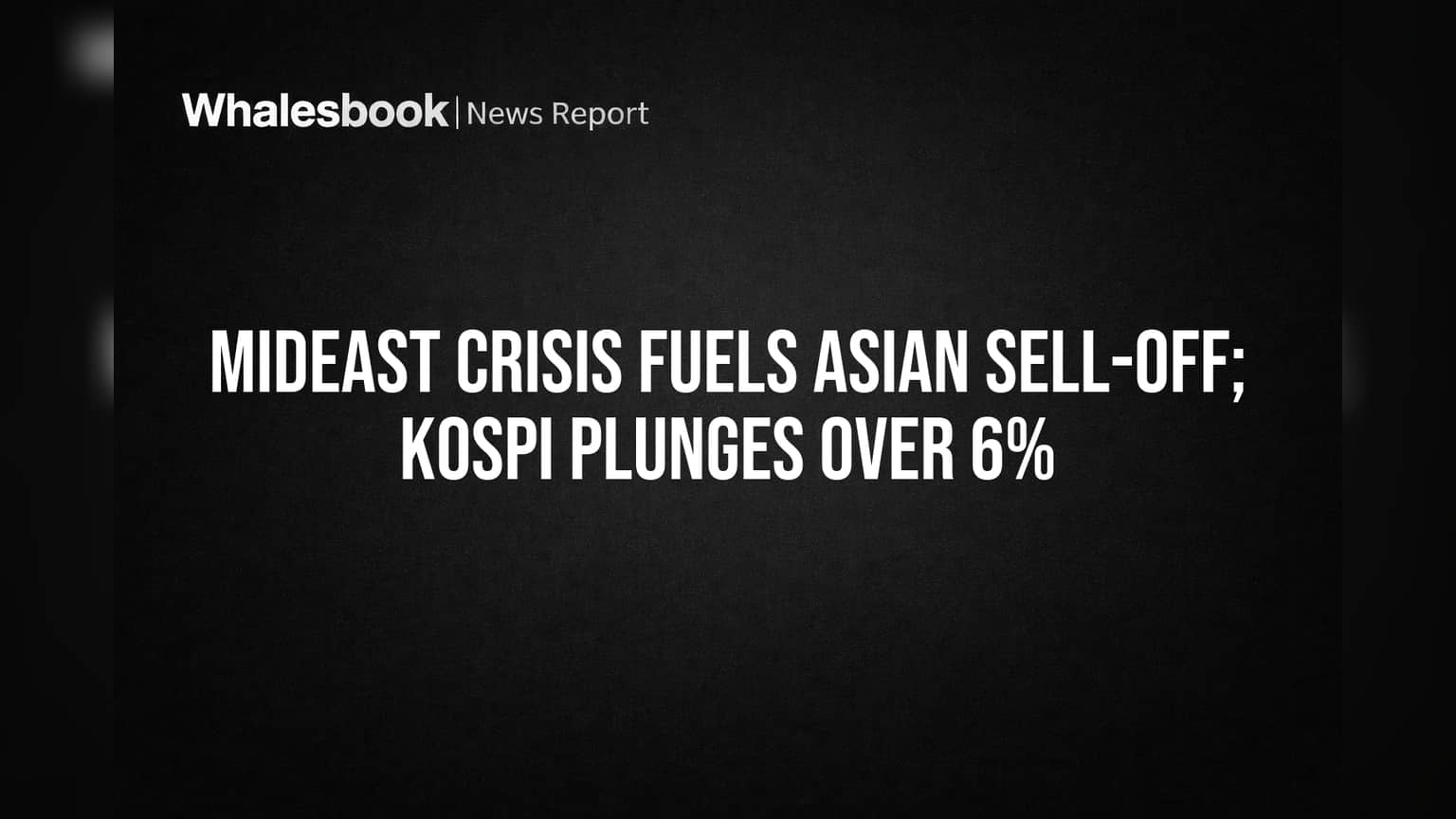
Middle East Crisis Hits Asian Markets
Asian markets opened sharply lower as escalating geopolitical tensions in the Middle East cast a dark shadow over investor sentiment. The crisis involving Iran, Israel, and the U.S. has sparked fears of wider energy supply disruptions, leading to a broad sell-off across global markets.
Energy Fears Drive Market Anxiety
Investor anxiety is focused on the potential impact on oil prices and global energy security, especially concerning the Strait of Hormuz. A 48-hour ultimatum issued by U.S. President Donald Trump to Iran regarding the Strait's operation is cited as adding significant uncertainty. Goldman Sachs warned that the outlook for oil prices and global growth depends heavily on how long any potential closure lasts.
Sector Shifts Seen in Sell-Off
The sell-off wasn't uniform; investors pulled funds from technology, travel, and consumer discretionary sectors. Conversely, energy-linked sectors, such as oil and electric vehicles, saw inflows as markets positioned for potential increases in energy demand and prices. This rotation signals a defensive shift in market strategy amid heightened global risks. Wall Street's weaker close on Friday also contributed to the cautious mood in Asian trading.