

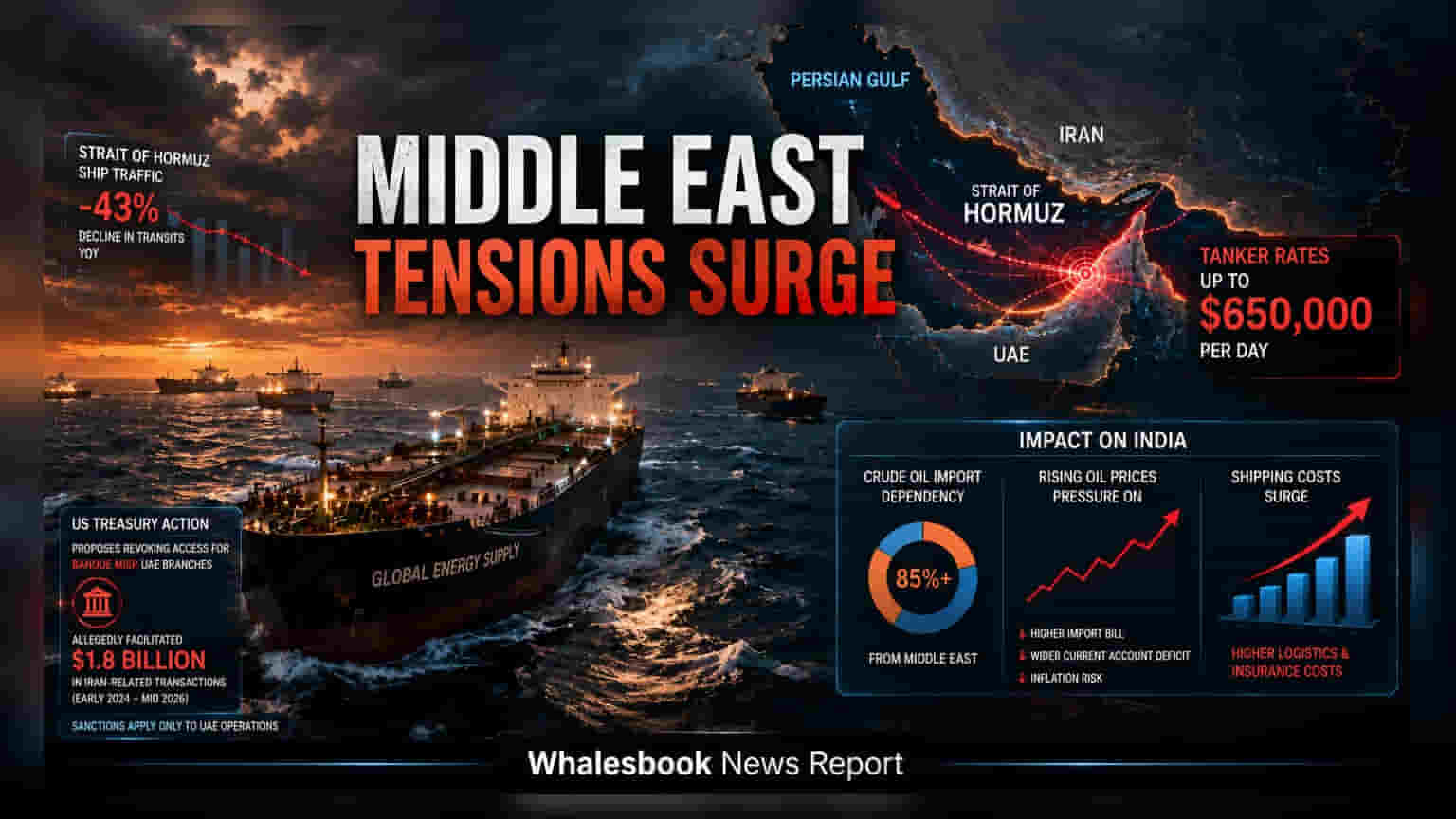
Escalating geopolitical conflict in the Middle East has restricted shipping in the Strait of Hormuz, driving tanker costs to extreme levels. For Indian investors, this maritime uncertainty poses risks to global crude oil prices and energy import costs, which are critical to watch for their impact on domestic inflation and supply chains.
Rising geopolitical tensions in the Middle East have caused a severe disruption in global shipping lanes, specifically within the Strait of Hormuz. This critical chokepoint, which handles a significant portion of the world's oil and natural gas supply, is currently experiencing a sharp decline in traffic. The disruption is forcing shipping companies to navigate dangerous waters, driving tanker rates to levels as high as $650,000 per day for certain routes. This increase in logistical costs is creating ripple effects across global energy markets, as companies factor in the higher risk of transit and elevated insurance premiums.
Adding to the regional instability, the US Treasury has intensified its economic measures against financial entities linked to Iran. The US government recently proposed revoking the access of the United Arab Emirates branches of Banque Misr to the American financial system. This action follows allegations that the bank facilitated roughly $1.8 billion in transactions for Iranian shadow banking networks between early 2024 and mid-2026. The Central Bank of Egypt has clarified that these sanctions apply specifically to the UAE operations and do not extend to the bank's headquarters in Cairo or its other international branches.
For Indian markets, these developments are significant due to the country’s high reliance on imported crude oil. Any sustained disruption in the Middle East, which is the primary source of India's energy imports, can lead to volatility in global oil prices. Higher oil prices generally increase India’s fuel import bill, which can put pressure on the current account deficit and potentially influence domestic inflation. Investors typically monitor these maritime security risks closely, as they directly impact shipping costs, trade routes, and energy supply chains.
Meanwhile, regional powers continue to discuss alternative infrastructure to bypass traditional routes. Reports indicate that Russia and Iran are in advanced negotiations regarding a large-scale natural gas supply agreement that would involve transit via Azerbaijan. While this project aims to address energy shortages in the region, its implementation remains a long-term goal given the substantial capital spending required and the complexities of international isolation.
As the situation remains fluid, investors may watch for updates on global oil price movements, maritime insurance trends, and any official announcements from shipping companies regarding route changes. The stability of energy prices and the cost of logistics remain the key monitorables for sectors reliant on consistent import flows.