

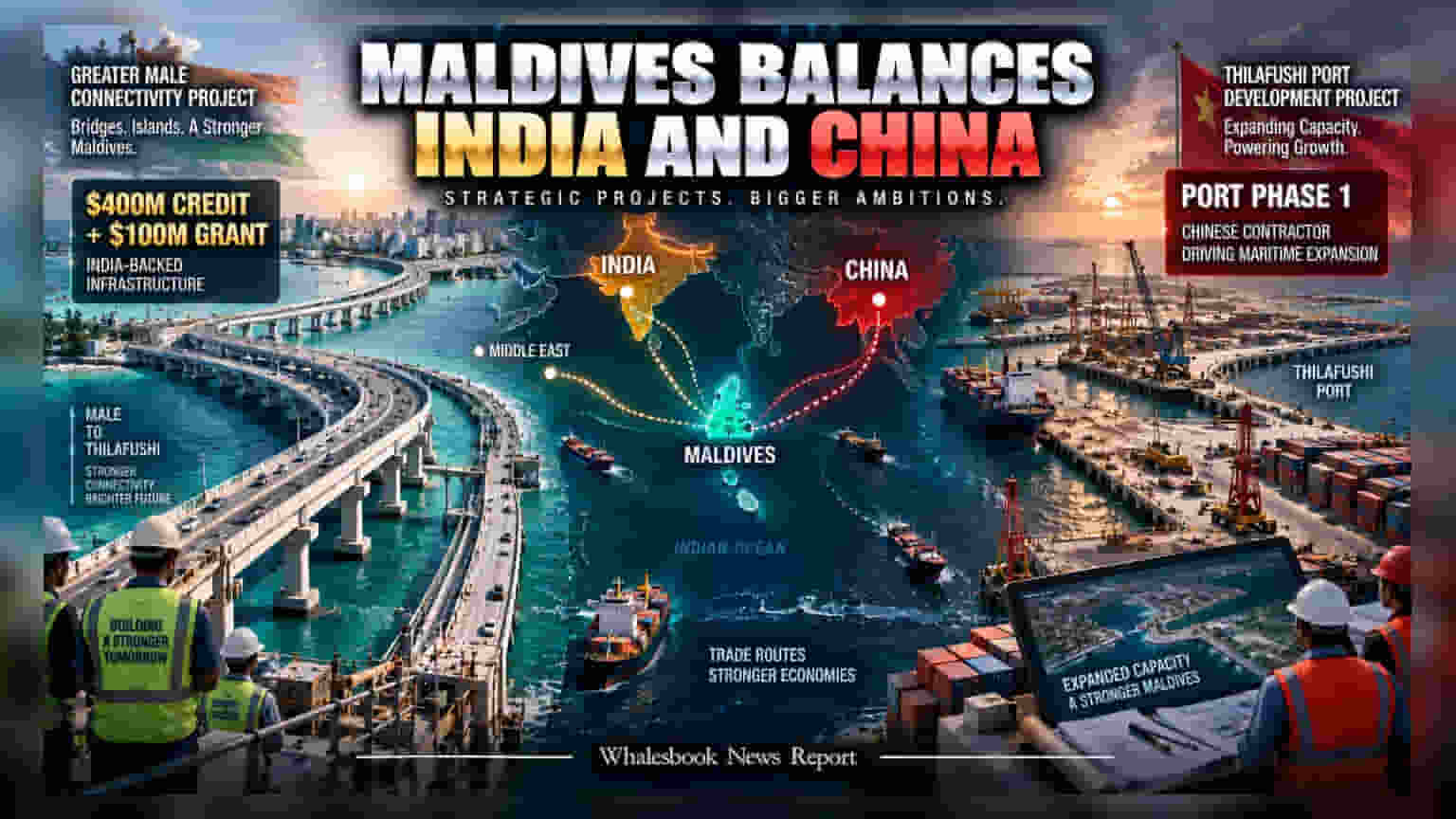
The Maldives has awarded the Thilafushi Port expansion to China Harbour Engineering Company, while an Indian firm continues work on the Greater Male Connectivity Project. This dual-track approach comes as the island nation attempts to manage its high external debt while balancing strategic and financial ties with both India and China.
The Maldives is currently navigating a significant infrastructure balancing act by dividing major development projects between Indian and Chinese companies. Maldives Ports Limited has awarded the first phase of the Thilafushi Port Development Project to China Harbour Engineering Company, placing a Chinese contractor at the helm of a key maritime expansion. This development runs alongside the ongoing Greater Male Connectivity Project, a major infrastructure network linking the capital city to surrounding islands, which is being executed by the Indian construction firm Afcons Infrastructure.
Infrastructure Strategy and Project Status
The two projects represent different, yet complementary, pillars of the nation’s logistics upgrade. The port project aims to shift cargo operations from the congested Maafannu area to Thilafushi, expanding port capacity significantly to streamline maritime trade. Meanwhile, the Greater Male Connectivity Project, which is a $500 million endeavor supported by Indian credit and grants, is well underway. Recent updates confirm that this project—which includes a network of bridges and causeways—is now over 75% complete, with key sections already walkable. This progress is a notable milestone for connectivity in the region.
Financial Context and Economic Reality
For investors and observers, the Maldives’ decision to engage both nations is heavily influenced by its challenging financial position. The country faces significant fiscal stress, with total outstanding external debt reaching approximately $9.41 billion by the end of 2024. Both India and China are major creditors, and the government’s ability to fund these large-scale projects depends on balancing diplomatic relations with these nations to ensure continued financial support and credit lines. The strategy of using Chinese contractors for port development while relying on Indian financing for connectivity infrastructure reflects an attempt to leverage different sources of capital and expertise to keep the economy moving.
Risks and Monitorables
While these projects aim to modernize the country’s infrastructure, they also bring specific risks that market participants often track. The primary concern remains the nation's high debt-to-GDP ratio, which limits its room for error in fiscal management. Over-reliance on foreign loans to fund large projects increases vulnerability to external economic shocks. Furthermore, investors may monitor the execution efficiency of these projects, as single-nomination contracts—where contractors are selected directly rather than through competitive bidding—can sometimes face challenges in cost management and timeline adherence. The long-term success of these infrastructure assets will depend on the Maldives' ability to grow its tourism and maritime economy enough to service the debt taken on to build them. Moving forward, observers will watch for updates on the Thilafushi port’s commissioning timeline and any further fiscal updates from the Maldivian government regarding debt sustainability.