

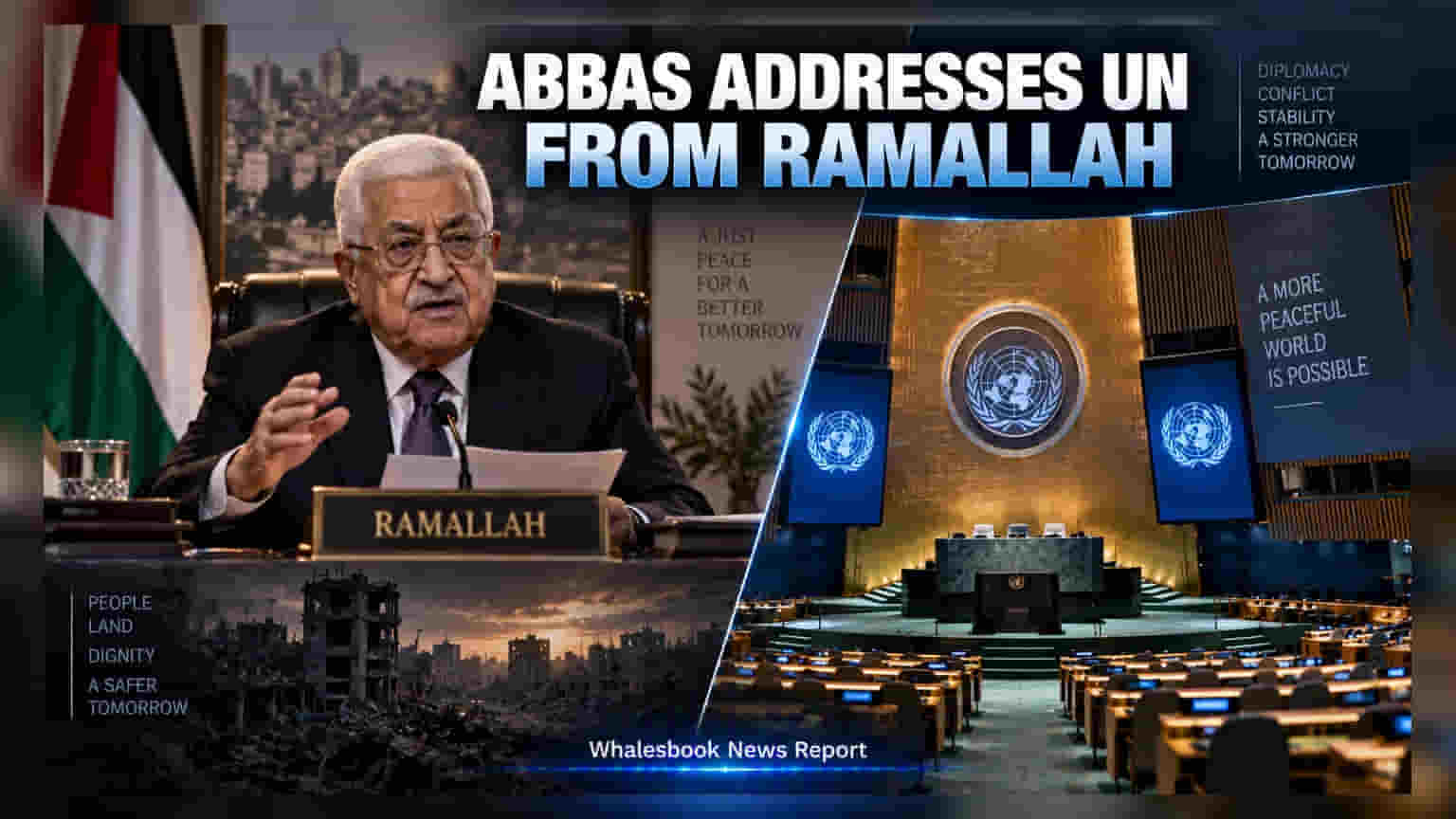
Palestinian President Mahmoud Abbas addressed the United Nations General Assembly via a prerecorded video from Ramallah after being denied a US visa. This marks the second consecutive year of diplomatic exclusion, highlighting the political instability in the region that global investors monitor for potential impacts on security, supply chains, and market sentiment.
Palestinian President Mahmoud Abbas delivered his address to the United Nations General Assembly on Thursday via a prerecorded video from his office in Ramallah. The digital appearance followed a decision by the United States government to deny entry visas to President Abbas and his delegation for the second consecutive year. This exclusion underscores the ongoing diplomatic friction between the Palestinian Authority and Western powers as the regional conflict in Gaza and the West Bank persists.
In his recorded statement, President Abbas, who has led the Palestinian Authority since 2005, described the current situation as a perilous period in Palestinian history. He utilized the global platform to criticize the ongoing military occupation in the West Bank and the extensive damage to infrastructure in Gaza. The diplomatic disparity was further highlighted by the schedule of the UN sessions, which featured an in-person address by Israeli Prime Minister Benjamin Netanyahu, signaling the deep fracture in the current diplomatic landscape.
The administrative status of the Palestinian Authority remains a focal point for geopolitical observers. The organization faces significant internal challenges, including a lack of legislative or presidential elections since 2006 and declining public support. These governance issues, combined with persistent reports of internal corruption and the expansion of Israeli settlements, have constrained the Authority's operational influence. Furthermore, the administration continues to navigate a complex financial environment, relying heavily on foreign aid while its ability to govern Gaza effectively has been limited since the expulsion of its administration from the territory.
For investors and global markets, the developments at the United Nations reflect the broader volatility in the Middle East. While this specific event is a matter of diplomatic protocol, the exclusion of the Palestinian leadership from such a key global forum reinforces the difficulty in reaching long-term regional stability. Geopolitical instability in this region is often closely watched by markets due to its potential impact on supply chains, energy prices, and overall investor sentiment toward emerging markets exposed to Middle Eastern conflict. The inability to bridge these diplomatic gaps may result in prolonged uncertainty for regional peace efforts, which are essential for sustainable economic development. The key monitorable for market observers will be any future shifts in diplomatic engagement or attempts to stabilize the regional security environment.