

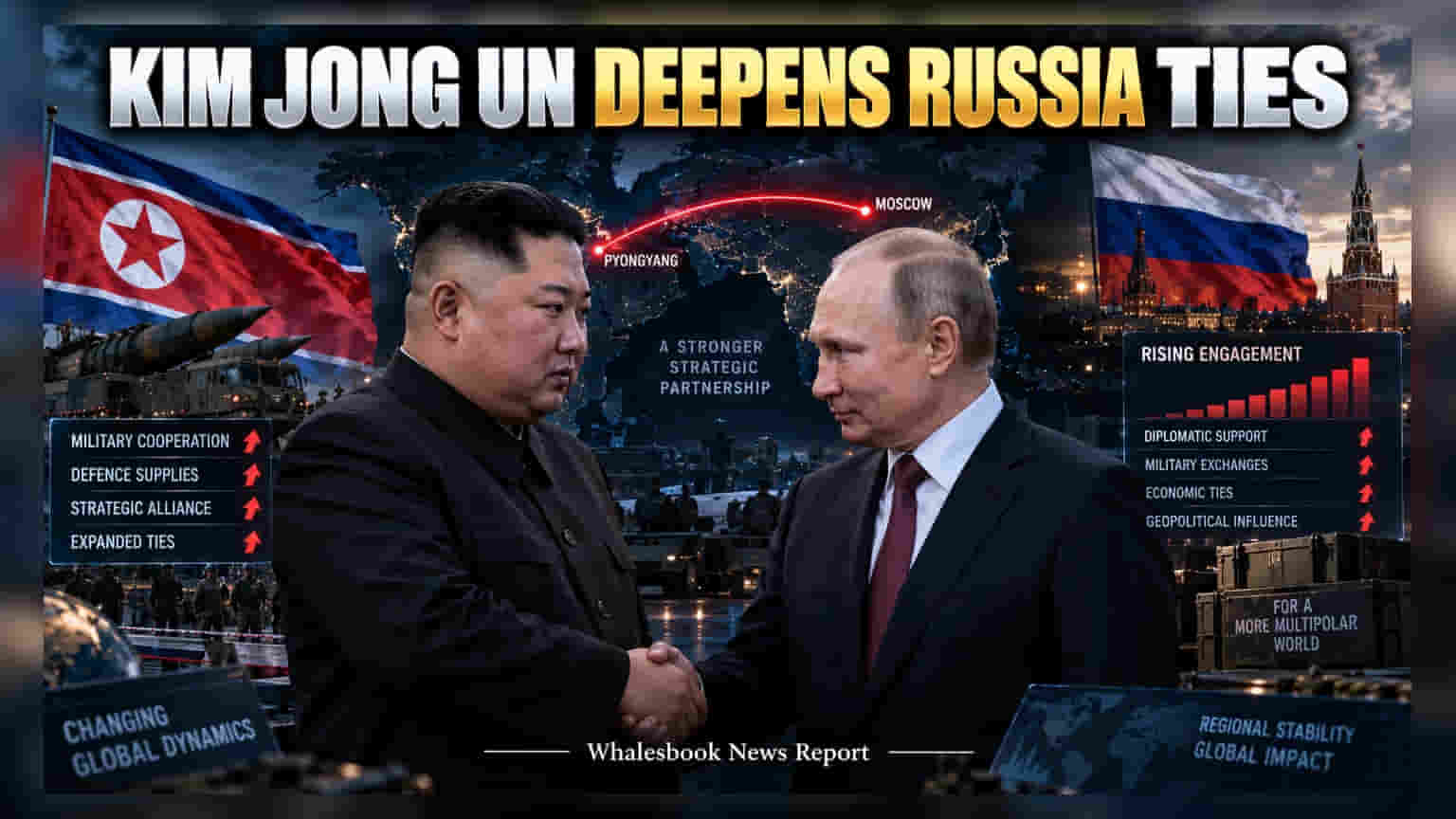
North Korean leader Kim Jong Un has formally committed to deepening cooperation with Russia following his country's 78th founding anniversary. This stronger alliance reinforces their 2024 mutual defense pact, potentially impacting global supply chains, energy markets, and regional security, which are key watchpoints for international investors.
North Korean leader Kim Jong Un has formally pledged to expand and deepen cooperation with Russia, marking a significant development in the ongoing diplomatic and military partnership between the two nations. The commitment was made in a message to Russian President Vladimir Putin following North Korea's 78th founding anniversary celebrations on September 9, 2026.
In his communication, Kim Jong Un characterized Russia’s ongoing conflict in Ukraine as a “sacred war” for international justice and security. This rhetoric marks a shift from traditional diplomatic relations to an explicit promise of support for Russian operations. This strengthening of ties builds upon a formal mutual defense pact signed in June 2024, which has already facilitated significant military and economic exchanges between the two countries.
Strengthening Military and Strategic Cooperation
The deepening alliance suggests that the 2024 treaty is being actively implemented. Reports and observations from the past two years indicate that this cooperation involves not just diplomatic support but also tangible contributions, including the deployment of personnel and military supplies to support Russia’s efforts. By solidifying this partnership, Pyongyang is signaling that its security strategy is increasingly focused on its ties with Moscow, potentially distancing itself from its traditional reliance on other regional powers like China.
Why Global Investors Are Watching
For global markets, this development introduces several layers of uncertainty. Firstly, regional security in East Asia is a critical concern for international trade. Any escalation in tensions involving North Korea, South Korea, Japan, or the United States can lead to volatility in global indices and impact supply chain stability in the Pacific region.
Secondly, investors are closely monitoring the impact of this alliance on global energy markets. Given Russia’s role as a major energy producer and the ongoing sanctions environment, closer cooperation with North Korea could invite further international countermeasures. If additional sanctions or trade restrictions are imposed, it could disrupt global supply chains, affect shipping costs, and influence the price of commodities, which are key inputs for global manufacturing.
Finally, the shifting geopolitical landscape often leads to changes in defense spending. While this is an indirect effect, institutional investors often look at how regional instability influences global defense budgets and, consequently, the performance of defense and aerospace sectors globally. The stability of these ties, the potential for further technological exchanges, and the international reaction remain the most important areas for market participants to monitor in the coming months.