

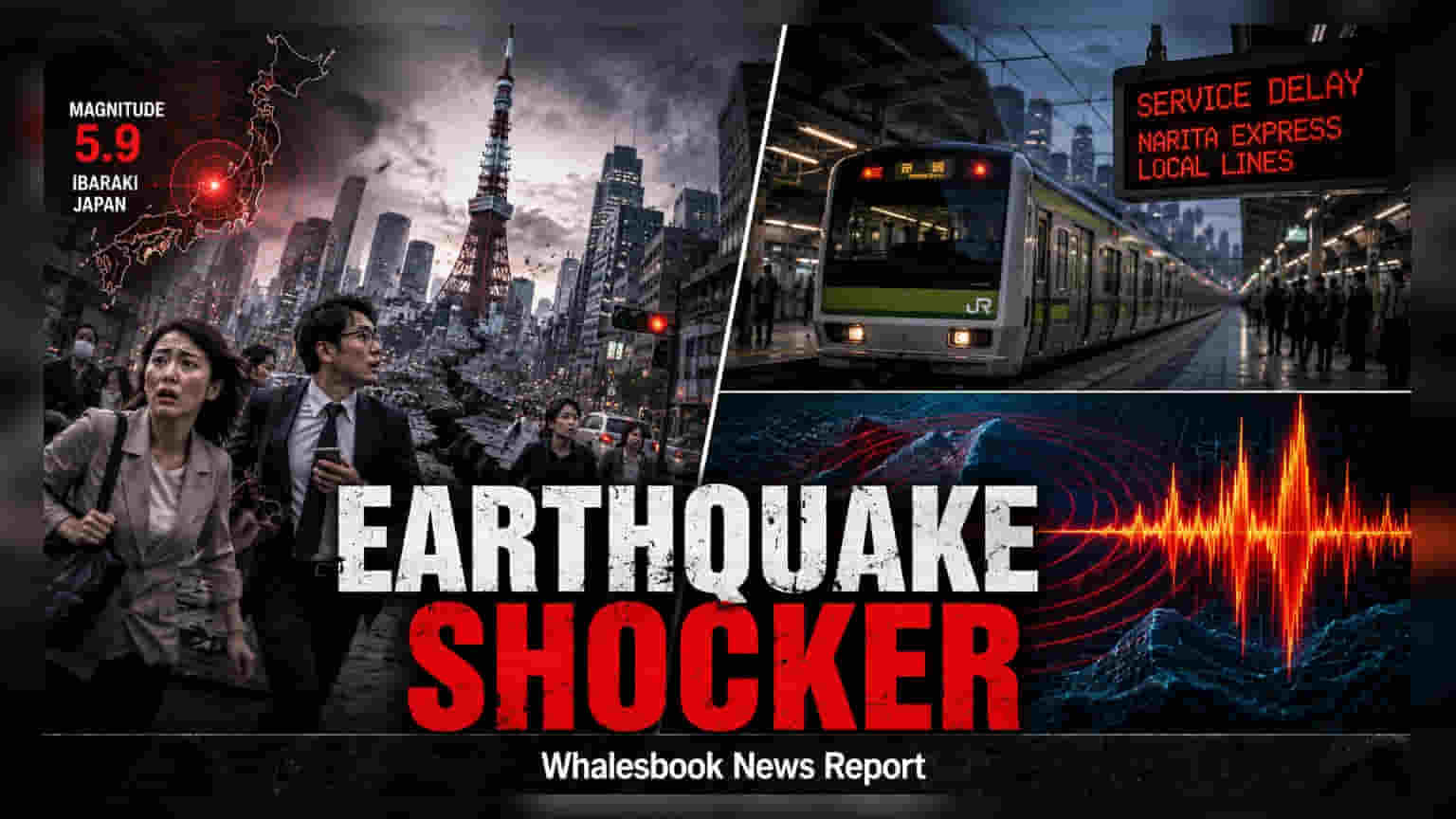
A magnitude 5.9 earthquake struck near Tokyo on August 23, 2026, causing 37 injuries and temporary transport delays. While minor infrastructure damage occurred, nuclear facilities remain safe and unaffected. The event highlights potential logistical challenges in the Kanto region, a major economic hub, which global investors monitor for supply chain and market stability.
A magnitude 5.9 earthquake rattled eastern Japan early Sunday, August 23, 2026, centering in southern Ibaraki prefecture. The tremor was strongly felt in Tokyo and surrounding areas, leading to at least 37 reported injuries. Most of these cases were minor, resulting from falls or collisions as the quake struck during the early morning hours.
Transport and Infrastructure Status
The earthquake caused immediate, though temporary, disruptions to transportation networks serving Tokyo and nearby regions. East Japan Railway Co. reported service delays affecting express and local train lines, including connections to Narita Airport. However, the high-speed Shinkansen bullet train network remained operational. Local authorities in Tokyo’s Koto ward also addressed a minor issue involving a ruptured underground water pipe, which was quickly repaired. Importantly, all major nuclear power facilities reported no abnormalities, avoiding the significant safety concerns that often follow seismic activity in the region.
Impact on Regional Logistics
The Kanto region, which includes Tokyo, acts as a massive center for economic and industrial activity in Japan. For global and Indian investors, major disruptions in this area can have ripple effects on logistics, supply chains, and market sentiment. While the current impact appears contained, transport delays can temporarily hinder the flow of goods and people in one of the world's largest urban economies.
Investor Monitorables
The Japanese government, led by the Prime Minister’s task force, is assessing the situation to ensure public safety and infrastructure stability. The Japan Meteorological Agency has advised residents and businesses to stay alert for potential moderate aftershocks over the coming week. Investors typically track such events for any signs of broader economic instability, currency volatility, or systemic risks to supply chains. At this stage, the primary focus remains on the swift restoration of transport services and the absence of significant structural damage to key industrial or nuclear assets. The stability of the regional infrastructure will be the key factor determining whether the event has any lingering economic impact.