

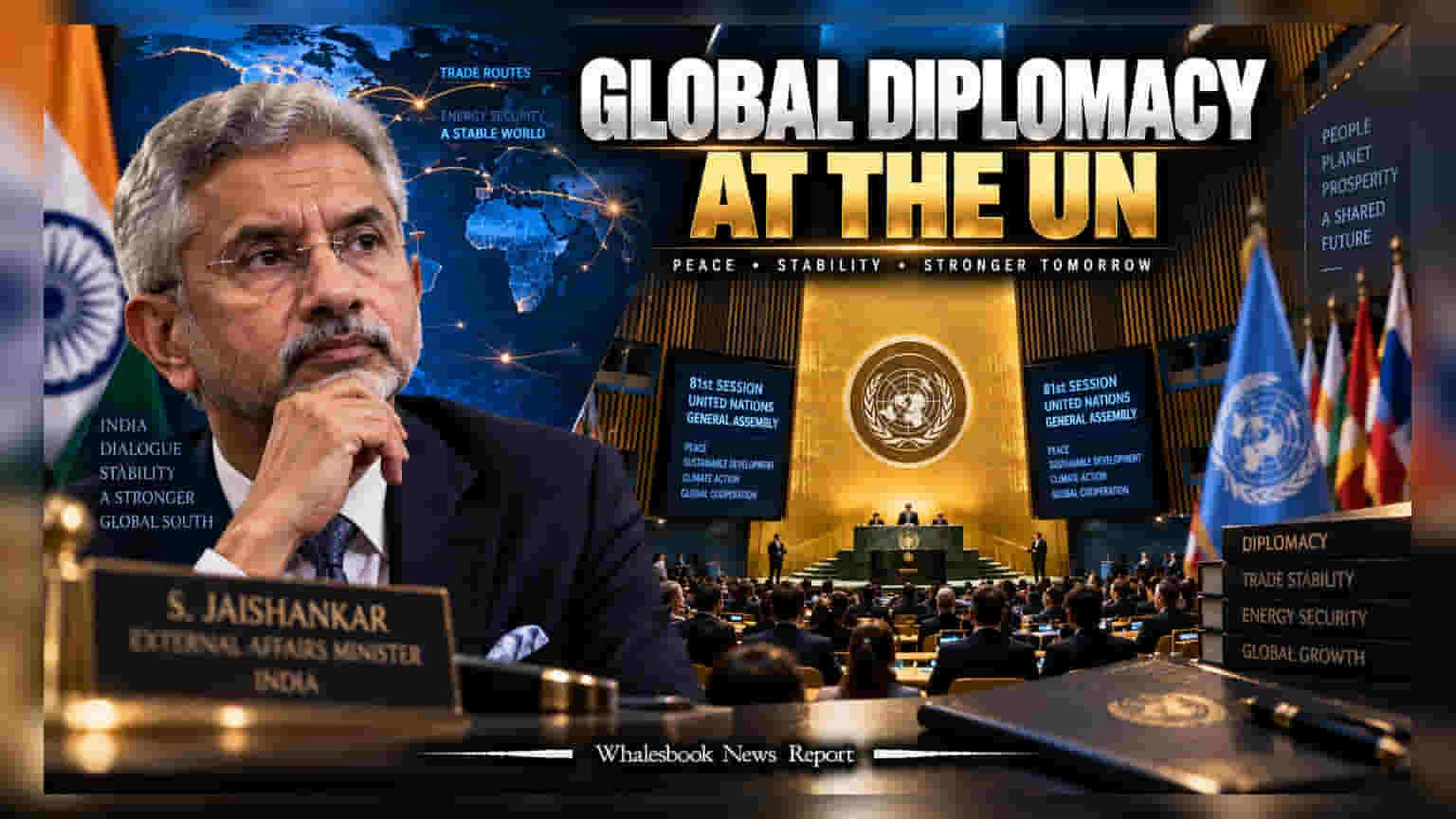
External Affairs Minister S. Jaishankar is scheduled to speak at the 81st United Nations General Assembly on September 26. The session arrives amidst heightened geopolitical tension that is disrupting energy and food supply chains. For Indian markets, the primary impact to monitor involves global crude oil prices and trade logistics, which remain sensitive to these ongoing regional conflicts.
External Affairs Minister S. Jaishankar is set to deliver his national address at the United Nations General Assembly (UNGA) in New York on September 26. His appearance comes during the 81st session’s high-level General Debate, which is scheduled to run from September 22 to 28. This annual assembly is being closely observed by global economic analysts due to the challenging geopolitical backdrop that currently defines international relations.
The discussions at this year's UNGA are expected to be dominated by the ongoing regional conflicts involving the United States, Israel, and Iran. From an economic perspective, these tensions have introduced significant uncertainty into global maritime trade, particularly due to risks around the Strait of Hormuz. This critical shipping lane is a vital artery for energy transport. When disruptions occur in this region, they often translate into increased volatility in global fuel costs and food prices, creating direct pressure on the economies of the Global South, including India.
For investors and market observers, the UNGA session is a significant event to watch, not for corporate updates, but for the clarity it provides on the global economic climate. The persistent volatility in fuel costs has been a known drag on recovery efforts for many developing nations. As central banks and global policymakers evaluate the impact of these supply chain disruptions, commentary from international leaders on how to manage these risks will be critical. The session will also serve as a final high-level assembly for UN Secretary-General Antonio Guterres before his term concludes later this year.
The agenda for the week is broad, covering issues like climate-driven sea-level rise, pandemic preparedness, and nuclear disarmament. However, for domestic market participants, the commentary surrounding trade stability and energy security remains the most relevant takeaway. India’s position as a key player in the Global South often makes its diplomatic stance an important indicator of how supply chain challenges might be navigated in the coming months.
Investors may monitor the post-address briefings and subsequent global policy discussions for any signals regarding trade normalization or new diplomatic pathways. Any signs of easing geopolitical pressure would be viewed as a positive development for global inflation management, while continued uncertainty may keep energy price volatility in focus for domestic energy and manufacturing sectors.