

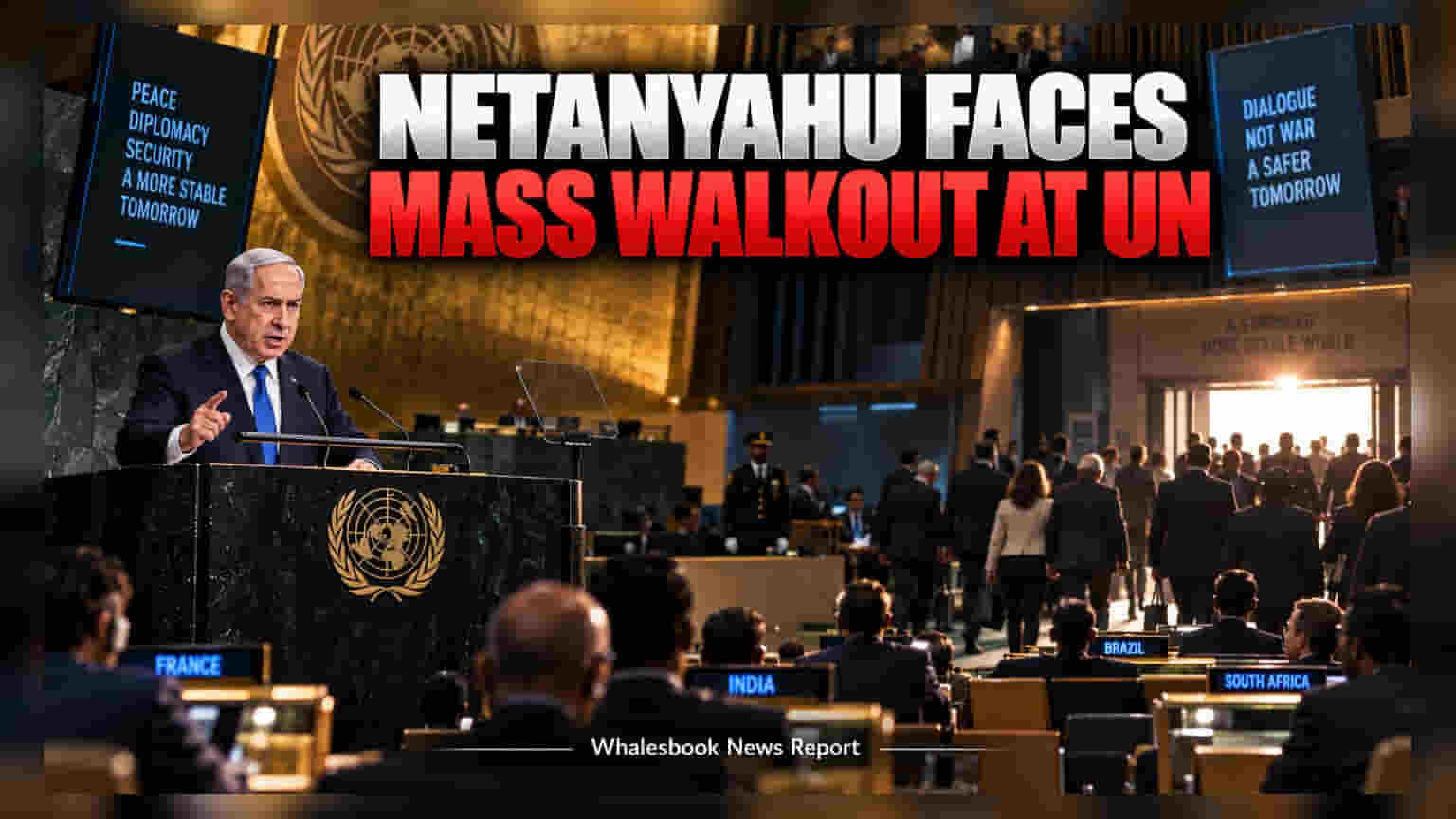
Diplomats staged a walkout during Israeli PM Benjamin Netanyahu's UN General Assembly address amid intensifying regional tensions. For Indian investors, this diplomatic friction increases the importance of tracking global crude oil prices, as geopolitical instability in the Middle East often influences energy costs and domestic market sentiment.
New York witnessed significant diplomatic friction at the United Nations General Assembly on Thursday as multiple delegations staged a walkout during the address by Israeli Prime Minister Benjamin Netanyahu. The protest highlighted growing international concerns regarding Israel's ongoing military policies and the regional conflict with Iran. During his speech, the Prime Minister described recent military operations as a necessary defensive measure against existential threats, a stance that drew a sharp reaction from various attending nations.
For Indian investors, the primary concern stemming from such Middle East geopolitical developments is the potential impact on global crude oil prices. India remains a major importer of crude oil, and any escalation in regional conflict often leads to increased volatility in energy markets. Higher oil prices can put pressure on the Indian rupee and impact the profit margins of several sectors, including aviation, paint manufacturing, and oil marketing companies.
Beyond the immediate market impact, the event underscored a complex shift in international relations. Reports from the assembly highlighted a restricted diplomatic itinerary and concerns regarding the current level of international support for Israel’s military strategy. The Prime Minister's focus on the Iran conflict, combined with the lack of a formal endorsement from the US administration mentioned in recent reports, creates a volatile political environment that global market participants are monitoring for signs of wider stability.
Investors typically view Middle East stability as a key factor for both energy prices and foreign institutional investment flows into emerging markets like India. While the stock market reacts to a variety of factors, significant geopolitical headlines often drive short-term volatility. The key monitorable for market participants will be the trend in crude oil prices and any further escalation or de-escalation in regional tensions, as these factors directly influence inflation expectations and corporate costs in India.