

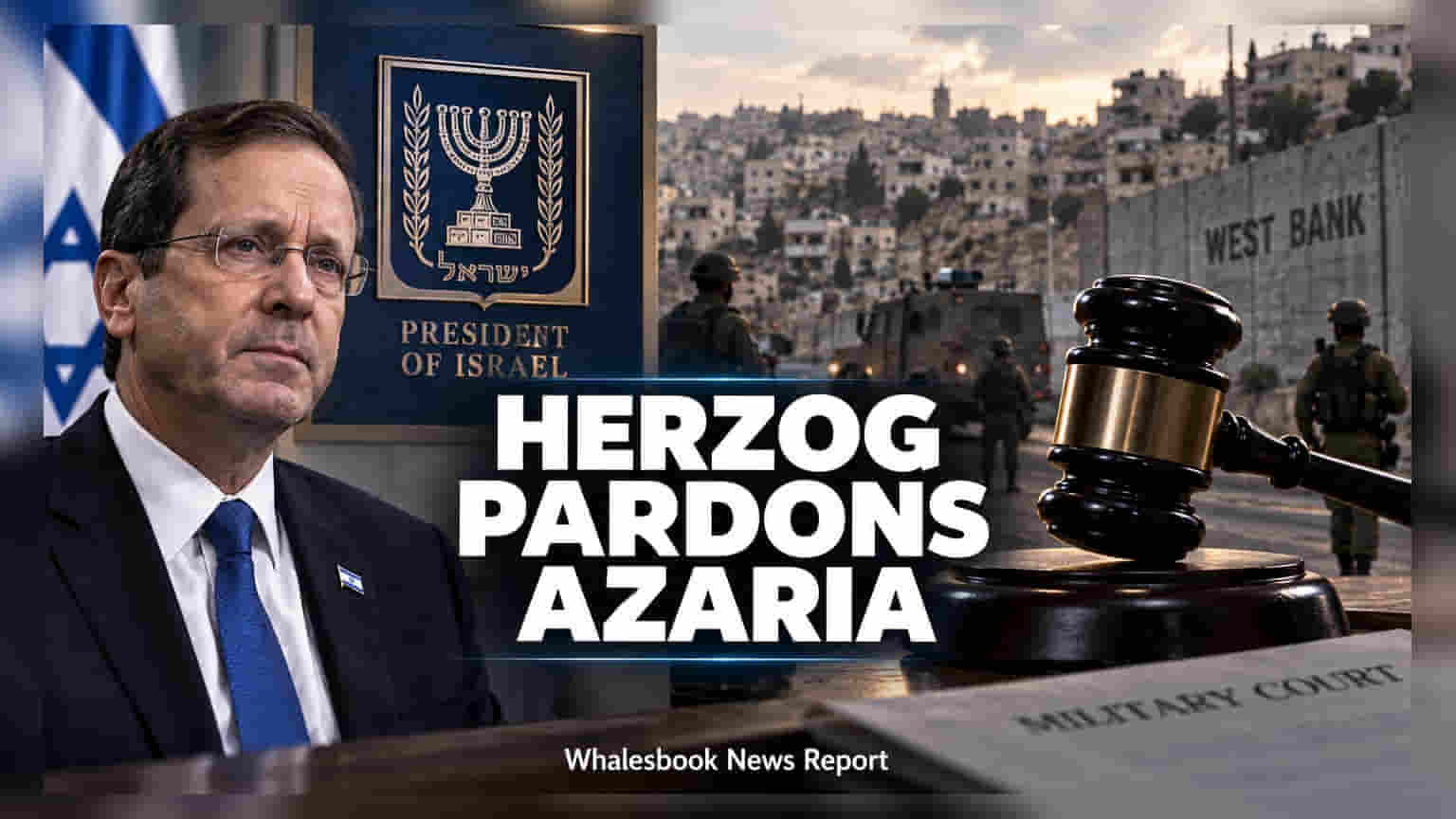
President Isaac Herzog has pardoned former combat medic Elor Azaria, closing a 10-year legal battle over the 2016 shooting of a wounded Palestinian attacker in Hebron. The decision, supported by Defense Minister Israel Katz, resolves a deeply divisive case that challenged Israel’s military judicial standards.
Resolving a Decade-Old Legal Chapter
Israel’s President Isaac Herzog has officially pardoned former combat medic Elor Azaria, bringing a formal end to a legal saga that began in 2016. The decision follows a recommendation from Defense Minister Israel Katz and concludes a decade of intense national debate surrounding military ethics and the rules of engagement for soldiers in the field.
The case dates back to an incident in Hebron, where Azaria, while serving as a medic, shot a wounded and incapacitated Palestinian assailant. The subsequent trial resulted in a rare manslaughter conviction, leading to an 18-month prison sentence. The case became a major flashpoint, highlighting deep societal and political divisions within the country regarding the balance between military discipline and operational discretion.
President Herzog emphasized that his executive action serves as a final resolution to the case rather than a reassessment of the military court's original verdict. Defense officials have described the move as a step toward closure, citing the significant time elapsed since the incident and the proximity to the Yom Kippur holiday.
Public and Political Reaction
The pardon has drawn mixed reactions across the political spectrum. National Security Minister Itamar Ben-Gvir welcomed the decision, supporting the removal of the criminal record. However, the move has faced strong criticism from several human rights organizations, which argued that the original sentence was already too lenient for the severity of the act.
For observers, the conclusion of this case marks the end of a long-standing point of friction in Israeli public life. While the legal proceedings are now officially closed, the case remains a reference point for discussions on judicial independence and military conduct. Regional analysts often track such domestic developments as they can influence political stability and government policy-making, which in turn impacts the broader environment for international relations and regional security.