

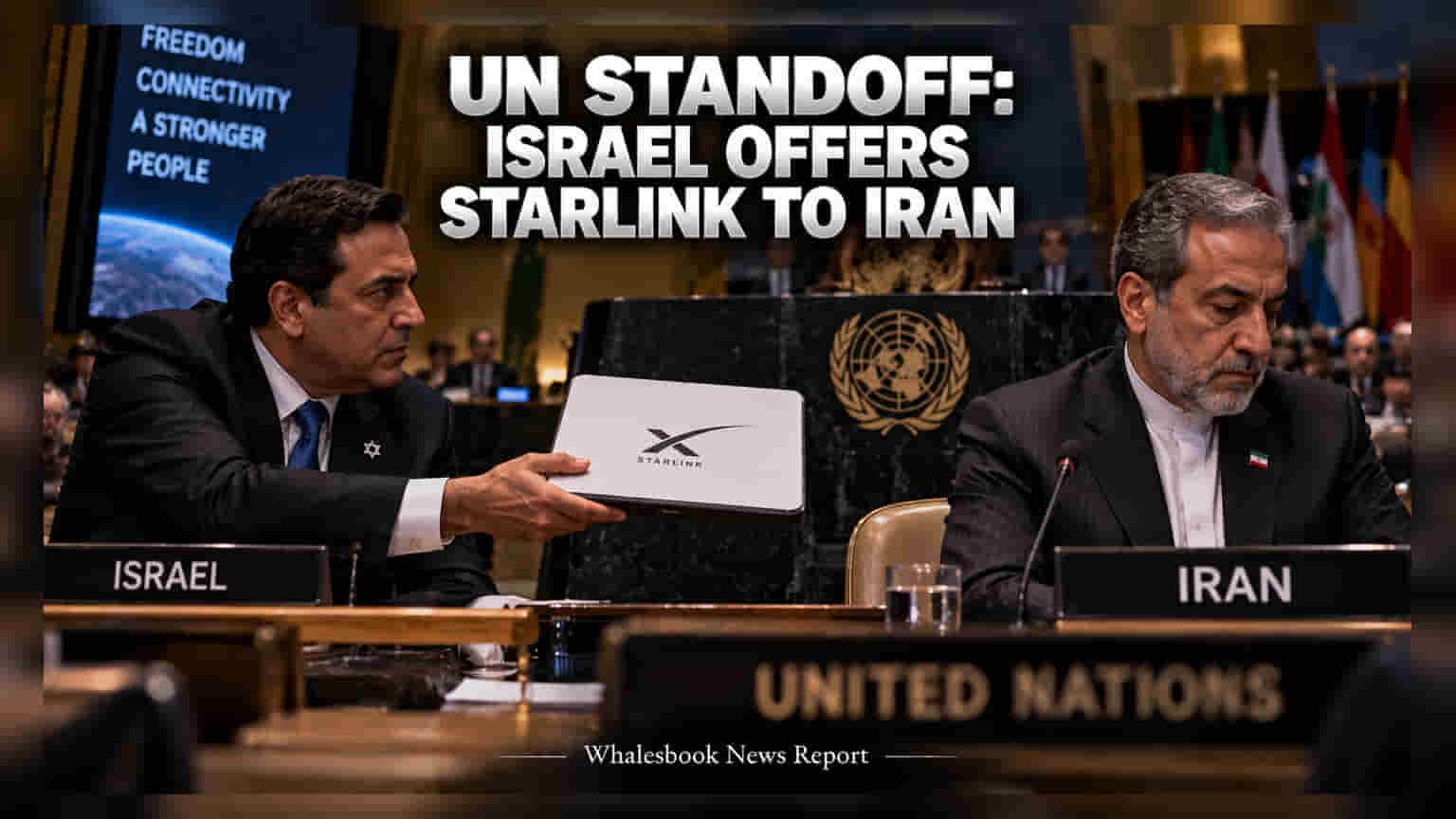
Israeli UN Ambassador Danny Danon attempted to hand a Starlink receiver to an Iranian diplomat following Prime Minister Benjamin Netanyahu’s UN address. The gesture, aimed at highlighting internet censorship, comes amid heightened geopolitical friction. For global markets, increased hostility between the two nations is a critical factor, particularly for its potential impact on crude oil prices and regional stability.
In an unusual diplomatic confrontation at the United Nations General Assembly in New York, Israel’s UN Ambassador Danny Danon attempted to hand a Starlink satellite internet terminal to an Iranian representative, Nasser Asadi. Danon stated that the device was intended to help the Iranian public bypass government-imposed internet censorship. The Iranian diplomat declined to engage, leaving the device ignored as the interaction unfolded.
This incident followed a speech by Israeli Prime Minister Benjamin Netanyahu, who earlier used his time at the UN podium to showcase a Starlink unit. Netanyahu framed the technology as a vital tool for Iranians to communicate globally, suggesting that such connectivity would support those opposing their government. The rhetoric, combined with this physical gesture, underscores the intensifying diplomatic tension between the two nations on the global stage.
For investors, the primary relevance of such geopolitical friction lies in its potential to influence global market sentiment, specifically regarding energy prices. The Middle East is a central hub for global oil production, and heightened tensions between Israel and Iran are historically associated with increased volatility in crude oil markets. When geopolitical instability rises in this region, it can create supply concerns and inflationary pressures, which impacts trade balances and economic sentiment in import-reliant economies, including India.
While this event is diplomatic in nature, it reflects the ongoing volatility in the Middle East that global markets remain sensitive to. Beyond oil, prolonged regional instability can affect logistics, insurance premiums for shipping, and overall investor appetite for emerging market equities. Investors often monitor such developments as part of broader macro-risk assessments. The potential for these diplomatic exchanges to escalate or influence regional policy will remain a subject of focus for those tracking global economic indicators.