

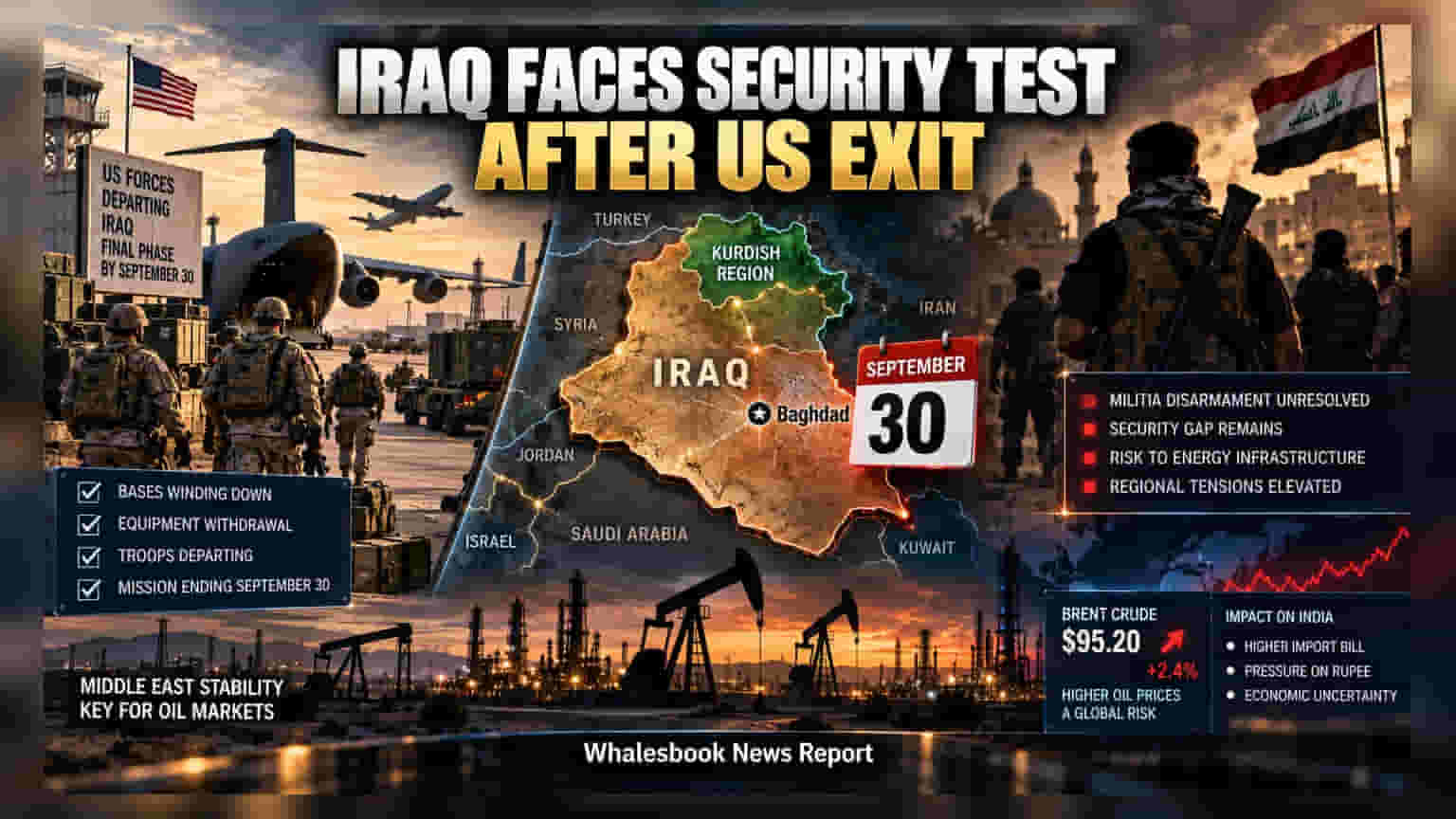
Iraq is set to complete its US troop withdrawal by September 30, 2026, marking the end of a long-term military presence. While the transition aims to secure political stability, investors are focused on the potential security vacuum and regional instability. The risk of disruption to energy infrastructure in the Middle East remains a key concern for global crude oil prices and energy-importing nations like India.
The United States is scheduled to complete the withdrawal of its remaining military personnel from Iraq by September 30, 2026. This transition follows a 2024 agreement to wind down the long-term US-led mission that was originally established to counter the Islamic State group. As this deadline approaches, the situation has shifted from a military matter to a complex regional security concern.
The core issue for the market is not just the withdrawal itself, but the uncertainty regarding who will maintain security afterward. While the Iraqi government works to bring armed factions under state control, several major Iran-aligned groups have resisted disarmament. This resistance creates a security gap, particularly in northern Iraq and the Kurdish region, where military and strategic energy sites have previously faced threats from external attacks.
For investors, the primary concern is the potential impact on regional stability and, by extension, the global energy market. The Middle East is a critical region for crude oil production. Any instability, internal conflict, or disruption to energy infrastructure in this region often leads to volatility in global oil prices.
India, as one of the world’s largest importers of crude oil, is sensitive to such geopolitical shifts. Higher oil prices can increase the country's import bill, which impacts the national current account and can exert pressure on the Indian Rupee. While there is no direct impact on any single stock, investors often track these geopolitical developments to gauge potential risks to energy costs and broader economic stability.
The risk of continued regional tension remains elevated. The involvement of various militias and the ongoing diplomatic friction between major regional powers mean that security in Iraq may remain fragile even after the US personnel depart. Analysts and market observers will likely monitor the situation closely for any signs of instability that could affect transport routes or energy production facilities.
The next important phase will involve how the Iraqi government manages security post-withdrawal. Investors should watch for updates on regional energy production levels, global crude oil price movements, and any official statements regarding the security of energy infrastructure in the Middle East. These factors will determine whether the transition leads to a stable environment or continued uncertainty in the energy markets.