

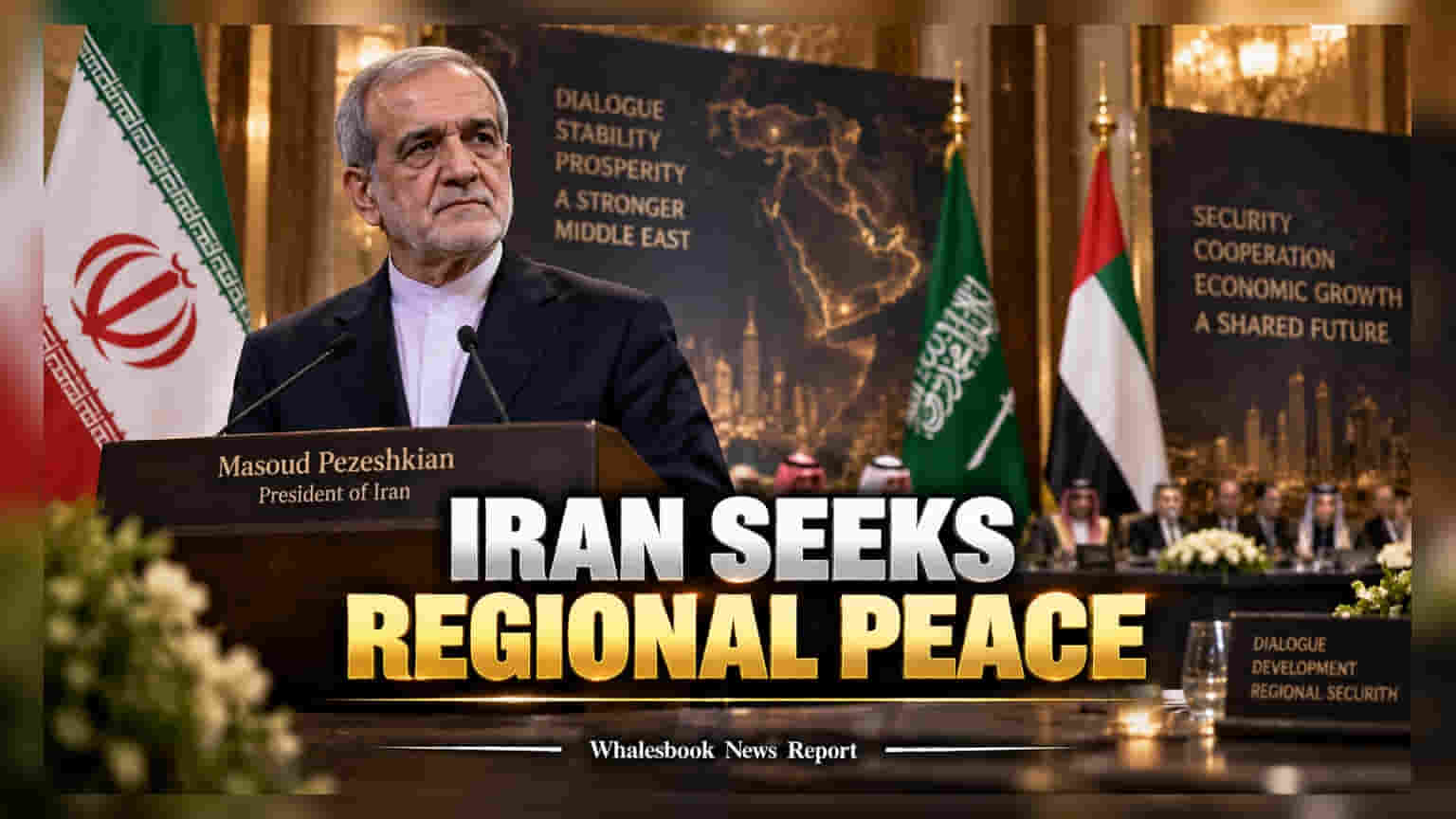
Iranian President Masoud Pezeshkian has denied any conflict with Saudi Arabia during the BRICS summit in New Delhi, urging for a new regional security framework. For investors, the situation remains tense as recent attacks on Saudi oil pipelines continue to fuel volatility in global energy markets, impacting India’s import-heavy economy.
Iranian President Masoud Pezeshkian, currently in New Delhi for the BRICS summit, has publicly stated that Tehran is not at war with Saudi Arabia. In a diplomatic push to stabilize the Middle East, he has proposed a collective security framework that would include major regional players like Saudi Arabia, Turkey, and Pakistan. He framed this proposal as an economic and security integration model similar to the one used in post-war Europe.
While this diplomatic outreach aims to ease long-standing regional friction, the reality on the ground remains volatile. Just yesterday, on September 11, 2026, drone attacks on Saudi Arabia’s critical energy infrastructure forced the shutdown of a major East-West oil pipeline. This incident has added fresh pressure on global energy markets, as investors remain worried about the security of essential oil supply routes in the Gulf.
For Indian investors, these regional tensions are a significant monitorable. India relies heavily on imported crude oil to meet its domestic energy needs. When geopolitical conflicts in the Middle East disrupt supply chains or cause oil prices to spike, it creates an immediate ripple effect on the Indian economy. Higher crude prices can lead to increased inflation and put pressure on the profit margins of Indian companies, particularly those in sectors like transport, chemicals, and manufacturing that are sensitive to energy costs.
Furthermore, many Indian infrastructure and engineering firms maintain significant operational exposure to the Middle East. When regional stability is threatened, it can lead to project delays, higher insurance costs, and execution risks for these companies. While the Iranian administration is distancing itself from militant groups and emphasizing economic ties, the market continues to react to the potential for wider conflict.
Investors are currently balancing the news of potential diplomatic progress with the immediate impact of energy supply disruptions. The key factor for the coming days will be whether these high-level talks can lead to actual de-escalation on the ground. The market will likely continue to react to any updates regarding the restoration of oil pipeline operations, global crude oil pricing trends, and any further developments from the BRICS summit that might influence regional security.