

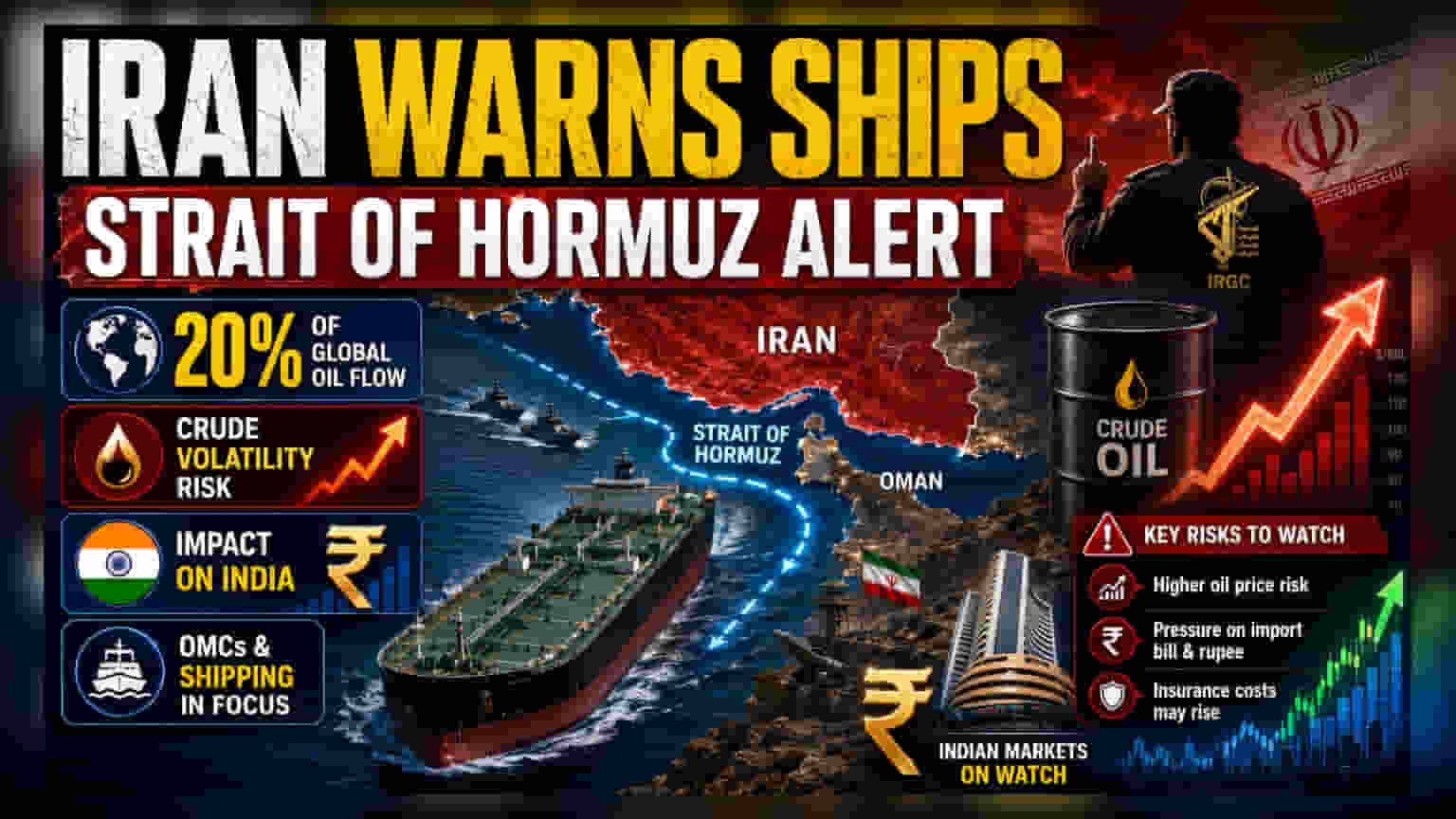
Iran's Revolutionary Guards have warned against unauthorized ship transit in the Strait of Hormuz, a vital route for 20% of global oil. For Indian investors, this geopolitical tension may cause volatility in crude oil prices, impacting oil marketing companies, shipping stocks, and domestic inflation. Investors are closely watching how these supply chain risks influence energy costs.
What Happened
The Islamic Revolutionary Guards Corps (IRGC) of Iran has issued a stern warning regarding transit through the Strait of Hormuz. The military body stated that ships must only use the officially authorized route announced by Iran, claiming that any unauthorized passage will be dealt with. This warning follows an incident involving the Liberian tanker, the Stoic Warrior, which used a new route near the coast of Oman. This route was coordinated with the International Maritime Organization (IMO) to ensure safe passage. Iran’s latest statement is a move to reassert its influence over this strategic waterway amid ongoing disputes over passage fees and control.
Why This Matters for Global Oil
The Strait of Hormuz is one of the world's most critical energy chokepoints. Approximately 20% of the world's daily crude oil and liquefied natural gas (LNG) supply passes through this narrow waterway. Any threat or disruption to shipping in this region historically leads to concerns about supply chain security. When tensions rise in this corridor, global crude oil markets often experience volatility, as traders weigh the risk of supply blockages against actual trade flow.
Impact on Indian Markets
For Indian investors, the primary concern when tensions rise in the Middle East is the price of crude oil. India is a major importer of energy, and fluctuations in global oil prices directly influence the country's import bill, the rupee's exchange rate, and domestic inflation.
Oil Marketing Companies (OMCs) like Indian Oil Corporation (IOC), Bharat Petroleum (BPCL), and Hindustan Petroleum (HPCL) are sensitive to oil price movements. If global prices spike due to geopolitical uncertainty, it can put pressure on their marketing margins if they are unable to pass on costs to consumers. Conversely, upstream oil producers like ONGC and Oil India may see their realisations fluctuate based on global benchmarks.
The Risk for Shipping
Shipping companies, such as the Shipping Corporation of India, may face indirect risks. Increased tension often leads to higher maritime insurance premiums, known as "war risk insurance," for vessels traversing the region. Higher operating costs or the need to adjust routes to avoid disputed zones can affect the operational efficiency and profitability of global shipping lines.
What Investors Should Track
Investors should monitor the situation for any signs of de-escalation or further hardening of stances. Key monitorables include global crude oil price trends, any official statements from international maritime bodies regarding route safety, and updates on the status of transit fee negotiations. While this is a geopolitical event, the market reaction is usually reflected in energy stock prices and broader indices that track oil-sensitive sectors. Investors may observe how energy stocks react to the news, keeping in mind that these situations can change rapidly based on diplomatic developments.