

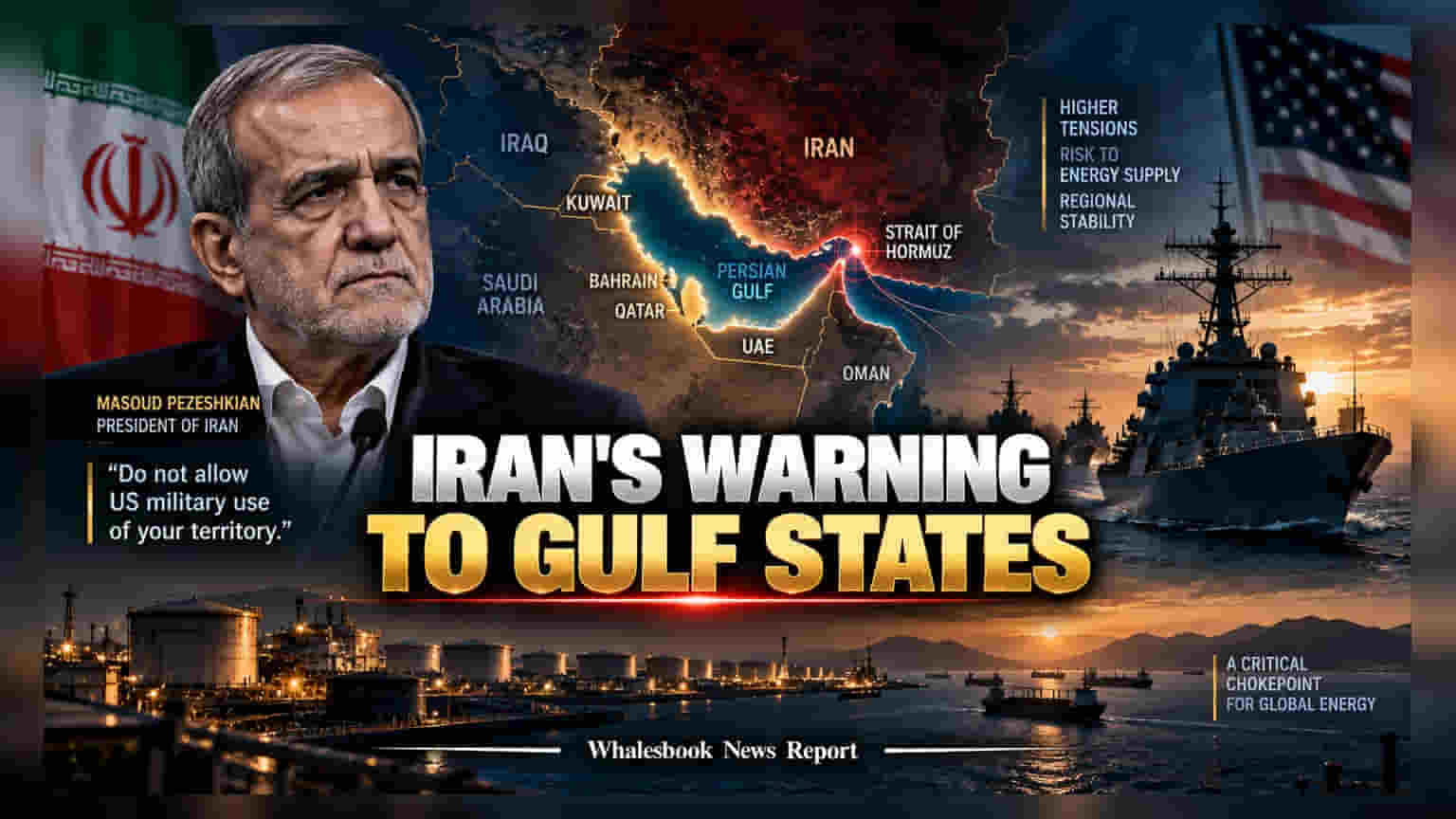
Iranian President Masoud Pezeshkian has urged neighboring Gulf countries to block US forces from using their territory for potential military actions. This warning increases pressure on regional alliances as countries attempt to balance security ties with the West against the threat of conflict. For global markets, the focus remains on the stability of energy transit and infrastructure security in the Strait of Hormuz.
Iranian President Masoud Pezeshkian has issued a formal warning to neighboring Gulf states, urging them to deny the United States the use of their territory for any military operations against Tehran. This diplomatic move is a calculated attempt to isolate the US military presence in the region and pressure Gulf nations to decouple their security arrangements from Western influence. By framing the conflict as a strictly US-Iran issue, Tehran hopes to secure its borders while preventing the formation of a unified, Western-led defensive bloc.
This development comes at a sensitive time for regional stability. Tensions have remained elevated since the conflict began on February 28, 2026, causing periodic disruptions to energy supply chains. With Iran and Gulf states, along with Iraq, scheduled to meet in Oman to discuss maritime security in the Strait of Hormuz, the pressure on regional leaders is mounting. Gulf nations currently face the difficult challenge of maintaining long-standing security alliances with the United States while minimizing the risk of retaliatory actions from Iran.
For investors and global markets, the implications center on energy security and logistics. The Strait of Hormuz remains a critical chokepoint for global oil transit. Any escalation in rhetoric or military positioning directly threatens the free flow of energy, which can lead to rapid volatility in global oil prices. Furthermore, recent security incidents, including reported drone attacks on Saudi Arabia’s East-West oil pipeline, have highlighted the physical vulnerability of energy infrastructure in the region.
Security officials, including Iranian Chief of Staff Maj. Gen. Ali Abdollahi, have previously stated that any facilitation of US military operations by regional states would be viewed as direct participation in the conflict. This stance puts increased weight on the upcoming diplomatic talks in Oman. If Gulf states are unable to negotiate a path that keeps them distanced from the US-Iran confrontation, the risk of further infrastructure attacks or maritime blockades remains a material concern for the global energy sector.
The next important update for the market will be the outcome of the discussions in Oman. Investors will likely monitor whether these talks produce a formal agreement on maritime security or if the standoff continues to leave regional energy transit paths exposed to geopolitical instability.