

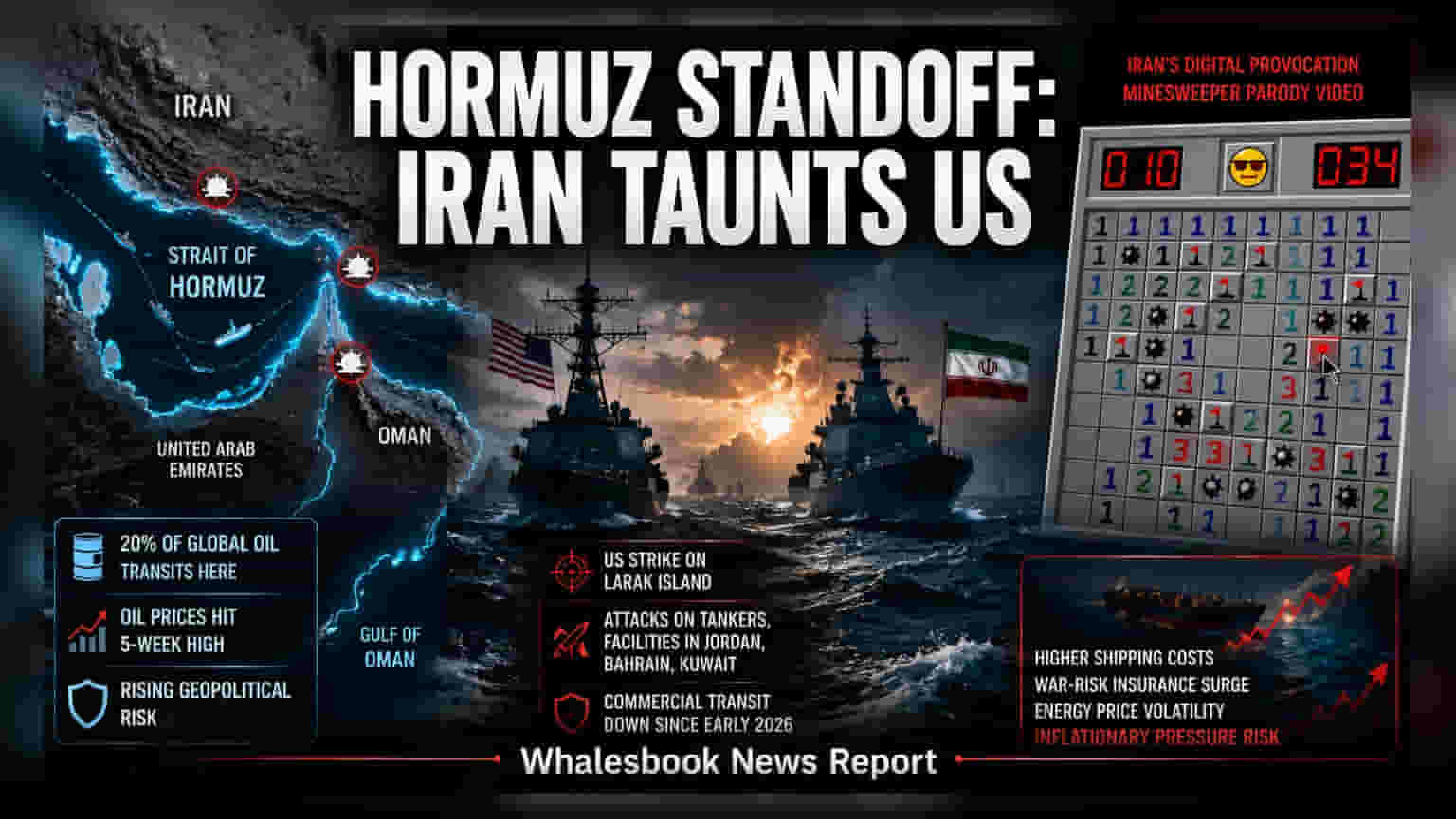
Global oil prices have surged to a five-week high as tensions in the Strait of Hormuz intensify. The standoff, marked by a recent digital provocation, is raising concerns among market participants about global energy supply stability and rising shipping costs.
Global oil prices reached a five-week high today as the standoff between the United States and Iran in the Strait of Hormuz showed signs of further escalation. The region, which serves as a critical artery for global oil transit, remains a significant flashpoint for financial markets. Investors are tracking the situation closely due to the potential for disruptions to energy supplies.
The latest spike in tension followed a digital provocation from Iran. The Iranian embassy in Sierra Leone posted a video parodying the Minesweeper game, targeting US naval operations that have been working to clear sea mines from the area. This event occurred alongside ongoing military movements, including a recent US strike on Iranian rocket launchers on Larak Island, which Washington stated was necessary to prevent the deployment of sea mines that threaten commercial shipping.
While major military operations such as 'Operation Epic Fury' officially concluded in May 2026, hostilities between the two nations have persisted. Recent reports indicate that the conflict has involved attacks on tankers and missile launches aimed at US-hosted facilities in Jordan, Bahrain, and Kuwait. These developments have significantly reduced commercial transit through the Strait of Hormuz since early 2026, creating a persistent risk profile for global energy markets.
The economic implications for businesses and investors are becoming clearer as the situation remains fluid. Higher operational costs for global shipping firms are a primary concern, as companies may face increased war-risk insurance premiums and the need to reroute vessels. Furthermore, sustained volatility in energy prices could contribute to broader inflationary pressures, affecting input costs for manufacturing and transportation sectors.
The key monitorables for investors in the coming weeks include the stability of oil prices, updates on maritime security in the region, and any official announcements regarding insurance costs or shipping lanes. Markets will likely remain sensitive to any further news of military confrontation, as the Strait of Hormuz continues to be a central factor in global energy supply security.