

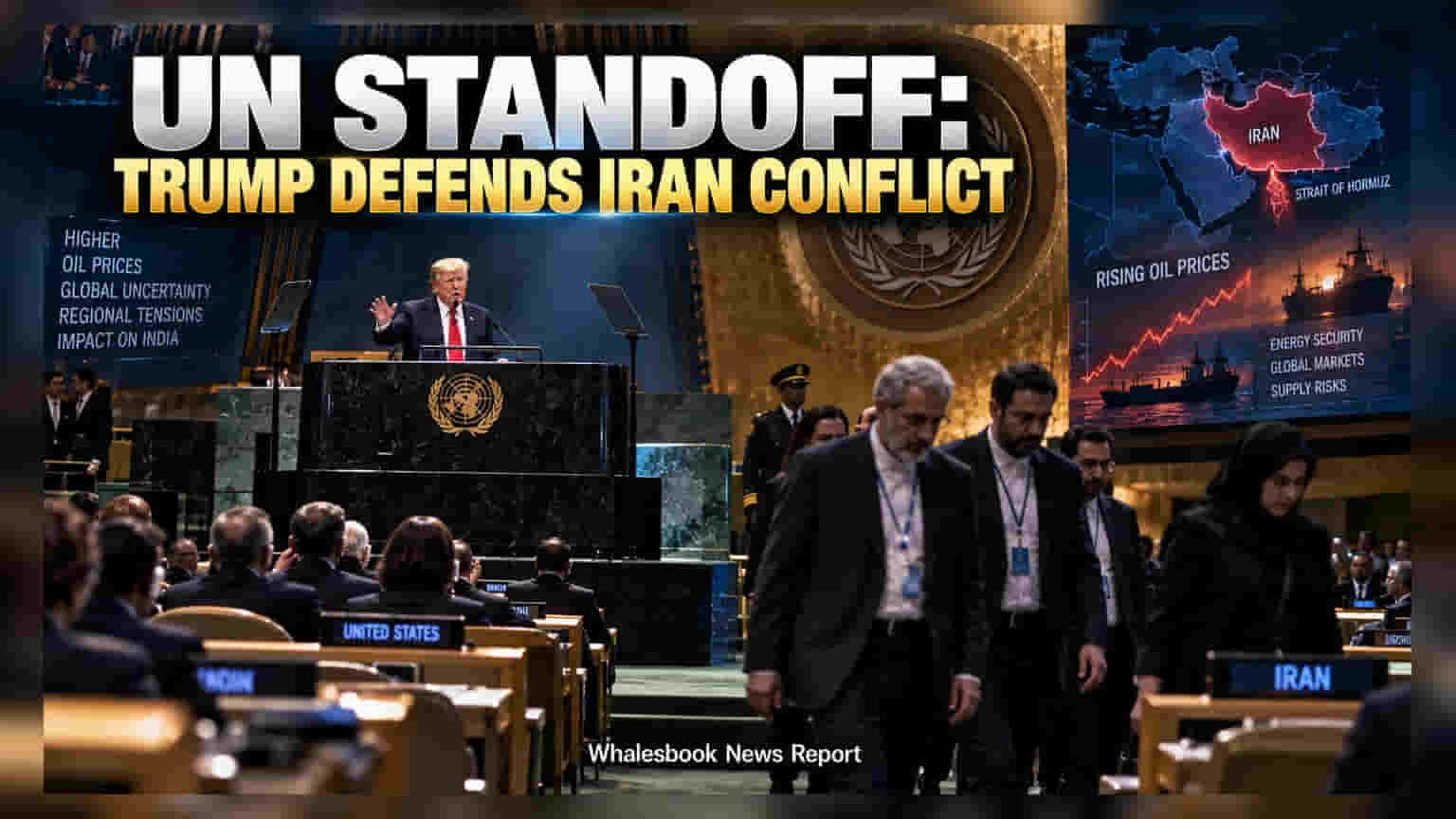
US President Donald Trump’s defense of military action against Iran at the UN has sparked diplomatic unrest, pressuring global energy markets. With the Strait of Hormuz in focus, Indian investors should monitor potential volatility in crude oil prices, which directly impacts the margins of domestic oil-dependent companies and inflation metrics.
Tensions in the Middle East have intensified following President Donald Trump’s address at the United Nations General Assembly, where he defended military operations against Iran. The speech, which resulted in the Iranian delegation walking out, has deepened the geopolitical rift and triggered concerns regarding stability in a region critical to the global energy supply. For Indian investors, the primary concern lies in the potential impact on crude oil prices and supply chain stability.
The Strait of Hormuz, often referred to as the world’s most important oil chokepoint, remains at the center of this friction. A significant portion of India’s crude oil imports passes through this waterway. Heightened military rhetoric and the threat of disruption in this area typically lead to a spike in global oil prices. For the Indian economy, which is a major importer of crude oil, rising prices often translate into a higher import bill, which can put pressure on the rupee and fuel domestic inflation.
Investors may monitor the performance of Indian Oil Marketing Companies (OMCs) such as Indian Oil Corporation, BPCL, and HPCL. When global crude prices rise rapidly due to geopolitical instability, these companies face challenges in balancing retail fuel prices with their operational costs, often affecting their profit margins. Similarly, the aviation sector is highly sensitive to fuel costs. Rising crude prices can directly impact the profitability of airlines like InterGlobe Aviation (IndiGo) and SpiceJet, as aviation turbine fuel (ATF) accounts for a significant portion of their operating expenses.
Beyond energy, the situation complicates the macroeconomic environment. Increased uncertainty in global markets often leads to a risk-off sentiment among foreign institutional investors (FIIs), who may retreat from emerging markets like India toward safer assets. The ongoing dialogue between the United States and the Gulf Cooperation Council, which includes major oil producers like Saudi Arabia and the UAE, will be a key event to track. Market participants will likely watch for any specific updates on the security of regional infrastructure, which has seen increased activity from Iran-backed groups.
The duration and intensity of this diplomatic rupture will dictate the extent of the economic impact. Investors may track daily movements in Brent crude prices and official commentary from the Ministry of External Affairs regarding any potential disruptions to India’s energy import routes. While the administration in the United States continues to frame the aggressive posture as a long-term security requirement, the market reaction will depend on whether this leads to supply disruptions or merely temporary volatility in energy pricing.