

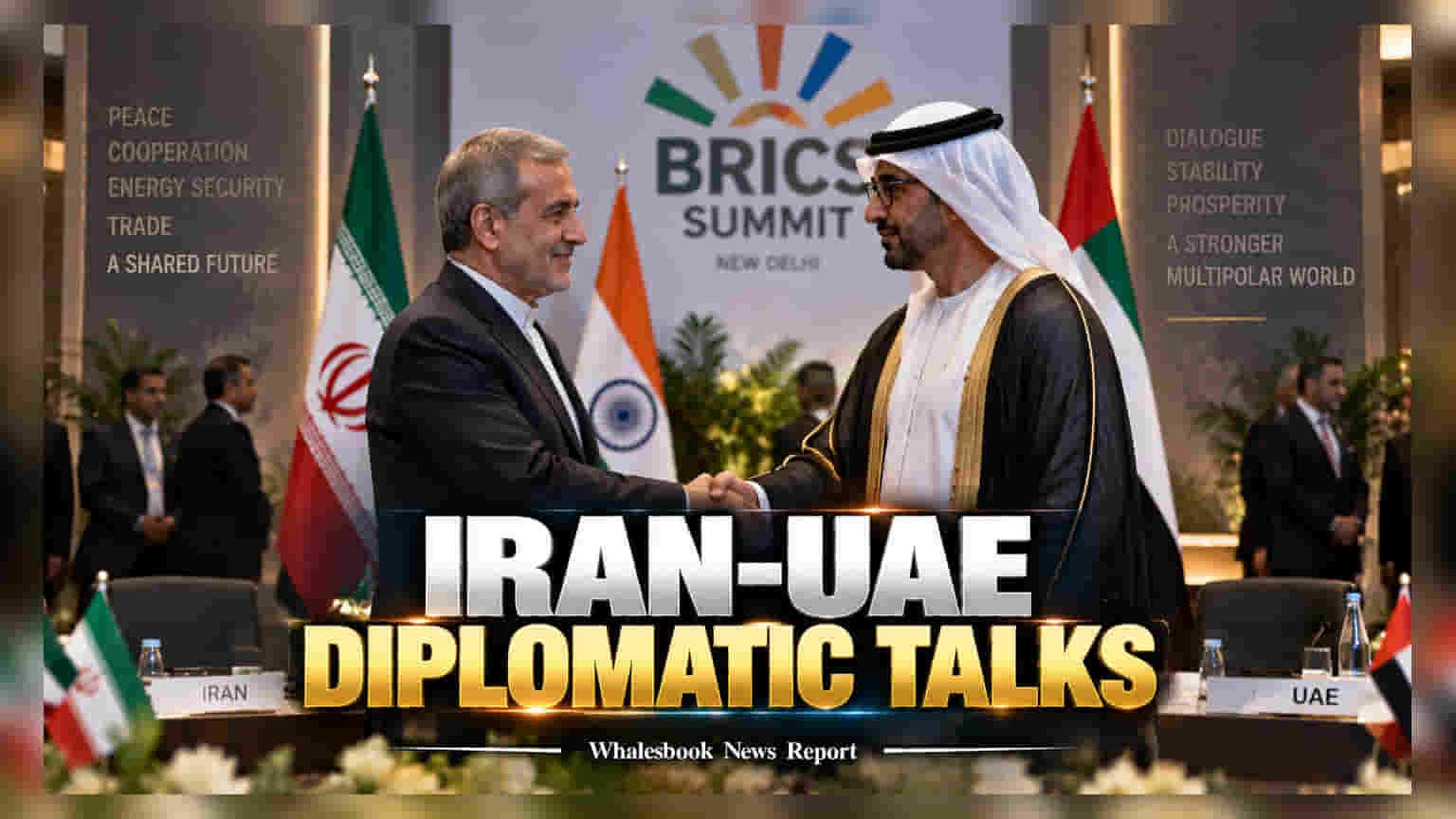
Iranian and UAE leaders held bilateral talks at the 18th BRICS Summit in New Delhi on Saturday, helping secure a consensus for the 'New Delhi Declaration'. This diplomatic effort addresses regional frictions, which is important for maintaining stability in energy markets and trade routes critical to the Indian economy.
Iranian President Masoud Pezeshkian and UAE Crown Prince Sheikh Khaled bin Mohamed bin Zayed Al Nahyan held high-level bilateral talks on Saturday on the sidelines of the 18th BRICS Summit in New Delhi. The meeting was a significant diplomatic step, aimed at managing ongoing tensions in West Asia that had threatened to stall the summit's joint outcome.
India played a crucial role in facilitating these discussions. Through back-channel negotiations, Indian diplomats worked to bridge the policy differences between Tehran and Abu Dhabi. This intervention was essential, as it allowed the BRICS member nations to reach the necessary consensus for the adoption of the 'New Delhi Declaration'.
For investors and the broader Indian market, the stability of the West Asian region is a primary monitorable. Because the region is a critical supplier of crude oil and a key corridor for global trade, geopolitical friction often leads to volatility in energy prices and logistics costs. By ensuring dialogue continues at the summit, the discussions help manage risks related to potential supply chain disruptions and energy price spikes.
The meeting underscores the complex geopolitical environment within the expanded BRICS bloc, where member nations often hold divergent views on regional conflicts. While this discussion provided a temporary window of cooperation to secure the joint declaration, the underlying tensions remain a factor for regional security. The ability of the bloc to maintain this consensus will depend on the continued commitment of all parties to de-escalate, even as military and political pressures persist.
Moving forward, market observers will track whether these diplomatic efforts lead to lasting improvements in regional relations or if they remain tactical pauses. For the Indian economy, the focus remains on ensuring that regional developments do not disrupt the flow of essential imports or impact the stability of global trade routes connected to the Middle East.