

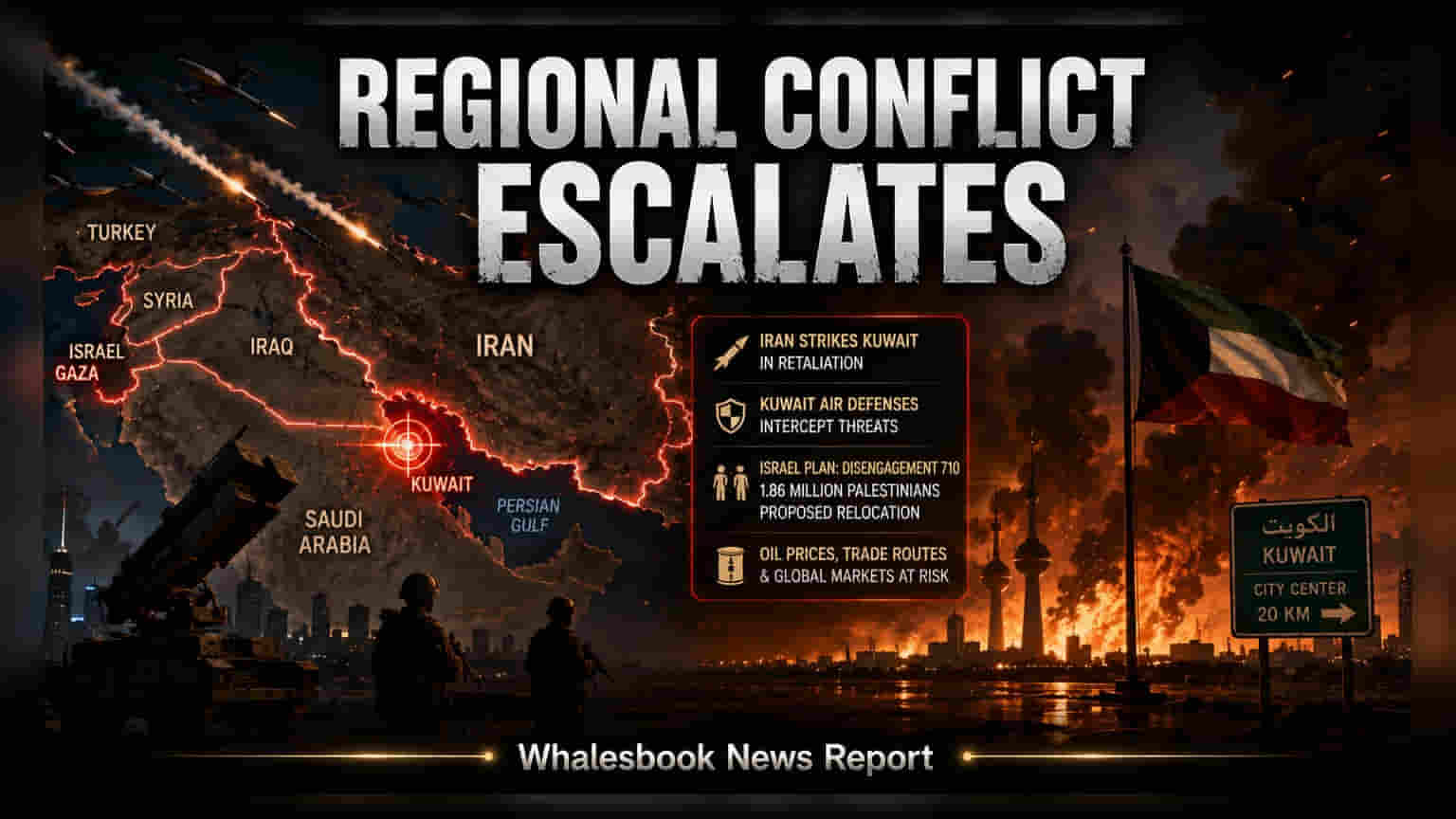
Geopolitical volatility in the Middle East intensified on September 3, 2026, after Iran launched missile and drone strikes against Kuwait in retaliation for U.S. bombardments. Simultaneously, Israel unveiled 'Disengagement 710,' a proposal to relocate 1.86 million Gaza residents. These developments have raised concerns about potential disruptions to crude oil supplies and global trade logistics, factors that investors are monitoring closely for their impact on market stability.
Geopolitical instability in the Middle East reached a new peak on Thursday, September 3, 2026, as Iran carried out missile and drone strikes targeting Kuwait. The Iranian government stated these actions were in retaliation for recent U.S. air bombardments in the region. While Kuwaiti air defenses intercepted the projectiles and officials reported that no military facilities were directly compromised, the incident marks a significant expansion of the ongoing conflict that has been unfolding since early 2026.
In a separate but concurrent development, Israel’s National Security Minister Itamar Ben-Gvir officially introduced a proposal titled 'Disengagement 710.' This initiative outlines a seven-year plan for the mass relocation of approximately 1.86 million Palestinians from Gaza. The proposal has drawn immediate international scrutiny, complicating an already volatile diplomatic landscape as global powers attempt to manage the escalation.
For investors, the primary concern lies in the potential impact on global energy and trade corridors. The Strait of Hormuz, a critical chokepoint for global oil transit, remains a focal point of risk. Historically, increased tensions in this region lead to volatility in crude oil prices, as market participants account for potential supply chain interruptions. Any sustained rise in energy prices often creates inflationary pressure, which can have ripple effects on economies dependent on energy imports, including India.
Beyond energy markets, logistical costs are another area of focus. Heightened military activity frequently leads to higher insurance premiums for shipping vessels navigating the region, which can increase the cost of goods and impact operating margins for companies heavily reliant on international trade or import-export operations. Investors are also tracking global market sentiment, as investors often adopt a 'risk-off' approach—moving capital away from equities and into safer assets—when regional conflicts widen.
The situation remains fluid, and the primary monitorable for investors in the coming days will be whether the conflict remains contained or spreads further among neighboring states. Market participants will likely track statements from major global powers, developments regarding the Strait of Hormuz, and any shifts in central bank or government policy aimed at stabilizing energy markets. For now, the combination of active military engagement and controversial policy proposals has created an environment of heightened uncertainty.