

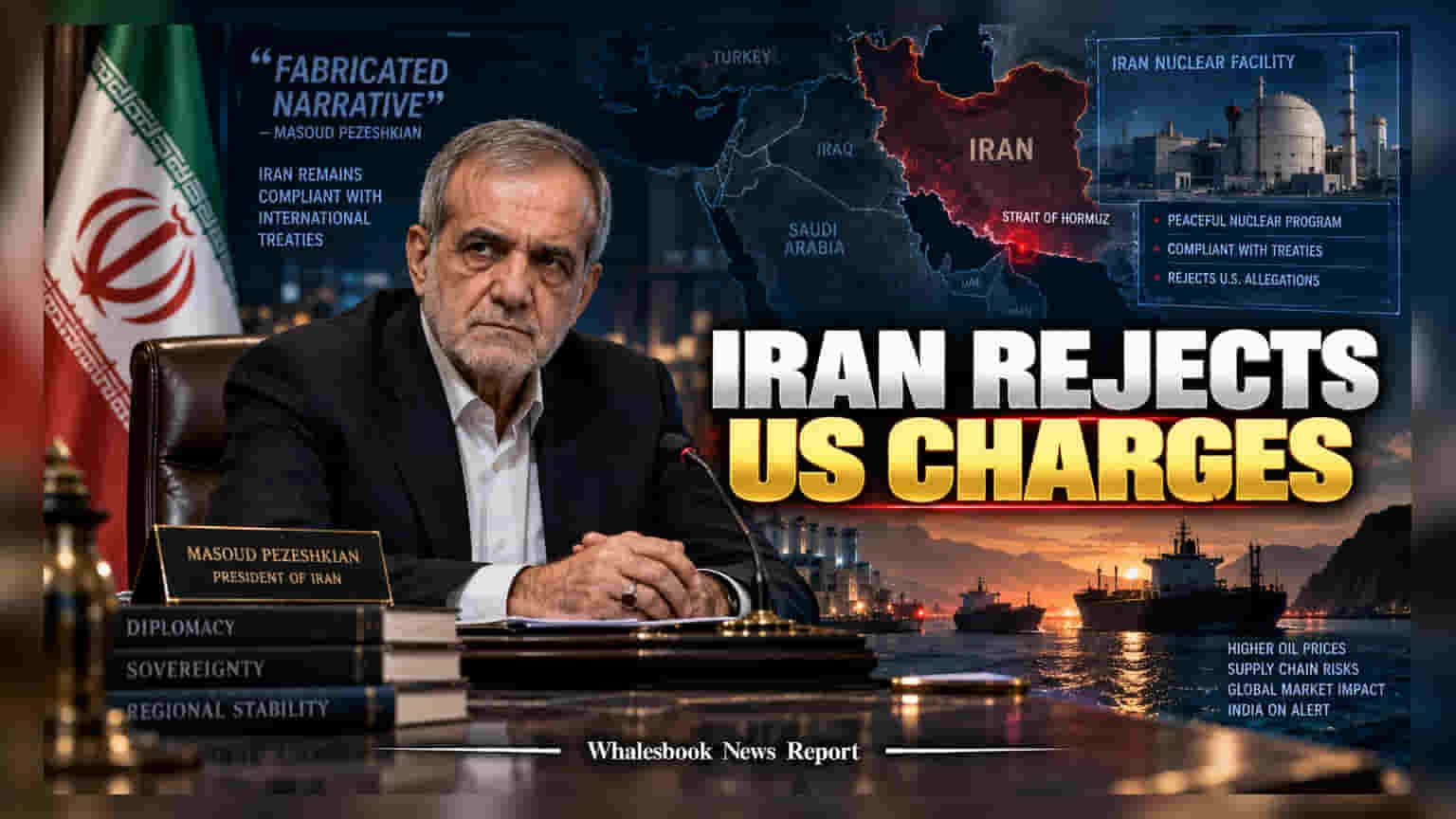
Iranian President Masoud Pezeshkian has denied U.S. nuclear weapons allegations, framing them as a pretext for continued military aggression. For Indian investors, the escalating geopolitical tension—particularly concerning the Strait of Hormuz—raises concerns over global crude oil supply, shipping costs, and potential inflationary pressure on the domestic economy.
Iranian President Masoud Pezeshkian has officially rejected U.S. allegations regarding Iran's nuclear program, describing the accusations as a fabricated narrative designed to justify military actions. The President stated that Iran remains compliant with international treaties and warned that such rhetoric serves only as a distraction from broader regional hostilities. This diplomatic friction adds to an already volatile situation that has persisted since the significant escalation of the Iran-U.S. conflict on February 28, 2026.
Impact on Energy Markets and India
For Indian investors and the broader market, the primary concern lies in the potential disruption of energy supply chains. The conflict, which has shown little sign of a durable resolution despite previous diplomatic attempts such as the Islamabad Memorandum of Understanding signed in June 2026, continues to pressure global shipping routes. Key among these is the Strait of Hormuz, a critical maritime chokepoint. With ongoing reports of restricted access and confrontations in the region, the risk of supply chain bottlenecks remains a significant factor for global oil prices.
India, as one of the world’s largest importers of crude oil, is sensitive to these developments. Higher global oil prices directly impact India's current account deficit and can put pressure on the margins of Oil Marketing Companies (OMCs) and aviation firms. Additionally, the risk of increased transit costs for shipping through the Red Sea and Gulf of Aden, exacerbated by ongoing regional instability, could weigh on the broader economy by increasing the cost of imports and logistics.
Investor Monitorables
Investors are keeping a close watch on crude oil price volatility as a primary indicator of market stress. While the current situation remains focused on diplomatic and military maneuvering, any signs of an escalation in the Strait of Hormuz could lead to immediate reactions in energy-related stocks and indices. Market participants are also tracking currency fluctuations, as geopolitical uncertainty often prompts investors to move toward safer assets, which can weaken the Indian Rupee.
The inability of previous diplomatic agreements to bring lasting stability means that the situation remains fluid. Future market movements will likely depend on whether there is a de-escalation of hostilities or if supply disruptions impact global energy availability. Investors may monitor statements from global powers and energy agencies for updates on supply security, as well as the quarterly performance indicators of energy-dependent domestic sectors.