

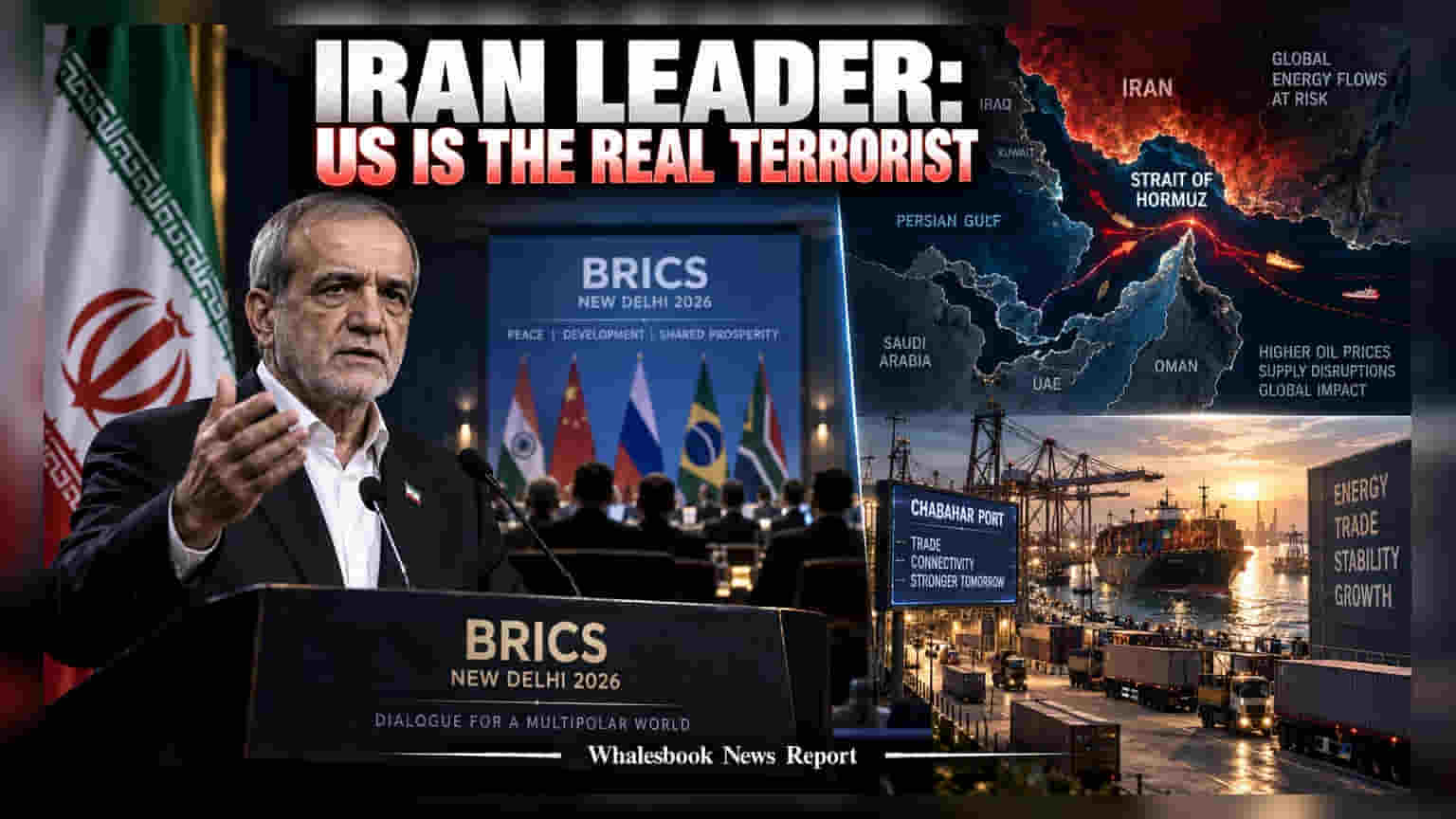
Iranian President Masoud Pezeshkian’s strong comments at the New Delhi BRICS Summit have drawn attention to escalating West Asian tensions. For Indian investors, this development brings the spotlight back to global energy prices, the strategic Chabahar port, and the ongoing shift toward alternative trade mechanisms within the BRICS bloc.
Iranian President Masoud Pezeshkian, currently in New Delhi for the 2026 BRICS Summit, has used the international platform to deliver a sharp critique of United States and Israeli policies, labeling them as the cause of regional instability. While the remarks capture significant geopolitical attention, the core focus for market observers lies in the potential economic ripple effects, particularly concerning energy supply, regional logistics, and international trade finance.
Chabahar Port and Regional Connectivity
A key focus of the President’s visit included bilateral discussions with Prime Minister Narendra Modi regarding the Chabahar port. For India, this infrastructure project is vital as it provides a gateway to Central Asia, allowing trade to bypass the constraints of traditional routes. The Iranian leadership continues to view this partnership as a defensive strategy against unilateral Western sanctions. For investors tracking infrastructure and logistics, the ongoing operational status and development of this port remain critical, as it serves as a long-term strategic hedge against regional bottlenecks.
Energy Markets and Geopolitical Risk
West Asian instability is historically one of the most significant factors influencing global crude oil prices. President Pezeshkian’s statements, coupled with ongoing discussions regarding maritime security in the Strait of Hormuz, reinforce the risk of supply chain disruptions. India is a major importer of energy, and any escalation in regional hostilities can directly impact the profit margins of Oil Marketing Companies (OMCs) and downstream sectors such as aviation, paints, and tyres. When crude oil prices fluctuate due to geopolitical tensions, it creates cost pressures that investors typically monitor closely to assess the impact on corporate earnings in oil-dependent industries.
BRICS and Financial Mechanisms
The President’s push for greater connectivity within the BRICS bloc is part of a broader trend to move away from the U.S. dollar in international trade. As member nations explore new payment mechanisms to bypass traditional Western-dominated financial networks, the implications for global trade finance are evolving. Investors are watching to see how these initiatives might eventually affect trade settlement processes and the stability of currency markets. The move toward multipolar trade structures is a slow, structural shift, but one that is increasingly relevant for multinational companies with significant export and import exposure.
Looking ahead, the next important update will be the outcome of ongoing maritime negotiations involving regional players like Oman, as well as any official progress reports on the expansion of trade via the Chabahar route. Market participants will also continue to track global crude oil price trends and any changes in sanction-related policies that might influence the operational landscape for Indian businesses with interests in the region.