

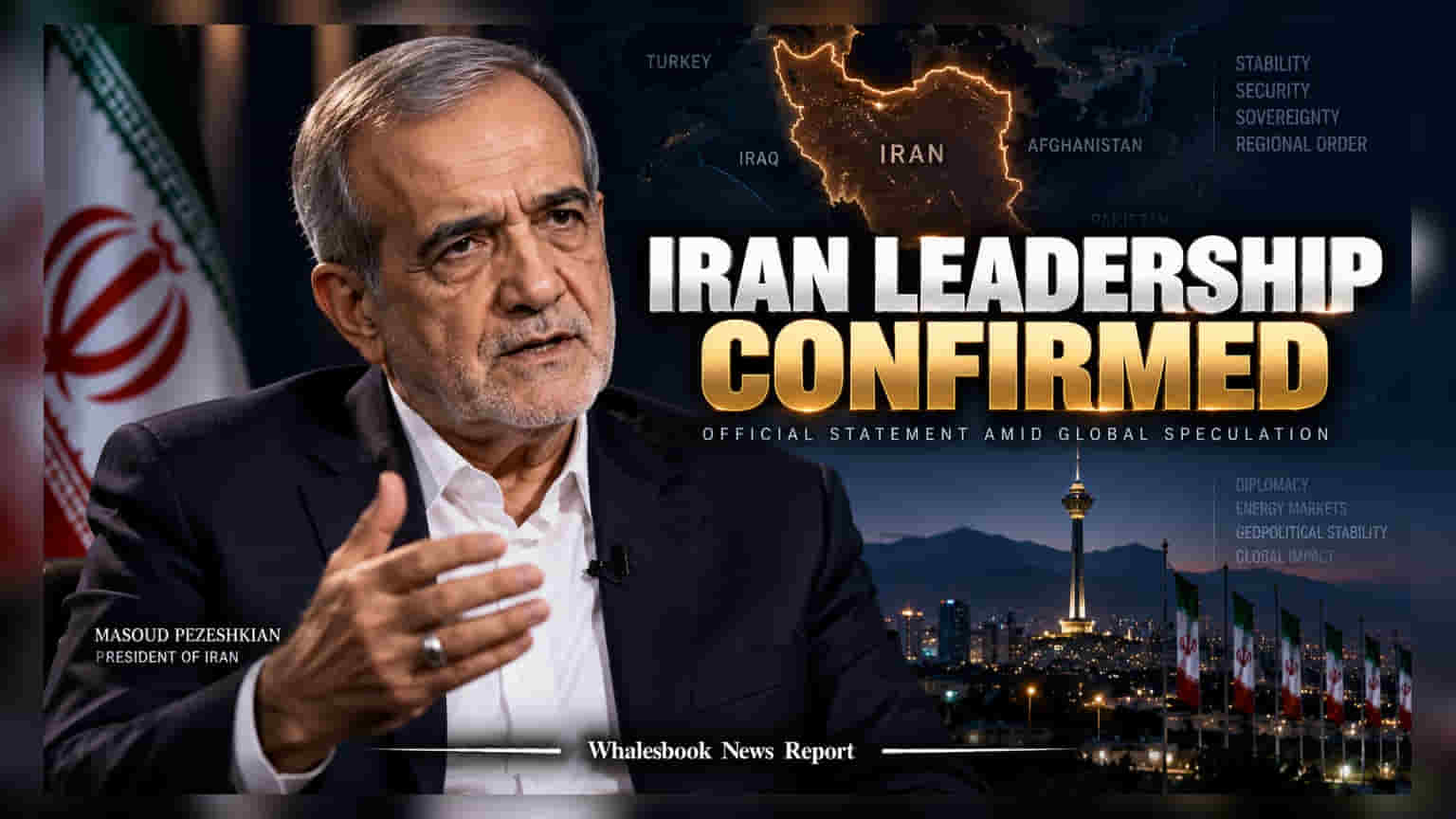
Iranian President Masoud Pezeshkian has formally refuted reports regarding the death or incapacity of Supreme Leader Mojtaba Khamenei. The confirmation addresses persistent international uncertainty following the leadership succession in March 2026. For investors, the lack of public appearances by the Supreme Leader continues to contribute to regional geopolitical instability, influencing oil market sentiment and risk premiums.
Iranian President Masoud Pezeshkian has issued a formal statement addressing ongoing international speculation regarding the status of Supreme Leader Mojtaba Khamenei. In a recent interaction with global media, President Pezeshkian dismissed widespread rumors suggesting a leadership vacuum, asserting that the Supreme Leader remains in full control of the state's constitutional authority. This clarification follows months of heightened curiosity and concern regarding the Iranian leadership structure.
Mojtaba Khamenei assumed the position of Supreme Leader in March 2026, following the assassination of his father, Ayatollah Ali Khamenei, in February of the same year. Since his appointment by the Assembly of Experts, the new Supreme Leader has maintained a strictly private profile, communicating exclusively through written statements rather than public appearances. This absence from public view has been a primary driver of speculation among international observers, with some foreign officials publicly questioning his health and ability to exercise authority.
The Iranian administration has attributed the secrecy surrounding the Supreme Leader’s location and daily movements to essential security protocols. President Pezeshkian argued that the government is currently navigating an aggressive information war orchestrated by foreign intelligence services. He maintained that providing specific details about the Supreme Leader's whereabouts would present an unacceptable security risk given the persistent pattern of targeted strikes against high-ranking Iranian officials, military commanders, and scientific figures.
For financial markets and geopolitical analysts, the situation remains a critical factor in assessing regional stability. The lack of direct visibility into the leadership's daily operations creates a persistent information gap, which often leads to increased volatility in sentiment concerning Middle Eastern stability. While the government insists that the institutional chain of command remains fully functional, the inability to verify the leadership's public presence keeps geopolitical risk premiums elevated, particularly within global energy markets where supply chain disruptions in the region are closely monitored.
Investors and market participants continue to observe the situation as a barometer for regional risk. The primary monitorable remains the stability of the established power structure and the potential for shifts in policy that could arise from internal administrative pressures. As the administration continues to attribute the secrecy to security necessities, the gap between official government communications and international skepticism remains a defining feature of the current political environment in Tehran.