

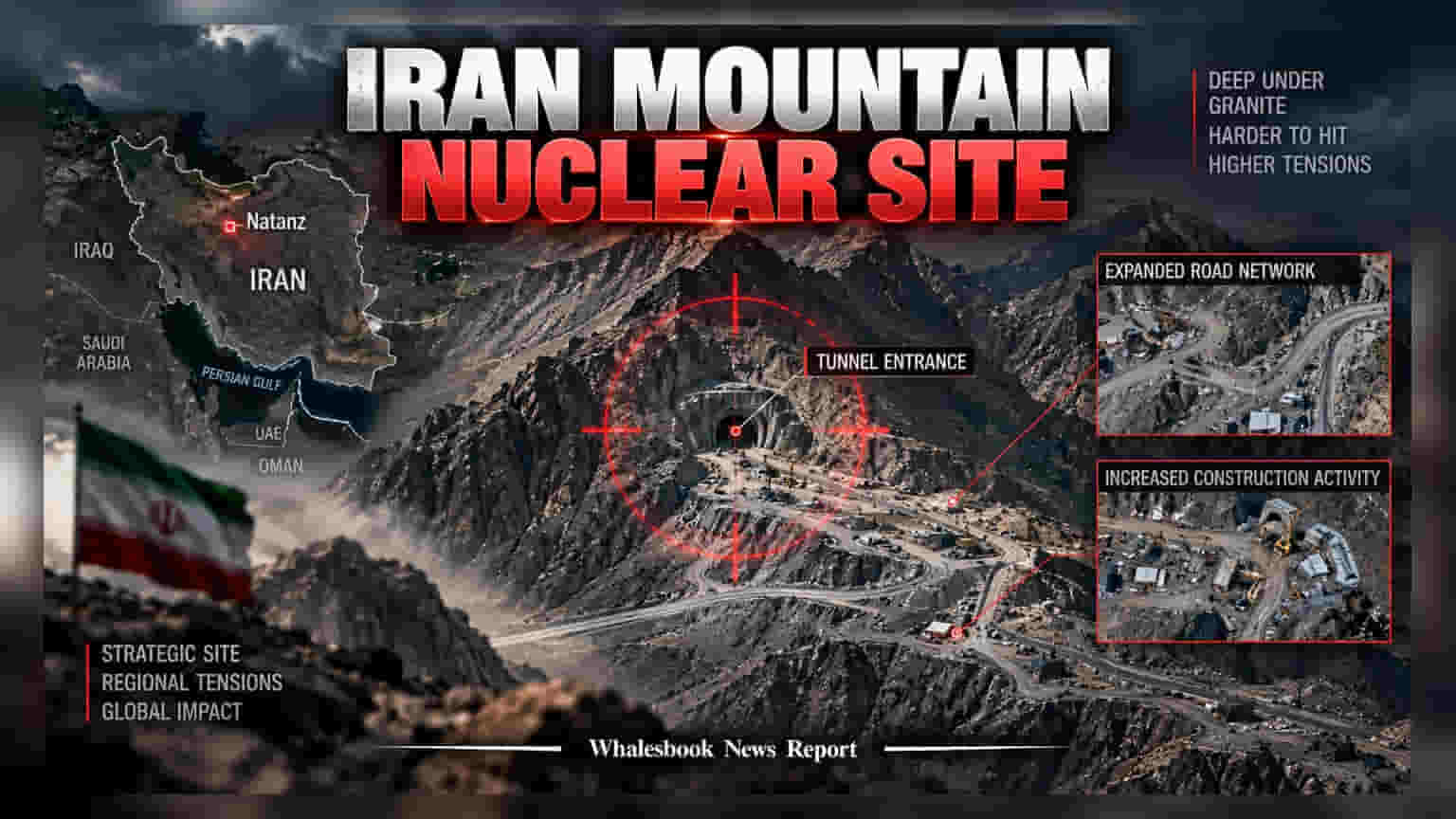
Satellite imagery reveals increased construction at Iran's Pickaxe Mountain nuclear site, fueling geopolitical tensions as U.S. strike threats persist. For Indian investors, this escalation raises concerns regarding potential energy market volatility and supply chain disruptions in the Strait of Hormuz, which could impact global oil prices and market sentiment.
Satellite imagery analysis from mid-2026 indicates a clear surge in construction activity at Iran's 'Pickaxe Mountain' (Kuh-e Kolang Gaz La) nuclear complex. Located near Natanz, this site has seen significant development over the past months, including the hardening of tunnel entrances and the expansion of road networks. Analysts at the Center for Strategic and International Studies (CSIS) note that the work suggests a shift toward finalizing the facility's internal structure, although there is no conclusive evidence yet of uranium enrichment operations. The facility is buried deep beneath granite, making it a difficult target for conventional military strikes.
The development coincides with rising geopolitical friction between the United States and Iran. U.S. officials, including President Donald Trump, have issued repeated warnings regarding potential military action against the site, driven by concerns that Iran may be housing thousands of centrifuges within the facility. Iran has countered these warnings, with military leadership stating that any attack on its nuclear infrastructure would result in a regional expansion of the conflict, potentially targeting U.S. and allied interests in the Middle East.
For investors, this geopolitical standoff carries significant implications for energy security and global market stability. The Strait of Hormuz remains a critical chokepoint for global oil transit. Heightened tensions or an actual military engagement in this region often lead to immediate volatility in crude oil prices, which directly impacts India’s import bill and can create broader pressure on inflation and corporate margins for oil-dependent sectors. While no specific stock is directly impacted by this facility's construction, Indian equity markets historically react to geopolitical shocks with increased risk aversion, particularly in the form of foreign institutional investor outflows or shifts toward safe-haven assets.
Furthermore, the potential for maritime disruptions in the Arabian Gulf adds a layer of complexity to supply chain logistics. Any restriction on shipping routes could affect energy-heavy industries and logistics companies reliant on stable fuel prices and secure transit corridors. Investors are likely to track developments in U.S.-Iran diplomatic and military interactions, as any movement toward de-escalation could stabilize energy markets, whereas further hardening or military rhetoric will likely keep volatility elevated.
The most important factor for market participants to monitor is the stability of oil transit through the Persian Gulf and any official updates regarding military posture from both the United States and Iran. Given the unpredictable nature of regional conflicts, market sentiment in the coming weeks will likely remain sensitive to breaking news regarding the status of the Pickaxe Mountain facility and broader Middle Eastern security.