

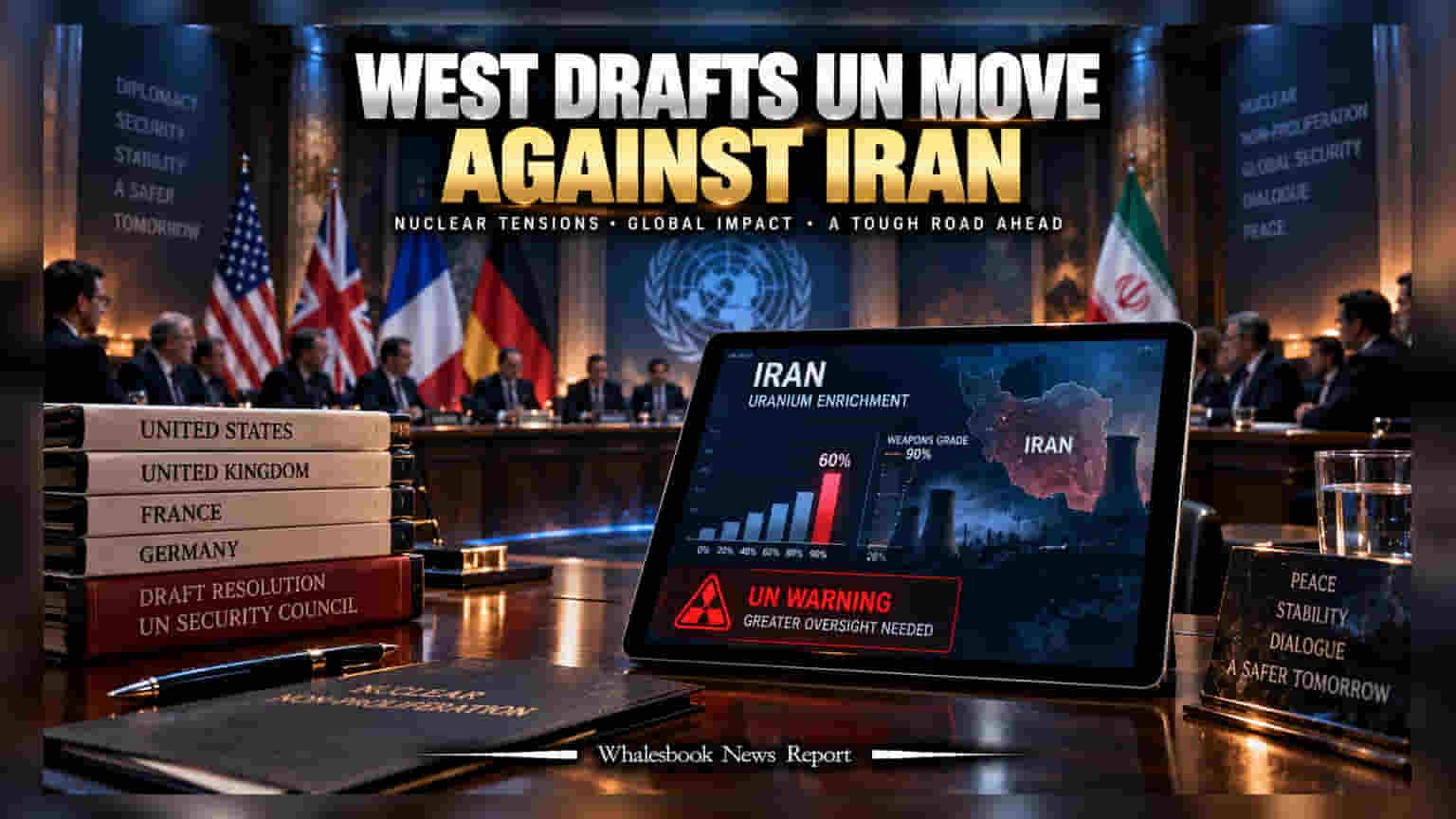
Western nations are moving to refer Iran to the UN Security Council following disputes over nuclear site inspections and uranium stockpiles. For Indian investors, the escalation poses risks to energy security and global oil prices. The move currently faces diplomatic hurdles due to potential vetoes from permanent Council members.
The United States, United Kingdom, France, and Germany are drafting a formal resolution to refer Iran to the United Nations Security Council. This move comes as diplomatic efforts to oversee Iran’s nuclear program continue to stall, with concerns mounting over Tehran's refusal to provide the International Atomic Energy Agency (IAEA) with access to critical nuclear facilities.
The push for a referral is tied to ongoing tensions that have persisted since the regional conflicts of 2025. According to international reports, Iran currently maintains significant stockpiles of uranium enriched to 60 percent purity. While this is not yet at the 90 percent level required for weapons production, international monitors view the lack of transparent oversight as an urgent risk. The IAEA has noted that its ability to verify the status of nuclear materials has been severely limited, especially at sites damaged during recent military strikes.
For the Indian market, this geopolitical development carries potential implications for energy and trade. India remains heavily dependent on crude oil imports, and any significant escalation in the Middle East often leads to volatility in global energy prices. Investors and market observers are watching the situation closely for any impact on shipping routes, particularly the Strait of Hormuz, which is a vital chokepoint for global oil transit. Further instability in this region can introduce a geopolitical risk premium into oil prices, affecting input costs for Indian manufacturers and consumers.
Despite the push by Western powers, the referral process faces substantial obstacles. Even if the resolution moves to the UN Security Council, it is expected to face significant resistance. Permanent members Russia and China have historically opposed stringent sanctions against Tehran, suggesting that the path toward legally binding international measures remains blocked. This creates a scenario of prolonged diplomatic uncertainty rather than an immediate resolution.
For investors, the immediate monitorable is how these diplomatic tensions influence global commodity markets. While the threat of new international sanctions exists, the market will likely focus on whether the escalation leads to further military activity or disruption of supply chains. As the situation remains fluid, tracking developments in the IAEA meetings and any changes in the geopolitical landscape will be essential for assessing the broader impact on the energy sector and market sentiment.