

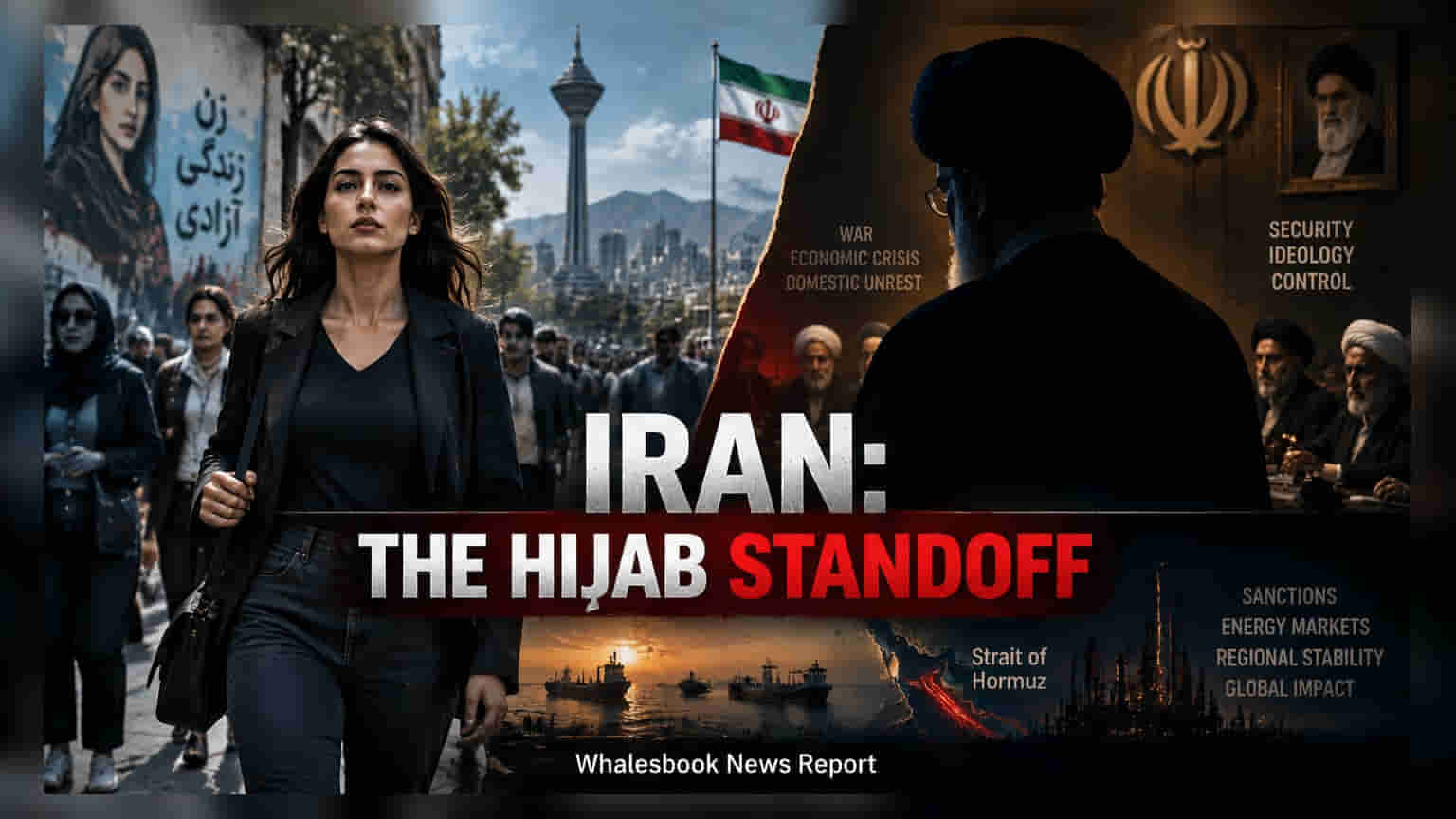
Divisions within Iran’s government are intensifying over the enforcement of hijab laws as the state faces military conflict and severe economic distress. This internal friction highlights growing risks for investors monitoring regional stability, global energy supplies, and potential inflationary pressures stemming from geopolitical uncertainty in the Middle East.
The Iranian government is currently experiencing a deepening internal divide regarding the enforcement of mandatory hijab laws. As the nation grapples with the pressures of an ongoing war and severe economic instability, a clear split has emerged within the ruling establishment. Hard-line factions are pushing for strict compliance, viewing the relaxation of social rules as a security threat, while other senior officials and pragmatists are advocating for restraint to avoid triggering widespread domestic unrest.
This policy inconsistency is visible on the streets, where enforcement of dress codes remains uneven. Observers note that this tactical patience is less about a change in ideology and more about a survival strategy. Military and security leaders appear to be prioritizing national stability, clearly wary that a repeat of the widespread protests seen in 2022—combined with the current strains of war and hyperinflation—could severely weaken the government's grip on power. The state is currently operating in a fragile environment, attempting to balance theological mandates against the reality of a war-weary population.
For investors and global markets, these developments carry significant macro-economic implications. Iran’s central role in the Middle East, combined with its proximity to critical energy shipping lanes such as the Strait of Hormuz, makes any internal or regional instability a concern for global commodity markets. Geopolitical uncertainty often leads to increased volatility in energy prices, which can have ripple effects on inflation and corporate costs globally. If the internal division leads to a shift in policy or if social tensions escalate, the resulting instability could affect trade routes and energy supplies.
The broader economic context remains a central risk factor. Iran is managing the combined weight of international sanctions, currency devaluation, and energy shortages. Any potential for renewed civil disobedience or political reshuffling adds another layer of complexity for international observers tracking the region's risk profile. Investors typically watch such situations for signs of how the government will handle domestic policy, as any sign of weakened control or significant shifts in state strategy can influence regional security assessments.
The most important monitorable in the coming months will be whether the Iranian leadership can manage these internal fractures without allowing them to spill over into broader social disruption. Markets will likely remain sensitive to any news that could impact regional stability or disrupt global energy supply chains. Observers are also paying attention to whether the government’s approach to enforcement shifts as the war progresses, as this will provide a clearer picture of the regime's long-term priorities.