

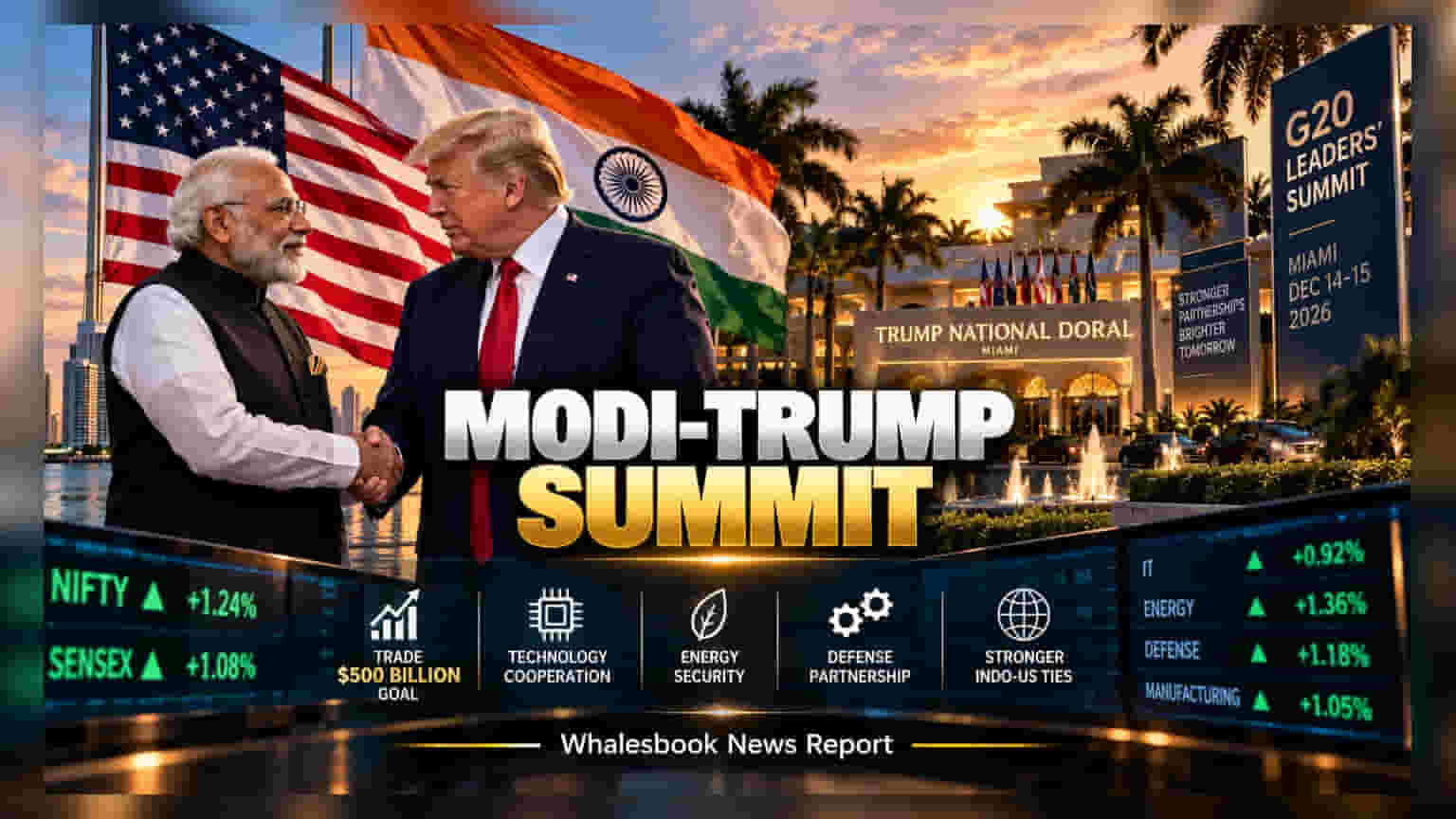
Prime Minister Narendra Modi is expected to meet US President Donald Trump at the G20 Leaders' Summit in Florida this December. The visit aims to push bilateral trade toward a $500 billion target. Investors are watching for potential developments in trade policy, technology, and defense sectors that could influence key Indian industries.
Prime Minister Narendra Modi is scheduled to travel to the United States in mid-December 2026 to attend the G20 Leaders' Summit, hosted at the Trump National Doral Miami resort. The event, set for December 14 and 15, is expected to serve as a platform for a high-level bilateral meeting between the Indian Prime Minister and US President Donald Trump. While official confirmation is pending, this expected meeting is a major focus for those tracking India-US diplomatic and economic ties.
The primary focus of these discussions is the advancement of the existing commercial relationship. Current data indicates bilateral commerce stands at approximately $240 billion, and both nations have set a long-term goal of increasing this figure to $500 billion. For investors, this objective highlights a strategic push toward deeper cooperation in critical sectors such as advanced technology, energy independence, and critical minerals. Achieving this ambitious target likely requires addressing existing trade friction and improving regulatory alignment, which remains a key area to monitor.
Impact on Key Indian Sectors
Trade and diplomatic negotiations between India and the US typically hold significant weight for several Indian industries. The IT and software services sector is particularly sensitive to US policy, as the US remains the largest market for Indian exports. Changes in trade agreements, visa policies, or technology transfer pacts often influence the profitability and operational flexibility of large-cap Indian tech companies.
Similarly, the defense and manufacturing sectors are closely tied to geopolitical relations. Increased collaboration on technology sharing or localized production initiatives can provide a boost to domestic defense contractors and component manufacturers. Furthermore, as the world moves toward renewable energy and electric vehicles, discussions on critical mineral supply chains are becoming increasingly important for energy-focused companies in India. If the two nations reach specific agreements on resource sharing or manufacturing, it could support the growth of companies involved in the EV supply chain and green energy infrastructure.
Risks and Market Realities
While the prospect of expanded trade is positive, trade negotiations are complex and often time-consuming. Any agreement requires balancing the interests of domestic industries in both countries. Investors should be aware of risks such as potential protectionist policies, changes in import duties, or stricter regulatory requirements that could create headwinds for Indian exporters.
Past trade discussions have demonstrated that while intent is often high, the transition from negotiation to implementation can be slow. Investors may observe how specific sectors, such as agriculture or pharmaceuticals, are treated in these talks, as these areas often face intense scrutiny during trade negotiations. Furthermore, broader macroeconomic factors, such as currency fluctuations and interest rate policies in both nations, will continue to play a role in the actual performance of companies operating in the US market.
Looking ahead, the summit is also expected to touch upon wider geopolitical themes, including a potential meeting of the Quad group—comprising India, the US, Japan, and Australia—to discuss security and emerging technology infrastructure. Following the Florida summit, reports suggest a potential visit to Canada to further discussions on the Comprehensive Economic Partnership Agreement (CEPA). For investors, the most important next step will be to track the specific outcomes of these bilateral discussions, particularly any announcements related to tariff adjustments, technology transfer frameworks, or new investment pacts that could provide clarity on future growth opportunities for Indian companies.