

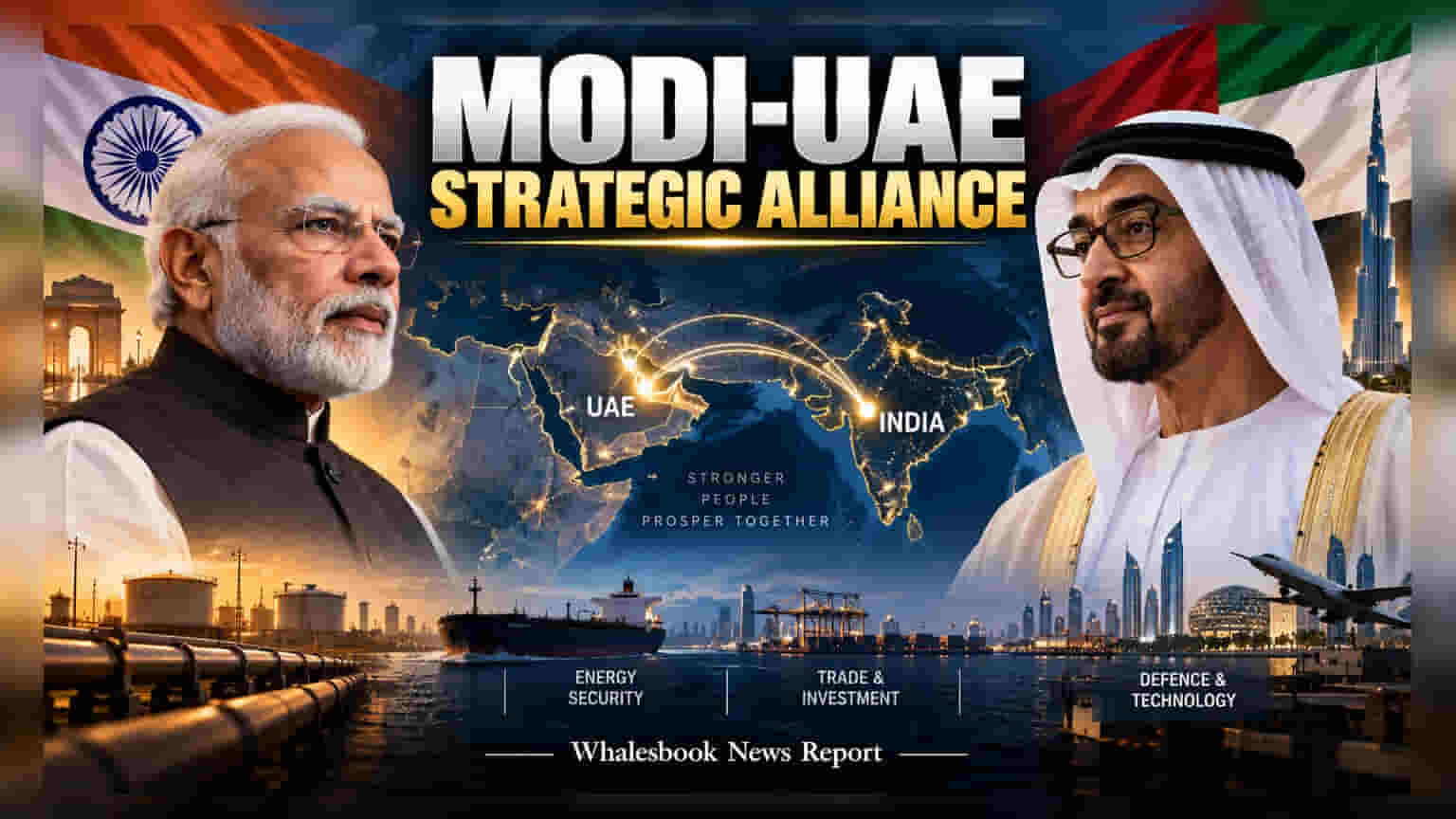
Prime Minister Narendra Modi and UAE President Sheikh Mohamed bin Zayed Al Nahyan reviewed economic and security ties. For investors, this meeting is significant as the UAE is a key energy supplier to India and a major source of foreign investment. The focus remains on strengthening the Comprehensive Economic Partnership Agreement (CEPA) and managing risks from regional tensions.
Prime Minister Narendra Modi met with UAE President Sheikh Mohamed bin Zayed Al Nahyan on Friday to discuss strengthening strategic, economic, and security ties. This meeting comes at a time when both nations are looking to expand their Comprehensive Economic Partnership Agreement (CEPA), which has been a primary driver of bilateral trade since its implementation in 2022. For Indian investors, the relationship with the UAE is a critical barometer for energy security, investment flows, and long-term trade stability.
Energy remains the most immediate area of interest. With a significant portion of India’s crude oil imports coming from the Middle East, regional stability is a major factor for Oil Marketing Companies (OMCs) like Indian Oil Corporation, Bharat Petroleum, and Hindustan Petroleum. Any disruption in regional logistics in West Asia can impact global oil prices and, consequently, the profit margins of these companies. Investors often track these diplomatic engagements to assess the security of energy supply chains and the stability of import costs.
Beyond traditional energy, the discussions covered collaboration in defense and technology. India has been actively seeking to increase its defense exports and improve its technological capabilities. The UAE acts as a strategic partner in this goal, with potential for joint manufacturing and technology transfers. Companies in the defense sector, such as Hindustan Aeronautics Limited and Bharat Electronics Limited, may be impacted by these partnerships if they lead to significant orders or joint ventures. These developments are important for tracking the long-term growth of India’s indigenous defense production.
Investment flows are another key monitorable. The UAE, through entities like the Abu Dhabi Investment Authority (ADIA) and Mubadala, is a significant foreign investor in the Indian infrastructure and technology sectors. A stronger strategic partnership typically signals a better environment for sovereign wealth funds to deploy capital in India. Investors often watch for announcements regarding new investment commitments, as these can provide a boost to long-term capital expenditure projects in India.
However, investors should also remain aware of the geopolitical risks in West Asia. Tensions in the region create uncertainty for shipping routes and commodity prices. While the India-UAE trade corridor is robust, volatility in the broader Gulf region can lead to sudden spikes in operational costs for trade-heavy sectors. The market will likely look for updates on specific projects, trade volume growth under CEPA, and any new agreements signed in the defense and technology sectors in the coming months.