

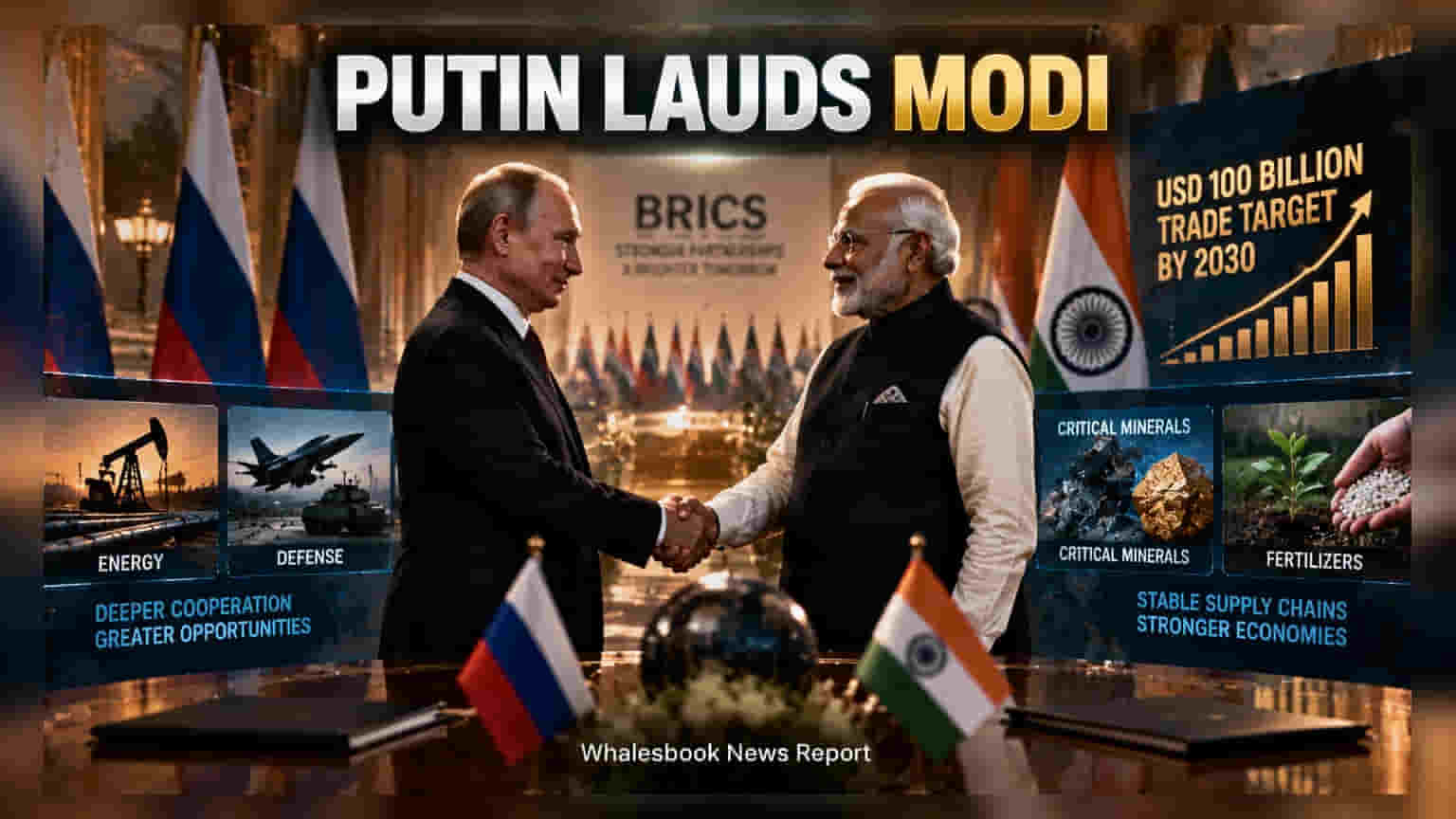
Following the BRICS Summit in New Delhi, India and Russia have set a roadmap to increase bilateral trade to USD 100 billion by 2030. Investors are evaluating the impact of this strategic alignment on key sectors including energy, defense, critical minerals, and fertilizers as both nations aim to quintuple trade figures.
Russian President Vladimir Putin’s recent diplomatic greeting to Prime Minister Narendra Modi, following his 76th birthday, serves as a formal reinforcement of the trade and economic roadmap established at the 18th BRICS Summit in New Delhi. The summit, held between September 11 and 13, 2026, concluded with a mutual commitment to expand bilateral trade to USD 100 billion by 2030.
Sector Impact and Economic Goals
For investors, the primary takeaway from the recent diplomatic engagement is the specific focus on four core sectors: energy, defense, critical minerals, and fertilizers. Each of these industries holds significance for the Indian economy and its supply chain security.
In the energy sector, enhanced cooperation with Russia often involves long-term procurement strategies for oil and gas, which directly impacts the operational planning of India’s large refining and marketing companies. Stability in these supply lines helps these firms manage input costs more effectively. In the defense sector, the focus remains on joint ventures and co-production agreements, which can influence the order books and long-term project pipelines of major defense manufacturers.
The inclusion of critical minerals and fertilizers in the trade roadmap is equally important. India’s push for agricultural self-sufficiency and industrial raw material security relies heavily on reliable imports. Strengthening trade relations in these specific segments aims to reduce volatility in procurement, providing a more stable environment for Indian companies that depend on these resources.
Stability as a Business Enabler
Beyond individual sectors, the affirmation of a privileged strategic partnership provides a degree of predictability that is essential for long-term capital allocation. When major trade partners set clear, multi-year economic targets, it helps reduce the risk of supply chain disruptions caused by geopolitical shifts. For Indian companies with exposure to Russian markets or supply chains, this high-level political alignment creates a foundational framework that lowers business uncertainty.
What Investors Should Monitor
While the USD 100 billion trade target is the headline goal, the practical realization of this target will depend on several factors that investors should track. The most important monitorables include the actual flow of new trade deals, the speed of implementation for joint defense projects, and any changes in payment mechanisms for bilateral trade. Investors should watch for official company filings regarding new partnerships or long-term supply contracts with Russian entities, as these will serve as real-time indicators of how the government-level roadmap is translating into corporate-level growth.