

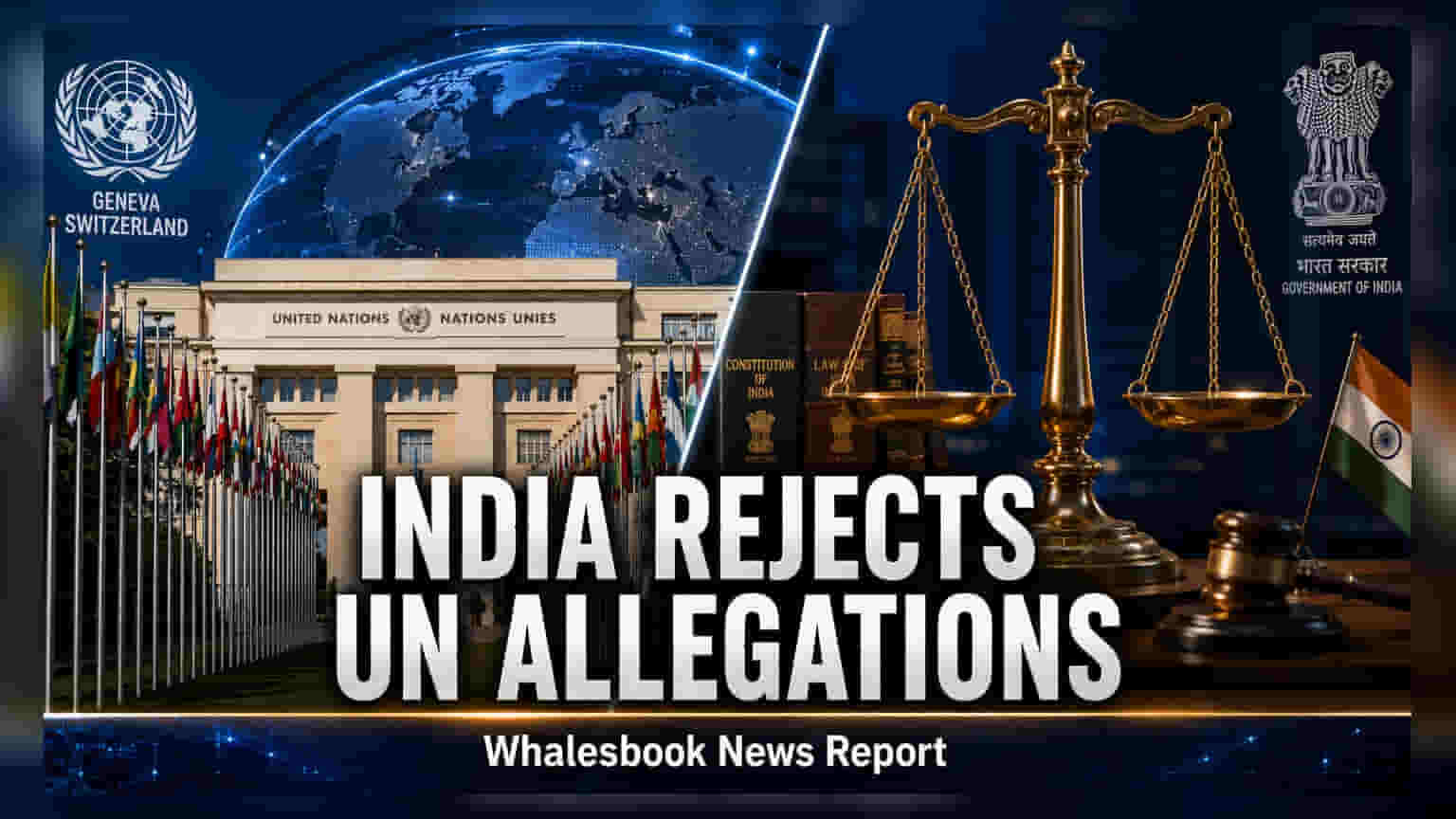
India has formally rejected a UN committee report alleging rights abuses against minority groups, calling the findings "politically motivated." While this is a diplomatic development with no direct impact on the stock market, investors monitor such international relations for potential shifts in global sentiment.
On Wednesday, August 26, 2026, the Indian Ministry of External Affairs (MEA) issued a formal rejection of recent findings released by the United Nations Committee on the Elimination of Racial Discrimination (CERD). The report, which followed India's 11th periodic review held earlier this month in Geneva, raised several concerns regarding the treatment of marginalized communities, including Dalits, tribal groups, and various ethnic and religious minorities.
The Indian government has described the committee's observations as "highly malicious" and "politically motivated." New Delhi argued that the report relies on sweeping generalizations and unsubstantiated allegations rather than credible evidence. During the review process, the Indian delegation, led by Solicitor General Tushar Mehta, contested the committee's scope and methodology, stating that the international body exceeded its mandated authority.
The CERD report had highlighted various allegations against Indian law enforcement, such as reports of excessive force, arbitrary detention, and extrajudicial killings. Additionally, the committee raised concerns regarding the prevalence of hate speech and urged the state to initiate independent investigations into these matters to ensure accountability. In its response, India emphasized its existing constitutional framework and democratic protections that are in place to safeguard the rights of all citizens, asserting that the nation remains committed to its sovereign legal processes.
From an investor perspective, this is a diplomatic and policy-related event. There is no direct, measurable impact on Indian stock market indices, sectoral performance, or the financial health of listed companies. However, international institutional investors often factor in geopolitical stability and human rights reporting as part of their Environmental, Social, and Governance (ESG) risk assessment frameworks. While these reports rarely cause immediate market fluctuations, sustained diplomatic friction or shifts in international perception can be monitored by foreign investors as part of broader macroeconomic and geopolitical risk analysis.
The government has stated that it will address the findings through established diplomatic channels. The next steps will involve ongoing communication between Indian authorities and the international committee as the formal review process proceeds.