

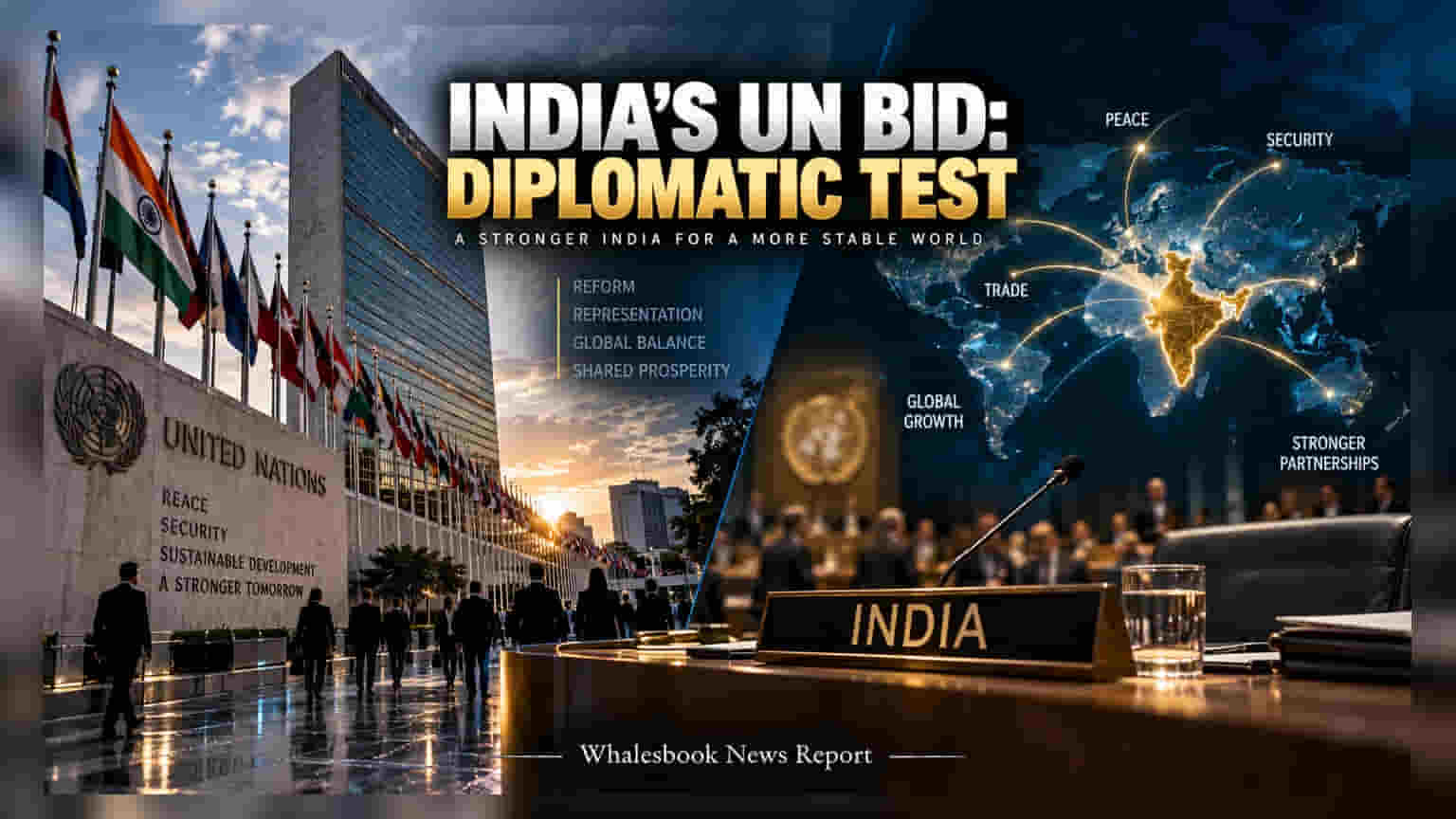
India and the G4 bloc are intensifying their push for structural reforms at the United Nations Security Council during the 81st UN General Assembly. For Indian markets, the move represents a potential shift toward greater global influence on trade and policy, though analysts note that the diplomatic requirements of a permanent seat could challenge the country's long-standing policy of strategic autonomy.
India, along with its partners in the G4 group—Brazil, Germany, and Japan—has again raised the demand for structural reforms at the United Nations Security Council (UNSC) during the 81st UN General Assembly in New York. The current permanent member structure, established in the aftermath of World War II, remains unchanged despite significant shifts in the global economic and political landscape. The coalition argues that this outdated framework limits the ability of the UN to address modern security and economic crises that affect global markets today.
The Economic and Investor Perspective
While the push for a permanent seat is largely a diplomatic effort, it carries important implications for the country’s global standing. For Indian investors, institutional influence on the world stage can lead to more favorable trade terms, a stronger voice in setting international economic rules, and potential improvements in the country's long-term risk profile. A permanent UNSC seat would signal to the world that India is a key decision-maker in matters of global stability, which can be a supporting factor for attracting long-term foreign direct investment and negotiating strategic trade alliances.
The Challenge of Strategic Autonomy
Market observers and geopolitical analysts are closely monitoring the requirements that come with a potential seat at the 'high table.' India has historically followed a policy of strategic autonomy, which allows the country to maintain independent diplomatic and trade relationships with various nations, even when those nations are in conflict with one another. This stance has provided a level of stability for India’s energy imports, technology partnerships, and defense logistics.
However, gaining a permanent seat on the Security Council may require the nation to move away from this neutral position and take more decisive, and potentially divisive, stances on international conflicts. If the country faces pressure to align more closely with specific global blocs, it could introduce new uncertainties for trade and supply chains that investors currently rely on. The potential trade-off between institutional status and diplomatic flexibility is a key detail that will shape the international perception of the country in the coming years.
What Investors May Watch Next
Investors will likely track how these negotiations progress as the UN session continues. The key to watch is whether the discourse leads to any tangible shift in India's diplomatic communication or if the status quo of strategic autonomy remains the priority. Any significant change in foreign policy that impacts critical trade relations or energy security will be an important factor for market participants to consider in the long run.