

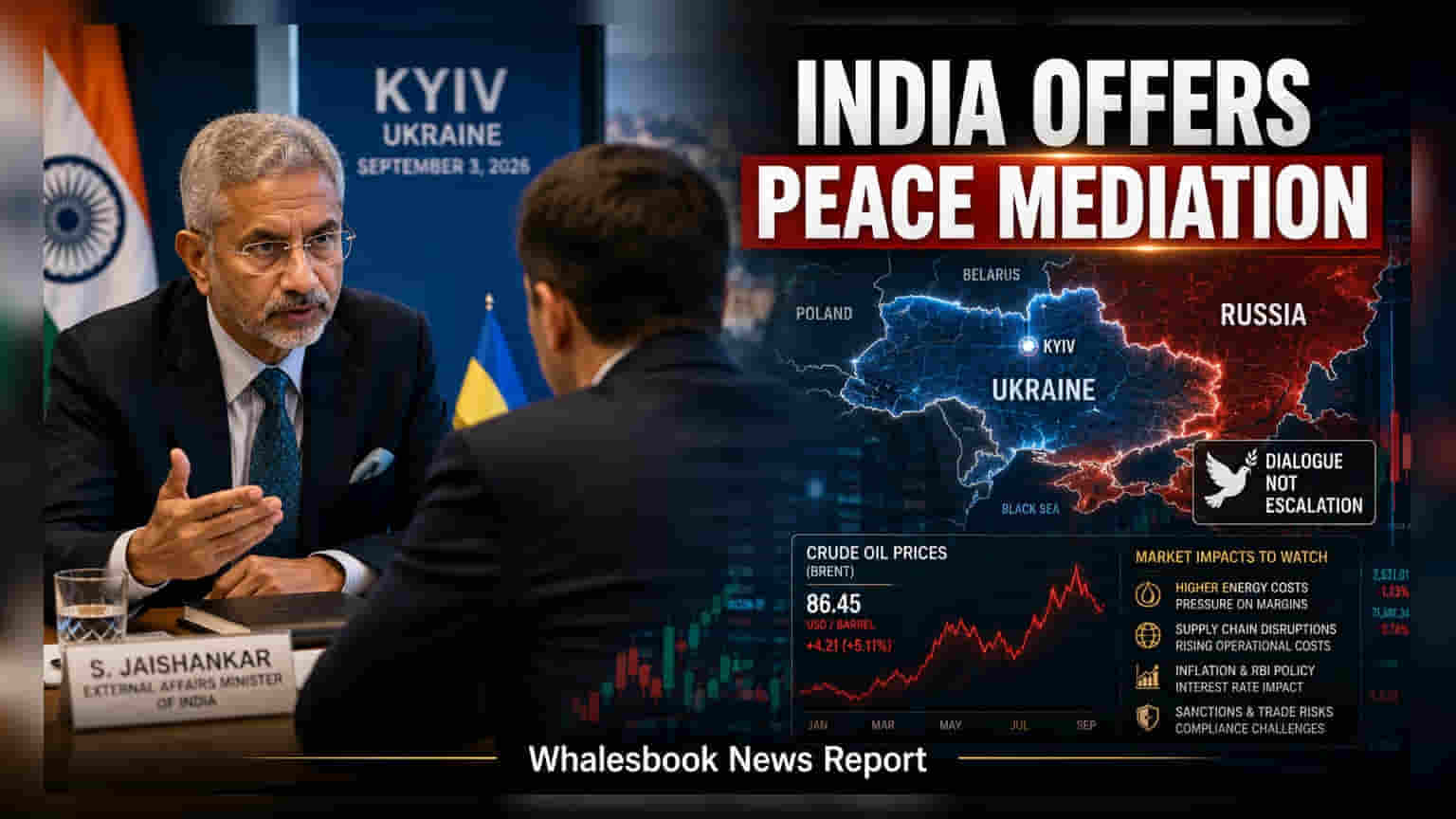
External Affairs Minister S. Jaishankar has signaled India's readiness to facilitate dialogue in the Russia-Ukraine conflict. For Indian investors, the news highlights the ongoing sensitivity of the domestic market to global geopolitical tensions, which can influence crude oil prices, supply chain stability, and corporate profit margins.
External Affairs Minister S. Jaishankar’s recent diplomatic visit to Kyiv has signaled a notable development in India’s effort to assist in finding a resolution to the Russia-Ukraine conflict. Prime Minister Narendra Modi has further reaffirmed India’s commitment to diplomacy, emphasizing that the path forward lies in dialogue rather than military escalation. While the diplomatic outreach is a significant geopolitical event, it serves as a reminder for Indian investors to focus on the broader macro-economic variables that often accompany such international instability.
Impact on Market Fundamentals
Geopolitical events of this scale frequently create ripples in global financial markets, impacting India’s economic environment in specific ways. The primary concern for investors often centers on energy prices. As India remains a significant importer of crude oil, any intensification of aerial or maritime hostilities can disrupt supply chains and potentially push global oil prices higher. For corporate India, this creates a cost-side risk. Companies with high exposure to energy, transport, and logistics may see their profit margins come under pressure if crude prices spike, as these firms often face difficulties passing on the full cost increase to consumers during periods of weak demand.
Supply Chain and Inflationary Risks
Beyond energy costs, persistent geopolitical tension can complicate global supply chains. Indian companies with significant export linkages or those that rely on international raw materials may experience increased operational costs and logistical delays. Inflationary pressure remains a critical monitorable for the market. If global conflict leads to sustained higher commodity prices, it could complicate the domestic inflation trajectory, influencing monetary policy decisions by the Reserve Bank of India and potentially impacting interest rate expectations.
While Indian equities have demonstrated resilience to global volatility in recent years, market sentiment remains sensitive to developments in Ukraine and West Asia. Investors should recognize that sudden shifts in the conflict often trigger short-term market adjustments. Furthermore, complex sanction regimes and global trade restrictions can create a challenging compliance environment for Indian businesses with international operations, which may temporarily affect investor confidence and sentiment toward these sectors.
What Investors Should Monitor
There is no direct impact on specific listed companies from this diplomatic development, as it is a macro-economic event. However, investors may keep track of three key areas to gauge the impact on their portfolios. First, monitor global crude oil benchmarks, as these are the most direct channel for geopolitical risk to hit the Indian economy. Second, watch upcoming monthly inflation data (CPI/WPI) and central bank commentary, which will reflect how much external price pressure is building up domestically. Finally, pay attention to quarterly management commentary from export-oriented companies and those in energy-intensive sectors, as these firms are typically the first to address how global supply chain disruptions affect their business performance.