

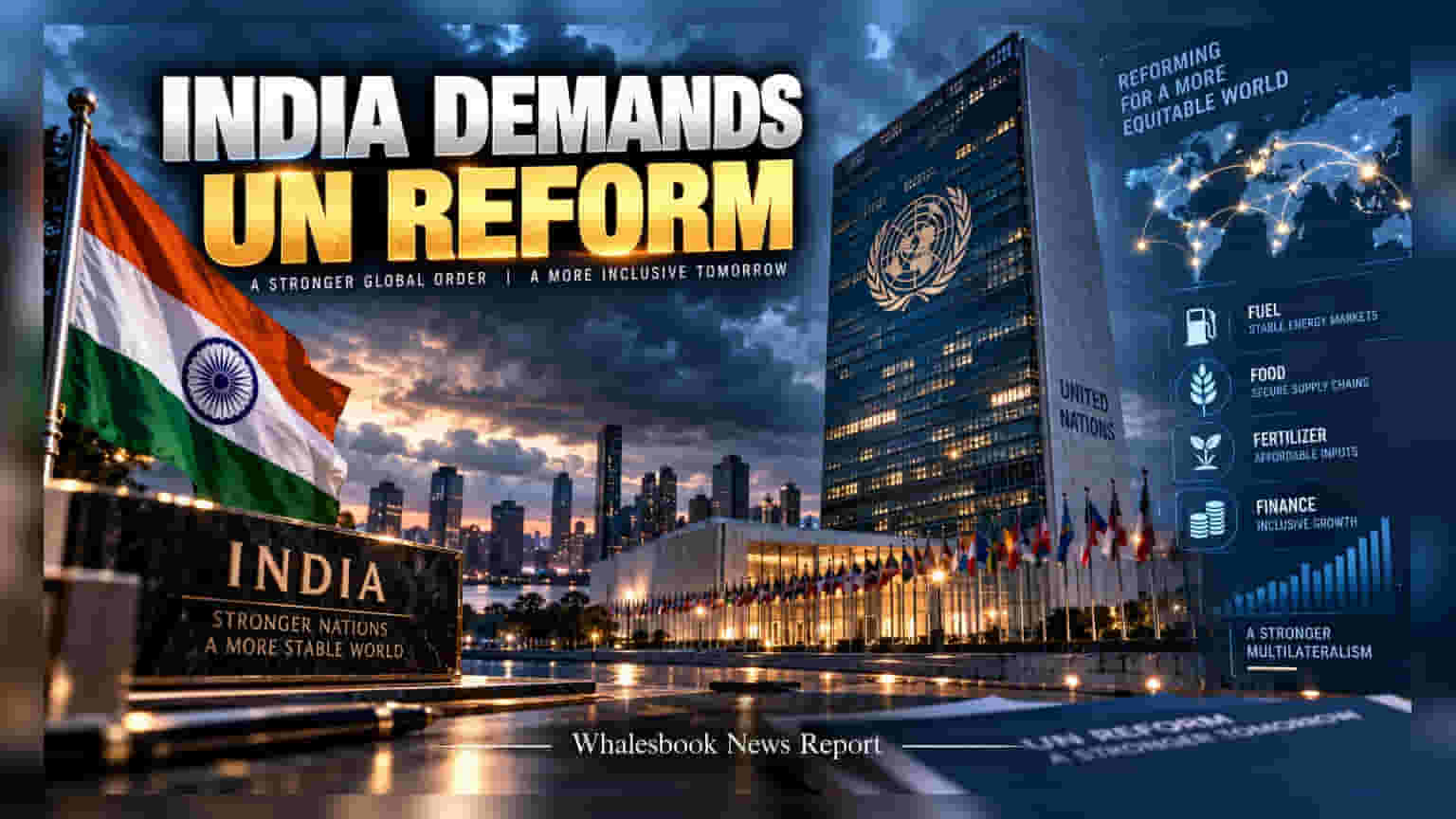
India has co-sponsored a UN summit seeking urgent reforms to address the '4F' crisis—fuel, food, fertilizer, and finance. For investors, the push for more resilient global supply chains and a rules-based order directly impacts long-term macroeconomic stability and international trade costs.
India has taken a lead role in the newly formed 'Partners for Multilateralism' summit at the United Nations, calling for significant institutional reforms. The initiative, co-sponsored by nations including Australia, Kenya, and Brazil, aims to address systemic issues in the UN Security Council that the government argues have left global bodies ineffective against rising geopolitical volatility.
The Economic Impact of the '4F' Crisis
External Affairs Minister S. Jaishankar highlighted the '4F' crisis—fuel, food, fertilizer, and finance—as the primary economic concern for developing nations. From an investor perspective, this is a critical monitorable. Vulnerabilities in these four areas are direct contributors to global inflation, supply chain bottlenecks, and currency volatility. When the costs of fuel and fertilizer rise, it pressures the profit margins of manufacturing and agricultural sectors within India. Similarly, volatility in food and finance impacts domestic consumption and interest rate policies, both of which are central to equity market sentiment.
Supply Chain Diversification and Stability
The summit emphasized a shift toward more transparent and diversified supply chains. India’s push for a rules-based order is strategically aligned with its domestic goal of becoming a global manufacturing hub. For investors, the reliance on single-point supply chains for critical raw materials has historically created significant business risk, often leading to production delays and cost overruns. By advocating for a system that prevents 'chokepoint dominance,' India is attempting to secure a trade environment where Indian firms can operate with more predictability regarding import costs and logistics.
Why Investors Watch Geopolitical Shifts
While this initiative is primarily diplomatic, its economic implications are long-term. Geopolitical alignments influence trade agreements, cross-border investment flows, and the stability of the global financial system. The current push for 'reformed multilateralism' represents an effort to ensure that emerging economies gain a stronger voice in how international law is enforced, which could lead to more favorable trade terms and reduced risks from international sanctions or trade wars.
For investors, the primary monitorables remain the effectiveness of these multilateral efforts in stabilizing the global economy. Future indicators of success will include tangible improvements in supply chain security, a reduction in the volatility of critical commodity prices like fuel and fertilizer, and a more stable environment for cross-border finance. Continued focus on these macro factors will be essential for assessing long-term risks to industrial growth and domestic inflation.