

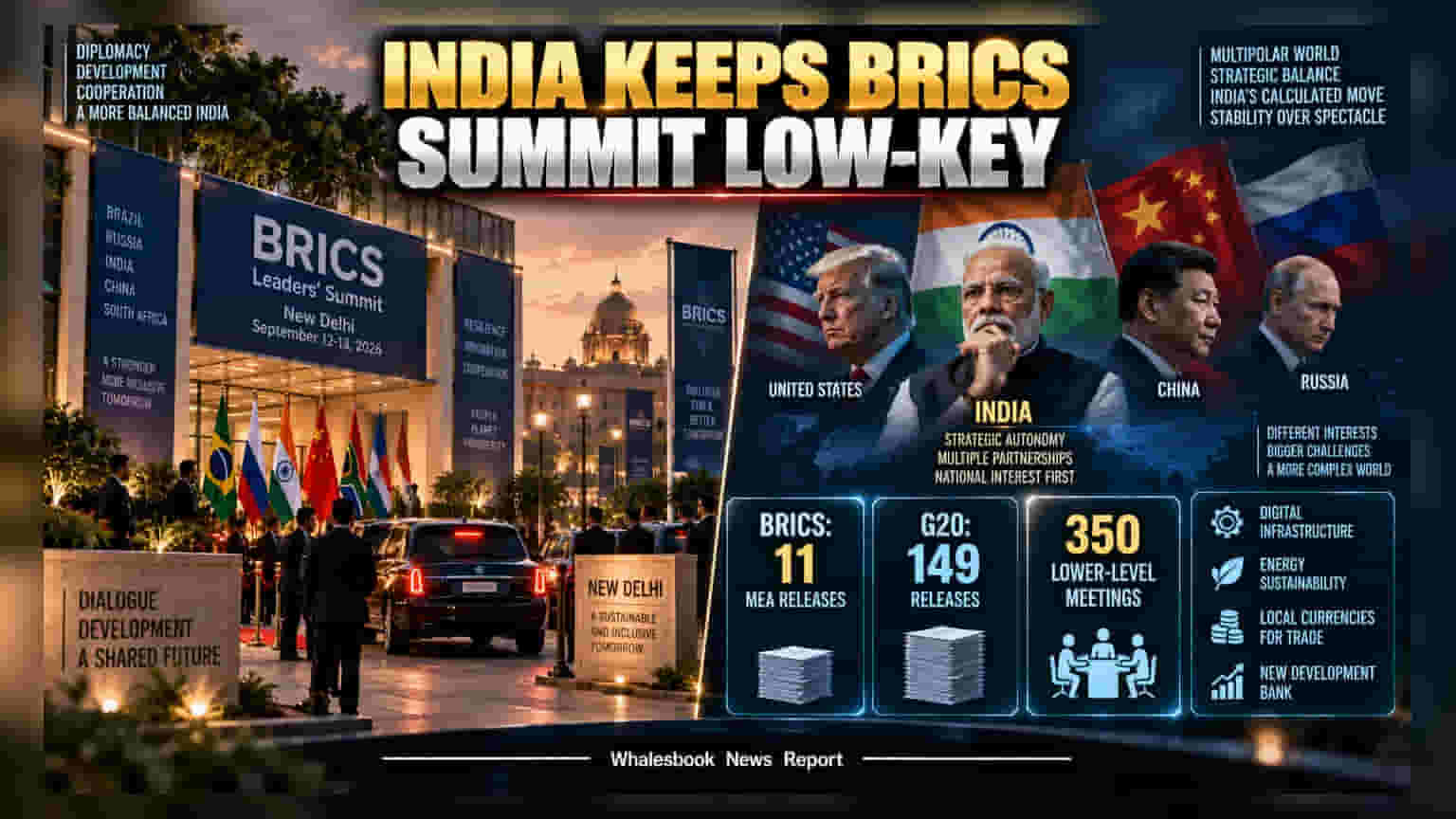
India is hosting the 18th BRICS Leaders’ Summit in New Delhi on September 12-13, 2026, with a restrained approach compared to its 2023 G20 presidency. While the event is diplomatic in nature, it has triggered a sharp rise in hotel rates across the National Capital Region. Investors are monitoring policy outcomes regarding digital infrastructure and trade, while balancing geopolitical complexities with the US and China.
India is set to host the 18th BRICS Leaders’ Summit in New Delhi on September 12-13, 2026. Under the leadership of Prime Minister Narendra Modi, the event focuses on themes of resilience, innovation, and cooperation. However, the scale of the gathering is notably more restrained than the high-profile G20 presidency India held in 2023. This quiet approach is a calculated diplomatic strategy, as New Delhi attempts to balance its ties with Western nations, particularly the United States, alongside its position in the expanded 11-member BRICS bloc.
Impact on Local Hospitality
While the summit is not expected to be a major mover for broader stock market indices, it has created immediate demand for hospitality services in the National Capital Region. Reports indicate that hotel room rates in Delhi and surrounding areas have surged significantly due to limited availability and the influx of delegates, officials, and security personnel. For investors in the hospitality and tourism sector, such high-profile events often provide a temporary boost to revenue and occupancy levels in the host city, though the effect is usually short-term.
Strategic Policy Agenda
Beyond the diplomatic optics, the summit agenda is filled with practical discussions. Since assuming the rotating chairship on January 1, 2026, India has led over 350 meetings across various levels. The primary focus for this summit includes the development of digital infrastructure, cooperation on energy sustainability, and the increased use of local currencies for trade. Another key monitorable is the activity of the New Development Bank, which remains a central pillar of BRICS economic cooperation.
Balancing Geopolitical Risks
For the Indian economy, the summit presents a complex geopolitical challenge. The bloc has expanded to 11 members, including China, Russia, Saudi Arabia, and the UAE, which increases the difficulty of reaching a consensus on sensitive global issues. India is carefully navigating this to avoid being seen as aligning with positions that could damage its vital trade relationship with the United States, which remains India’s largest export market.
Future Monitorables
Investors and market participants should look beyond the summit’s spectacle. The real value for the Indian economy will emerge from any concrete agreements on technology transfer, digital payments, and trade policy. However, participants must also be aware of potential risks, including the possibility of trade friction with China or supply chain disruptions for critical technologies. The most important updates to follow will be the final joint declaration and any specific announcements regarding trade agreements or financial cooperation mechanisms that could influence India’s long-term export and import strategy.