

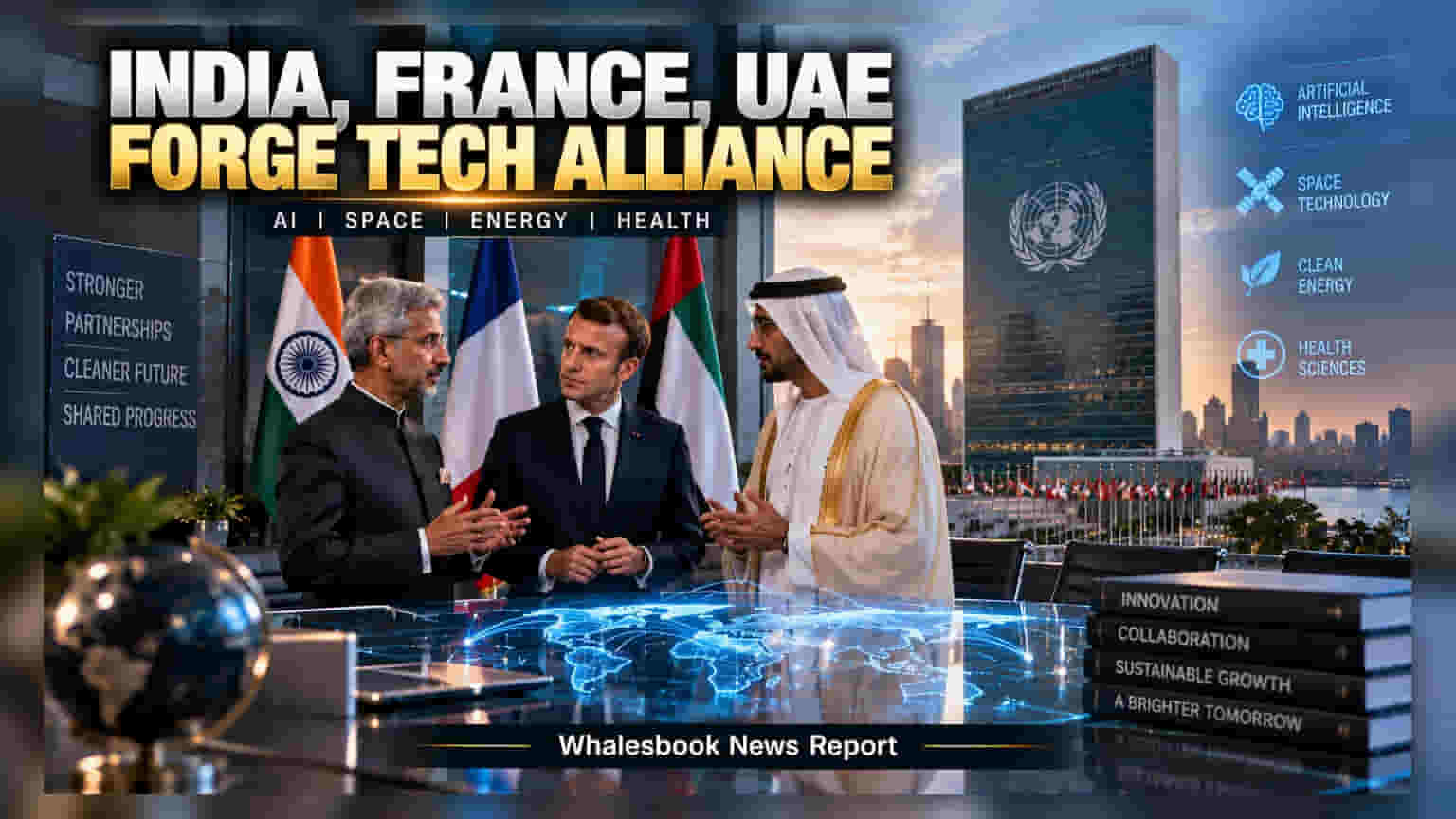
External Affairs Minister S Jaishankar and his counterparts from France and the UAE met at the 81st UN General Assembly to deepen cooperation in AI, space, and energy. While the move aims to build long-term strategic projects, investors should view this as a macro signal for these industries, with actual corporate gains depending on future project execution and government contracts.
The trilateral meeting between India, France, and the United Arab Emirates at the 81st United Nations General Assembly in New York marks a concerted push to move from diplomatic dialogue to tangible industrial and research projects. External Affairs Minister S Jaishankar, along with French and Emirati leadership, prioritized the operationalization of their shared framework, specifically targeting artificial intelligence, space technology, energy, and health sciences. For market participants, this high-level coordination is significant because it often sets the groundwork for cross-border partnerships that can benefit companies operating in these specialized sectors.
Strategic Sectors Under Focus
The alignment of these three nations creates a potential corridor for technology and capital exchange. Space technology and artificial intelligence are currently high-priority areas for the Indian government, which has been pushing for higher private sector participation. Cooperation with global leaders in these fields—France with its advanced aerospace and defense capabilities and the UAE with its focus on modernizing energy and infrastructure—could eventually lead to joint ventures or knowledge-sharing agreements. While no specific corporate contracts were announced, the government's stated intent to convert these interests into actionable industrial projects suggests a focus on accelerating development cycles for local and international firms.
Investor Context and Monitorables
It is important for investors to understand that diplomatic agreements of this nature operate on a long-term horizon. While the news signals strong policy intent, the financial impact for listed companies will depend on several variables, including the clarity of project funding, regulatory ease, and the final selection of technology partners. Investors in space, defense, AI, and renewable energy should track upcoming developments closely rather than expecting immediate revenue impacts.
Execution remains the primary risk for such large-scale trilateral initiatives. Past diplomatic promises have sometimes faced delays due to complex bureaucratic hurdles or changes in regional priorities. Additionally, while the focus on West Asia provides a strategic advantage, ongoing regional instability is a constant factor that could influence project timelines. The key monitorable for the next few quarters will be the progress of the regular review meetings mentioned by the Ministry of External Affairs. These updates will likely provide more concrete details regarding specific proposals, partner selection, and project commissioning timelines, which will be the real drivers of value for involved industries.