

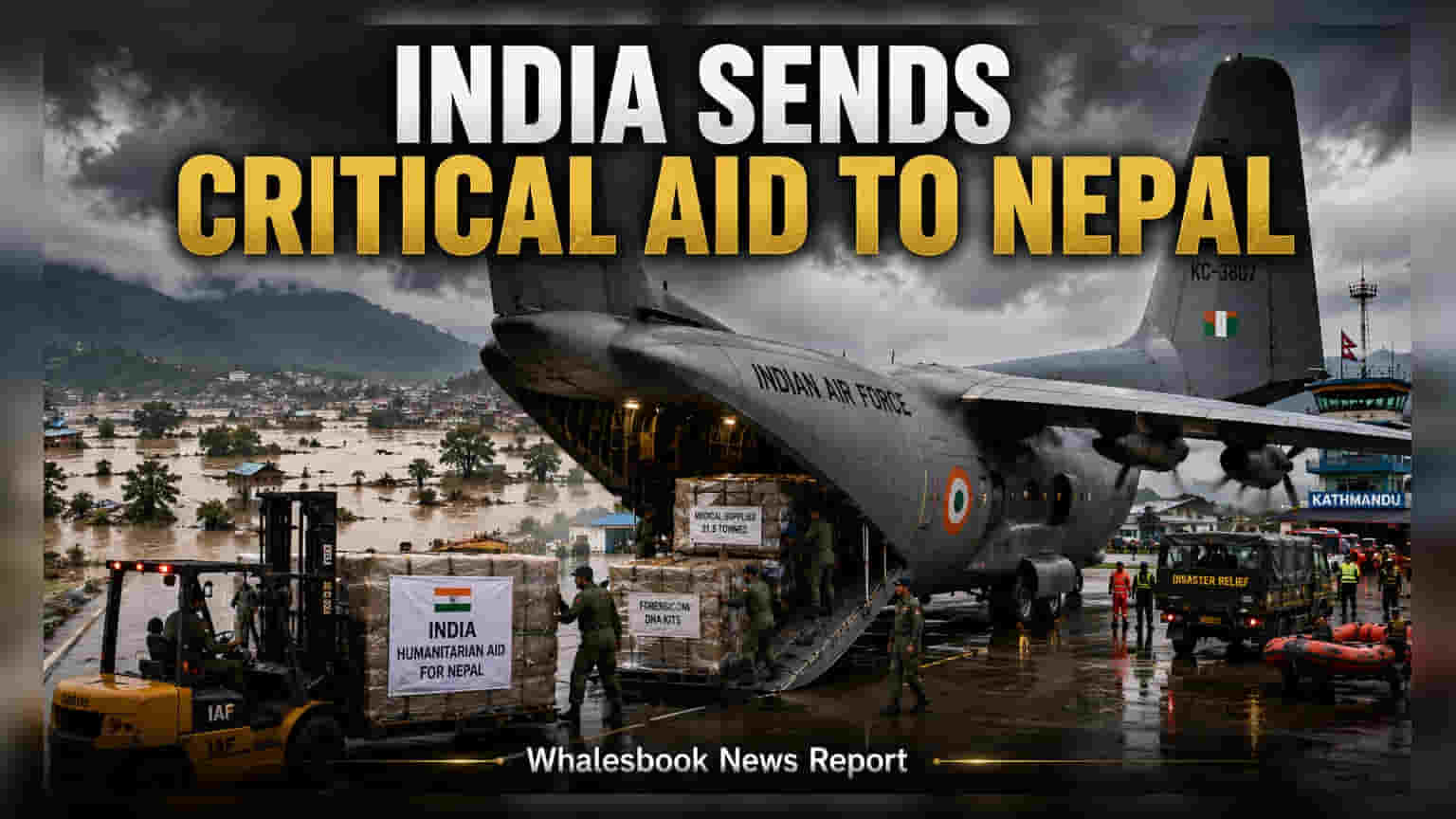
India has deployed additional flights delivering 21.5 tonnes of specialized medical and forensic equipment to Nepal as the death toll from recent flash floods reaches 1,259. With over 5,000 people still missing, the regional economic impact is severe, with initial estimates suggesting reconstruction costs could reach $4 billion to $5 billion.
The Indian government has accelerated its humanitarian response to the catastrophic flash floods in Nepal, completing its sixth and seventh relief flights this week. These specialized consignments, totaling 21.5 tonnes, include critical medical equipment, forensic DNA analysis kits, and rescue gear designed to assist local authorities in recovery efforts across the hardest-hit regions. The ongoing operation follows a rapid-response strategy to address the aftermath of floods that began in late August.
Economic Scale of the Disaster
Beyond the immediate humanitarian crisis, the disaster has created a significant economic challenge for the region. Official data from the National Disaster Risk Reduction and Management Authority confirms 1,259 fatalities, with more than 5,000 individuals still listed as missing. Preliminary assessments by officials indicate that the reconstruction of damaged infrastructure could cost between $4 billion and $5 billion. This projected financial burden is substantial, as Nepal works to repair vital transportation networks, communication lines, and energy infrastructure destroyed by the rising waters.
Infrastructure and Regional Impact
One of the most concerning aspects of the recovery is the impact on the energy sector. Several hydropower projects in Nepal have sustained damage, with reports of workers being trapped and tunnel systems compromised by debris. Because Nepal’s hydropower sector is a key component of its economy and central to its cross-border energy trade, the damage to these facilities presents a complex recovery timeline. The current focus remains on search and rescue operations, but the structural damage to these energy assets will likely require significant capital and time to restore to full operational capacity.
Next Steps for Recovery
The logistics chain established by India is intended to support the Nepalese government as it manages the immediate aftermath and begins the long-term process of rebuilding. As the situation stabilizes, the primary monitorables for observers and regional stakeholders will be the pace of infrastructure restoration and the ability of local authorities to manage the economic impact of such a large-scale reconstruction effort. International agencies and regional partners are expected to remain involved as the country assesses the full extent of the damage to its national infrastructure.