

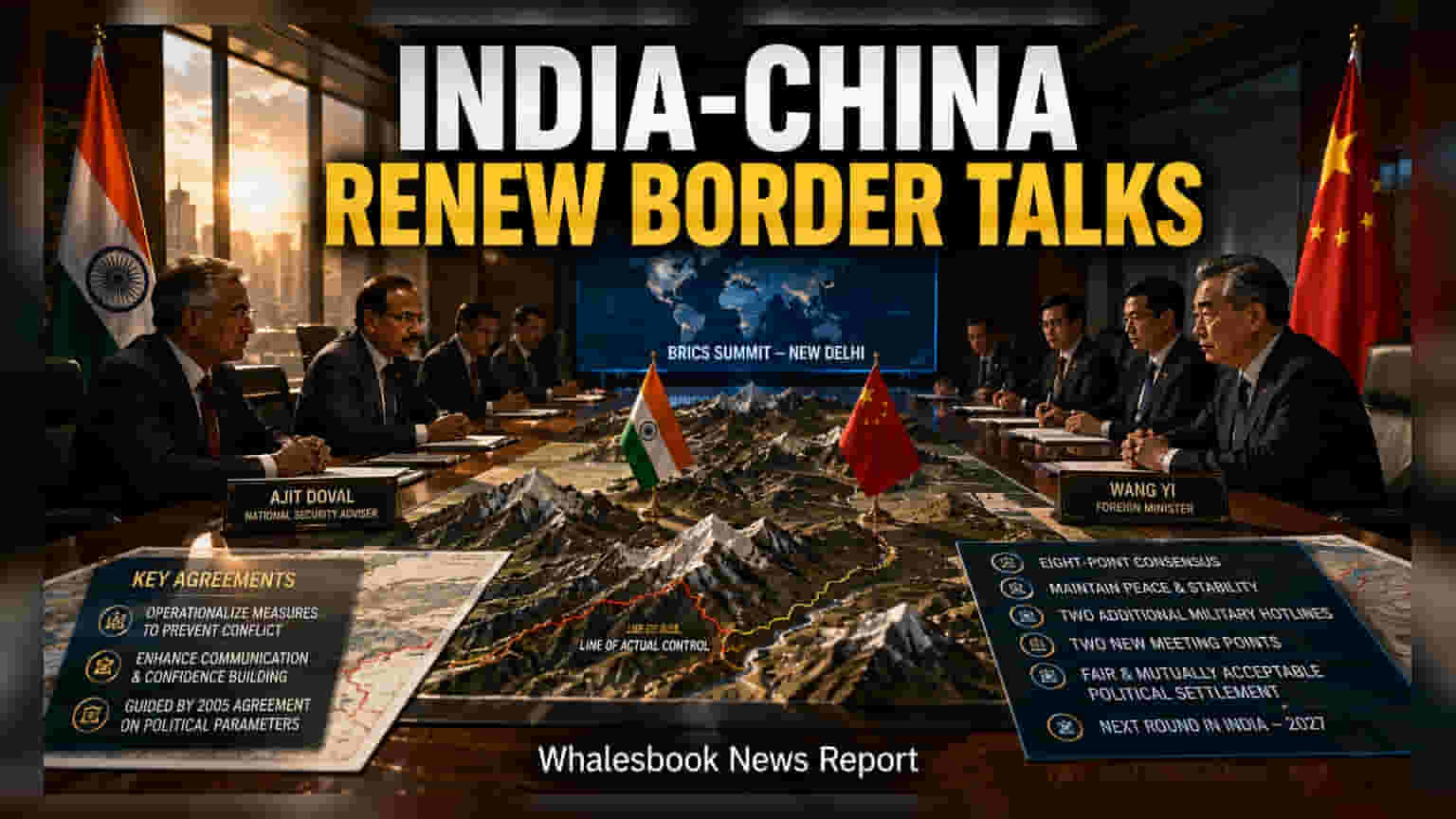
India and China concluded the 25th round of boundary talks with an eight-point consensus aimed at stabilizing the Line of Actual Control. Led by NSA Ajit Doval and Foreign Minister Wang Yi, the agreement focuses on military coordination and peace-keeping measures ahead of the upcoming BRICS Summit. For investors, this diplomatic step is significant as it may influence regional stability, which remains a key factor for cross-border trade sentiment.
India and China have completed the 25th round of Special Representatives' talks on the boundary question, reaching an eight-point consensus to maintain peace and stability along the Line of Actual Control. The discussions, held in Beijing, were led by India's National Security Adviser Ajit Doval and Chinese Foreign Minister Wang Yi. This diplomatic engagement comes as a crucial development ahead of the upcoming BRICS Summit in New Delhi, signaling a structured approach to managing bilateral tensions.
The core of the agreement is a commitment to a fair and mutually acceptable political settlement, guided by the 2005 Agreement on Political Parameters. Both sides have agreed to operationalize specific measures to prevent conflict and manage the border more effectively. This includes the establishment of two additional military hotlines to ensure immediate communication during potential flare-ups, as well as the creation of two new meeting points for senior military commanders. These actions are designed to reduce the risk of localized skirmishes escalating into wider disputes.
From an investor and economic perspective, this diplomatic progress is closely monitored as it affects the broader environment for cross-border cooperation. Over the past few years, border friction has been a primary reason for increased scrutiny on investments, stricter visa norms, and supply chain adjustments. While this agreement is a positive signal for regional stability, it is important to understand that the border dispute involves complex, long-standing issues that remain unresolved. The market impact of such diplomatic moves is usually indirect, as investors watch for signs of a more predictable environment for trade and policy-making.
The diplomatic framework established here is part of a broader strategy to ensure that economic and trade dialogues can proceed with fewer disruptions. With the high-level BRICS summit approaching, both nations appear focused on creating a stable environment for international diplomatic and economic agendas. However, challenges persist, including high military deployments along the border and broader geopolitical competitions in the region.
The key monitorables for the coming months will be the implementation of the agreed-upon military hotlines and meeting points on the ground. Investors and analysts will also watch for any subsequent shifts in policy regarding trade, investment screening, or travel, as these factors typically follow improvements in diplomatic engagement. The next round of talks is scheduled to be held in India in 2027, marking a long-term commitment to this consultative process.