

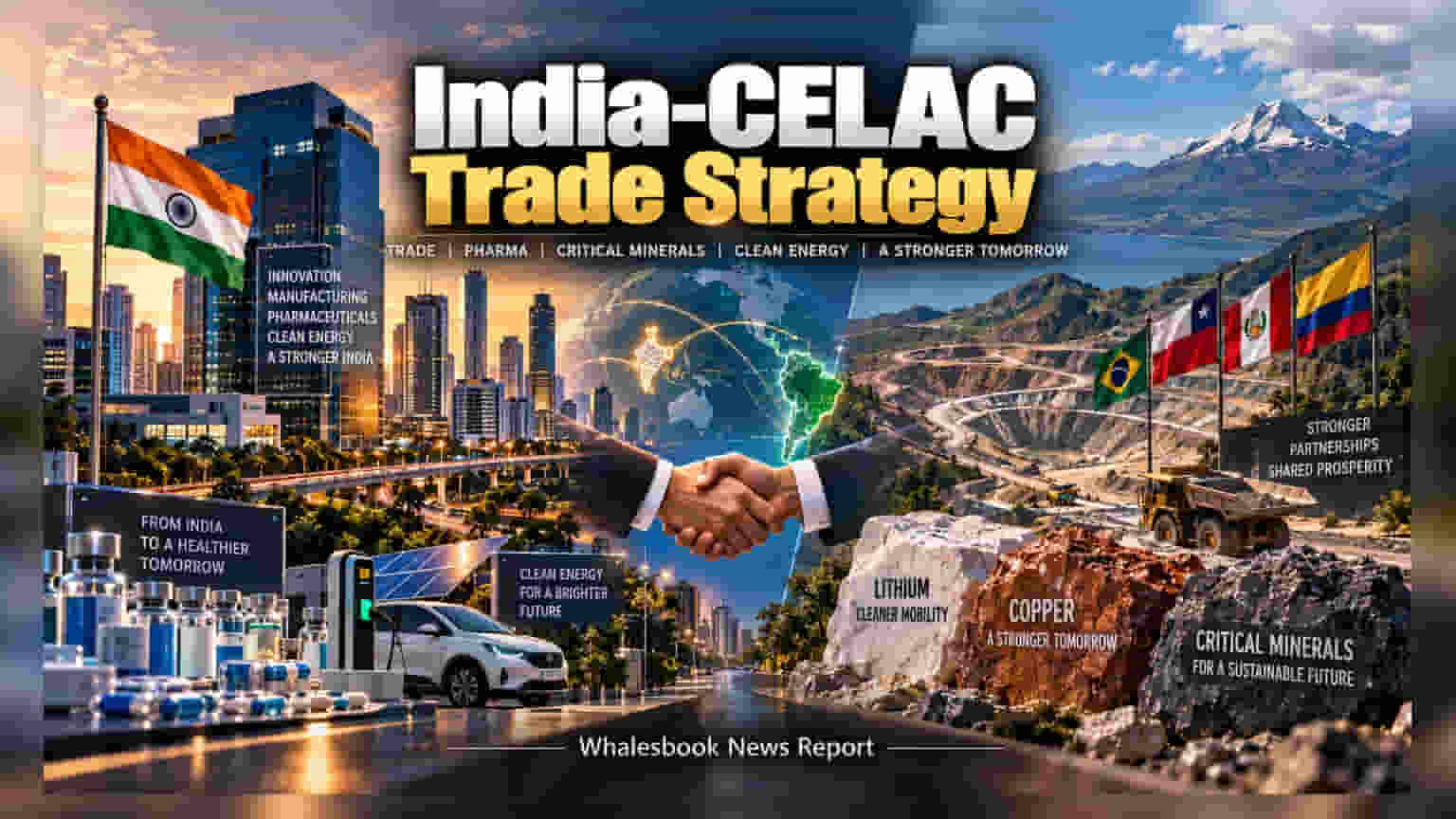
India is aiming to expand trade with the Latin American and Caribbean bloc (CELAC) beyond $50 billion. The strategy focuses on securing critical minerals for the EV sector and boosting pharmaceutical exports, presenting new avenues for Indian companies operating in these markets.
India is aggressively pursuing a more formal economic framework with the Community of Latin American and Caribbean States (CELAC) to deepen trade ties. Currently, annual trade between the two regions stands at over $50 billion. By pursuing new trade agreements with nations like Chile and Peru, and expanding the existing pact with the MERCOSUR trading bloc, New Delhi aims to simplify market access for Indian businesses and secure essential raw materials.
For investors, the most significant potential impact lies in the pharmaceutical and green energy sectors. Latin America has historically been a key destination for Indian generic drug manufacturers. A more formalized trade agreement could reduce tariff barriers and regulatory hurdles, potentially improving profit margins for Indian pharma companies that are already well-entrenched in the region.
Another critical angle is the supply of raw materials needed for India’s growing electric vehicle (EV) industry. South American countries, particularly Chile, are among the world's largest producers of lithium and copper, both of which are vital for battery manufacturing. Companies like KABIL (Khanij Bidesh India Ltd) have been exploring lithium assets in the region. Securing long-term access to these minerals through government-level pacts could provide a strategic advantage to Indian EV battery and automobile manufacturers by reducing dependence on imports from traditional, higher-risk supply chains.
However, expanding business ties in Latin America comes with inherent risks that investors should monitor. The region is known for currency volatility and frequent political shifts, which can create uncertainty for long-term investments. Additionally, Indian companies face stiff competition from Chinese firms, which have invested heavily in the region’s infrastructure and mineral assets over the past decade. Logistics and shipping costs also remain high due to the geographical distance between India and the Caribbean, which can impact the cost-competitiveness of Indian exports.
Moving forward, the primary monitorable for the market will be the progress on the proposed Comprehensive Economic Partnership Agreement with Chile and the Free Trade Agreement with Peru. Investors may track the specific terms of these deals, as they will dictate the extent to which Indian firms can effectively scale operations and secure supply chains in the region.