 Whalesbook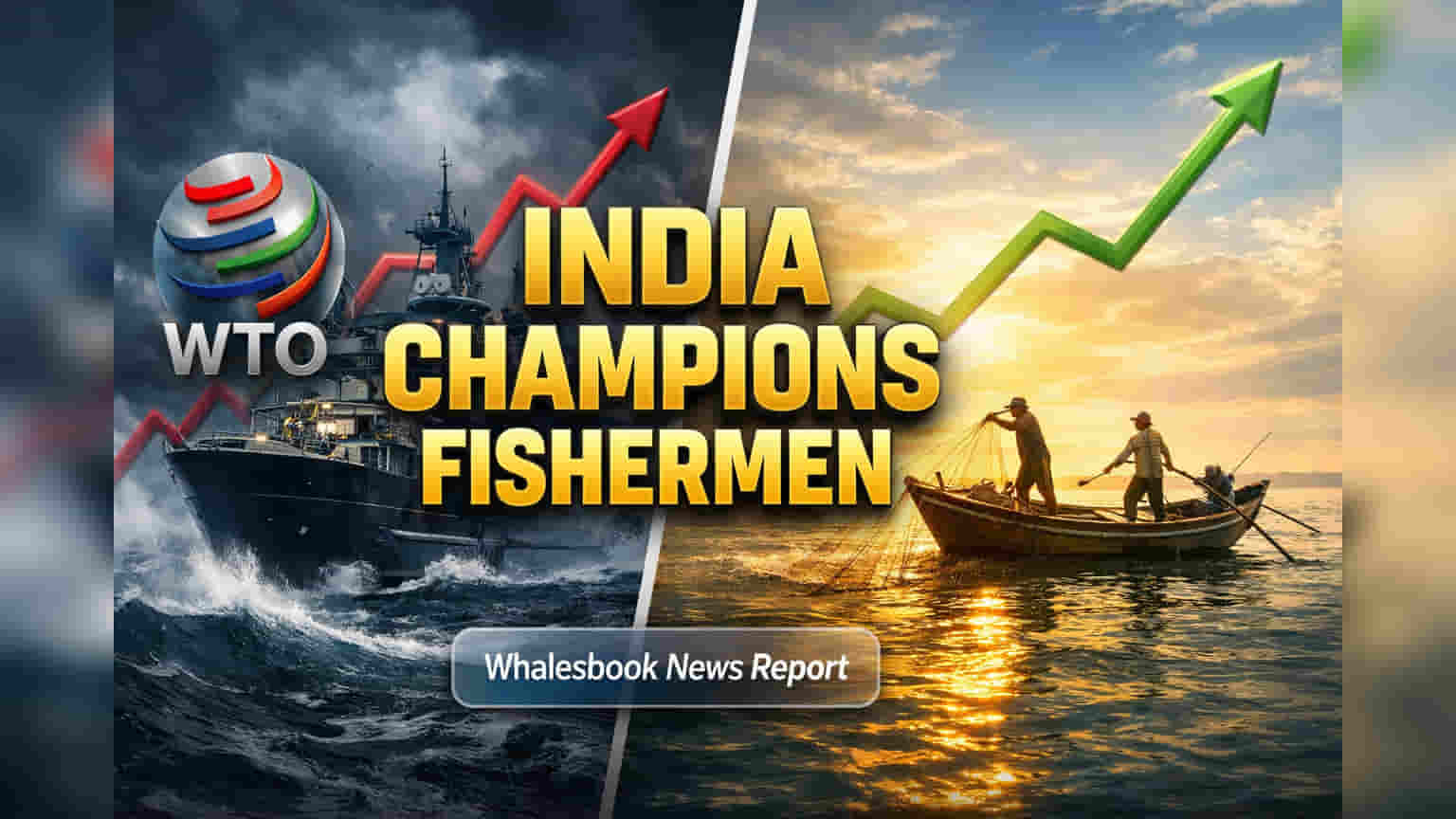
India's Push for Fairer Rules
India has officially backed a draft ministerial decision at the World Trade Organization (WTO) aimed at curbing overfishing through fisheries subsidies. Commerce and Industry Minister Piyush Goyal highlighted the crucial role of this sector in supporting about nine million Indian livelihoods, mostly from small-scale, artisanal fishing. He emphasized that overfishing is primarily driven by large, heavily subsidized industrial fleets from developed nations, not by small fishermen in developing countries. India seeks international regulations that are fair, support development, and protect both marine life and the economic well-being of fishing communities, aligning with its broader goals for balanced global trade. The draft decision calls for continued talks to establish rules against subsidies that boost overcapacity and overfishing, while protecting developing economies, with recommendations due for the Fifteenth WTO Ministerial Conference.
Global Subsidies & India's Position
India's position is built on years of advocating for developing countries in global trade. Major fishing nations like the United States, the European Union, and China offer vast subsidies, sometimes tens of thousands of dollars per fishing family yearly. In contrast, India's support is around $15 per family. This difference highlights India's point that large industrial fleets, which deplete marine resources, receive the most benefit. India's own fisheries sector uses modest fleets and aims for sustainable practices, unlike distant water fishing nations. Harmful subsidies from richer countries can directly harm poorer nations reliant on fish for food and income. While global fish stocks are increasingly threatened, with over a third facing unsustainable exploitation, the WTO Agreement on Fisheries Subsidies, which took effect in September 2025, aims to stop subsidies for illegal, unreported, and unregulated fishing, and for overfished stocks. However, countries like India, Indonesia, and Vietnam have not yet ratified this agreement.
Challenges and Criticisms of the Agreement
India's path to supporting the draft has seen past disagreements. The country previously blocked similar agreements in 2017 and did not support the 2022 accord, arguing it could unfairly impact developing countries and artisanal fishermen. Concerns remain that the agreement doesn't sufficiently protect small-scale fishers. Critics also question the current agreement's effectiveness, pointing to potential loopholes like the omission of certain fuel subsidies that are a large part of overall support. Transparency is another issue, as the pact relies on self-reporting and peer review without strong enforcement. It also focuses on subsidies for already overfished stocks instead of overfishing itself, potentially allowing practices to continue until stocks are severely depleted. Future talks, known as 'Fisheries II,' aim to tackle overcapacity and overfishing but depend on member cooperation and avoiding future deadlocks. The significant difference in subsidy levels between developed and developing nations continues to be a point of tension.
The Path Ahead
India's role in these WTO talks highlights the balance between global environmental goals and protecting livelihoods. While the current draft is a move toward agreement, fully implementing it and resolving remaining issues will be difficult. Future negotiations will focus on subsidies that lead to overcapacity and overfishing. For the agreement to succeed, all members, especially major fishing countries, must commit to strong implementation, greater transparency, and fair resource management. Upcoming Ministerial Conferences will be key to determining the future of global fisheries rules.