

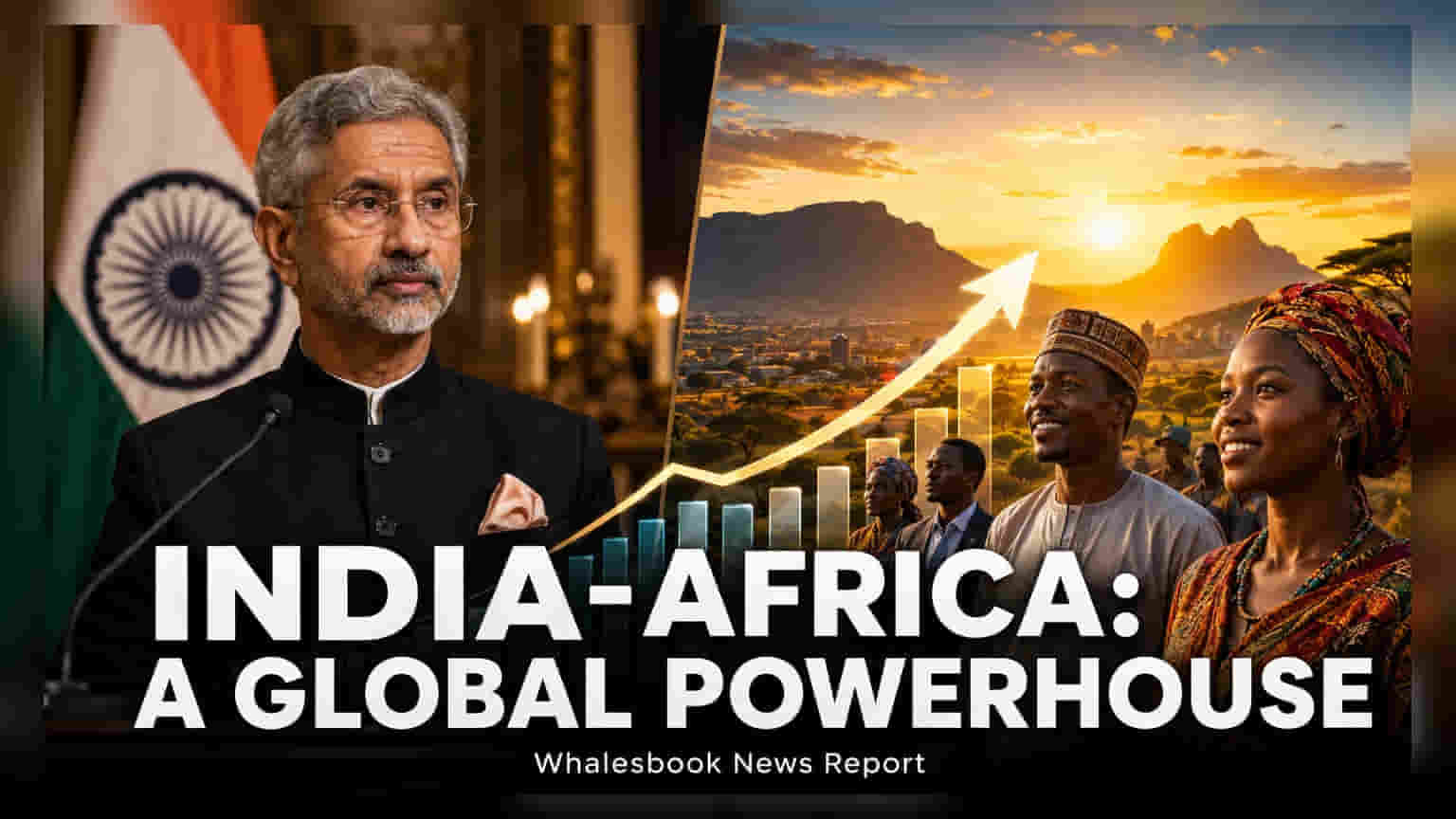
External Affairs Minister S. Jaishankar has highlighted the strong economic partnership between India and Africa, with bilateral trade reaching $93 billion. As India pushes for a reformed global order, the focus remains on digital infrastructure and investment. However, stakeholders are monitoring geopolitical volatility and health-related operational risks that have previously impacted high-level diplomatic summits.
External Affairs Minister S. Jaishankar addressed the India-Africa partnership during the Africa Day 2026 celebrations, emphasizing the continent's importance to India's global objectives. With bilateral trade reaching approximately $93 billion in the previous year, the relationship has evolved into significant economic cooperation across multiple sectors.
Economic Footprint and Investment
The economic ties between the two regions are built on substantial capital deployment. Indian businesses have established a deep footprint in the African market, with cumulative investments now exceeding $80 billion. This capital is primarily directed toward infrastructure, digital transformation, and capacity building. These efforts are aligned with Prime Minister Narendra Modi’s 2018 Kampala Principles, which prioritize open markets and developmental partnerships. For investors and businesses, the expansion of 17 new diplomatic missions, now reaching 46 African nations, signifies a clearer framework for reducing trade barriers and improving market access.
Geopolitical and Operational Challenges
While the partnership is expanding, it is not without complex challenges. The geopolitical landscape in Africa remains sensitive, and the success of long-term economic goals often depends on regional stability. A clear example of these operational risks is the postponement of the fourth India-Africa Forum Summit (IAFS-4), which was previously delayed due to the Ebola virus outbreak. Such events highlight how health crises and security concerns can disrupt diplomatic timelines and project execution.
Furthermore, global economic volatility presents a risk to trade and investment targets. Fluctuations in commodity prices and potential supply chain disruptions in emerging markets can affect the pace of growth for companies with high exposure to the region. The reform of multilateral institutions, such as the UN Security Council—a key goal for both India and its African partners—also faces long-standing diplomatic hurdles and requires consensus among global powers, which remains uncertain.
Future Monitorables
The next major phase of this engagement will be defined by the India-Africa Forum Summit. Investors and market watchers should monitor the schedules for this summit, as it will likely provide clarity on new infrastructure projects, digital cooperation agreements, and maritime security initiatives under the 'Vision MAHASAGAR' framework. Success in this partnership will depend on the ability of both regions to manage geopolitical pressures while maintaining the momentum of their $93 billion trade relationship.