

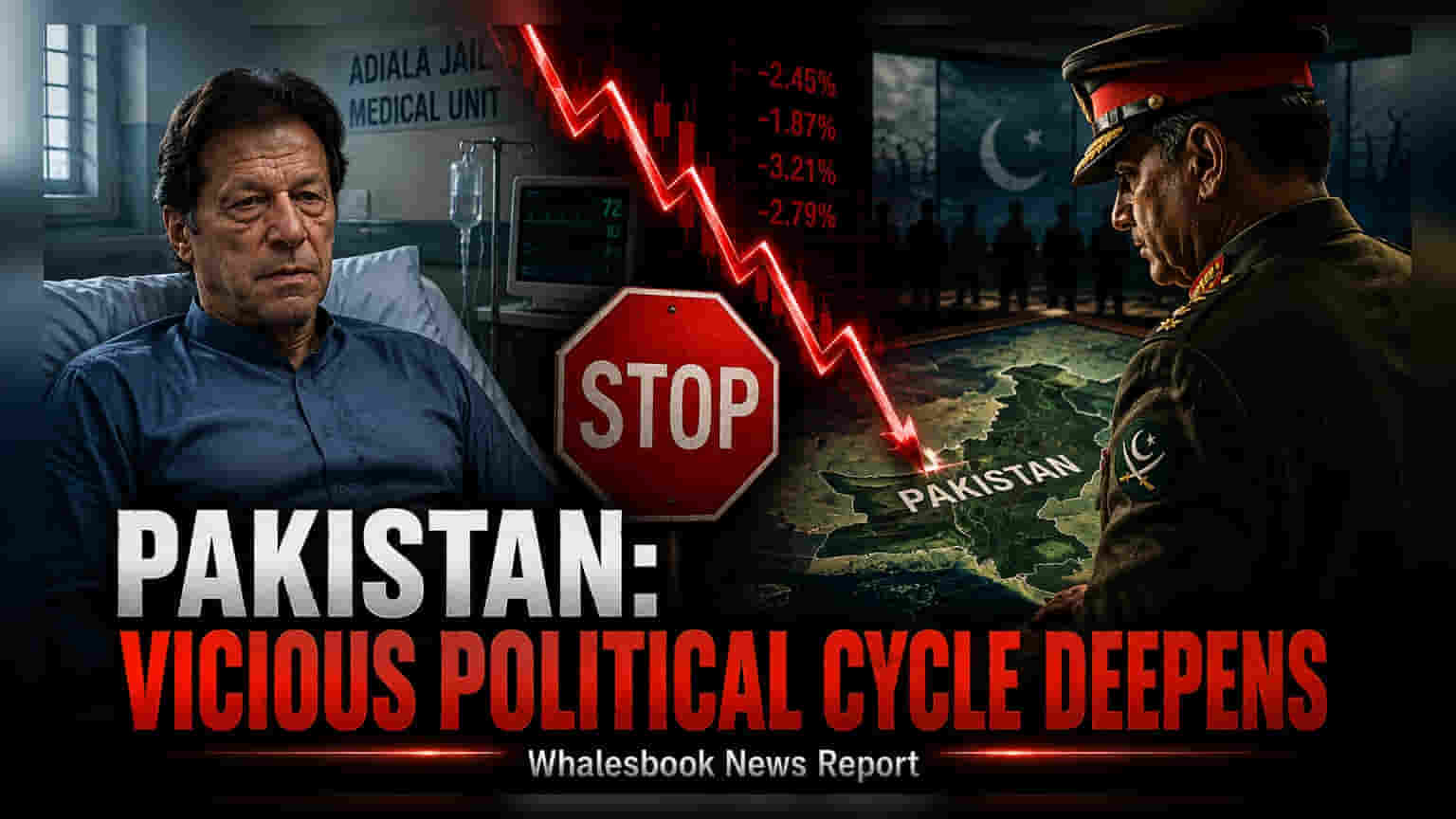
Former Pakistan Prime Minister Imran Khan was moved back to Adiala Jail shortly after a brief medical evaluation, following a Supreme Court order. This event has intensified domestic political debate, raising questions about institutional independence. While Indian equity markets remain insulated from these developments, the situation remains a critical factor for regional stability.
Former Pakistan Prime Minister Imran Khan has been returned to Adiala Jail following a brief transfer to a medical facility for health assessments. This development follows a Supreme Court order issued around August 18, 2026, which directed authorities to allow Khan to receive medical evaluation due to concerns regarding his health and vision. Despite expectations that he might receive care at a private hospital, he was taken to a government medical facility and returned to custody within hours after being declared medically fit by official doctors.
The event has triggered renewed political friction within Pakistan. Critics and supporters of Khan have voiced concerns about his treatment, the conditions of his confinement, and the perceived influence of the military establishment over judicial and executive processes. For observers, the situation is viewed as a continuation of a long-standing cycle where political figures in Pakistan face legal and physical challenges that often coincide with shifts in the nation's internal power dynamics.
From an investor perspective, these developments in Pakistan do not have a direct impact on Indian equity markets. There is no significant cross-holding or operational linkage between major Indian listed companies and the current political environment in Pakistan. As a result, domestic stock movements in India are generally driven by local corporate earnings, monetary policy, and global economic trends rather than political events in the neighboring nation.
However, the situation is monitored by regional analysts as a geopolitical risk factor. Continued political instability in Pakistan can influence regional security perceptions, though it has historically not translated into market-moving events for Indian indices like the Nifty or Sensex. Investors typically prioritize economic indicators and company-specific performance over regional political headlines, provided the local security environment remains stable.
Moving forward, the primary factor for those tracking the situation will be the potential for civil unrest. Ongoing protests or further legal developments involving Imran Khan could keep political tensions elevated in Pakistan. Market observers may watch for any unexpected developments that could impact broader regional stability, though for the Indian investor, the direct financial exposure to these events remains negligible.