

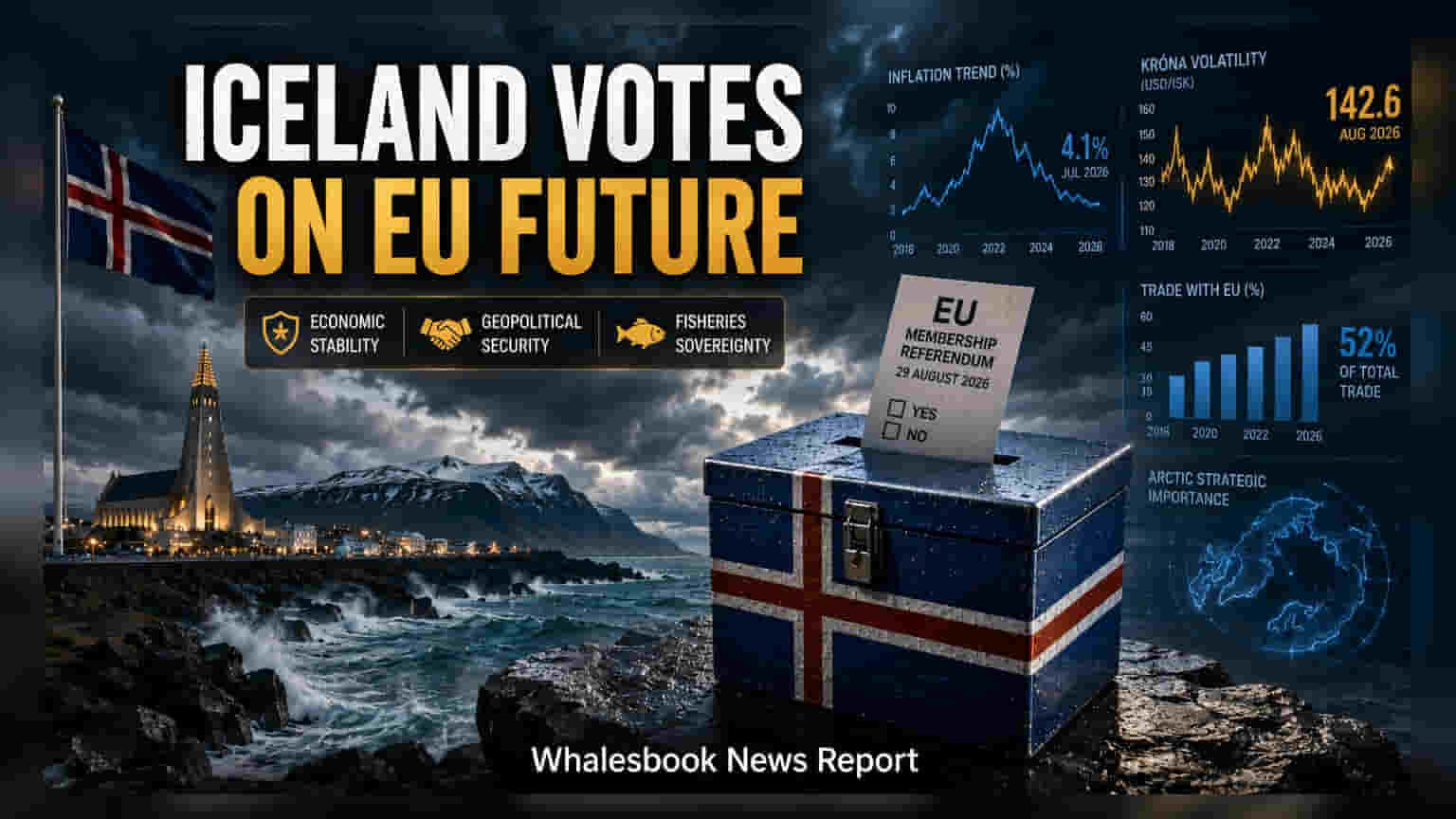
Icelanders are heading to polls today to decide on restarting European Union membership negotiations, a decade after talks were suspended. This referendum does not equate to immediate accession but highlights concerns over inflation and the Icelandic króna. For investors, the outcome signals potential shifts in Arctic geopolitical stability and trade policy.
Iceland is holding a national referendum on August 29, 2026, to determine whether the government should officially resume negotiations for European Union membership. This vote acts as a preliminary step, determining if the nation will return to the negotiating table after suspending talks in 2013. The decision carries significant weight for the nation's long-term economic and geopolitical orientation.
It is important to clarify that a 'yes' vote does not result in immediate accession. The current ballot authorizes the government to engage in formal discussions with Brussels. Any final treaty or membership agreement would be subject to a second, separate national referendum, ensuring a deliberate process for the electorate before any permanent changes are made.
Economic and Geopolitical Drivers
The push for this referendum is largely driven by domestic economic challenges, specifically persistent inflation and the inherent volatility of the Icelandic króna. By exploring EU integration, proponents aim to provide a more stable economic framework and potential currency alignment. Geopolitically, the debate is framed by increasing instability near the Arctic Circle. Shifting regional interests, including reported external focus on Greenland’s strategic positioning, have pushed the government to consider the security umbrella provided by EU membership.
Fisheries and Sovereignty Risks
The primary point of contention is the protection of Iceland’s fishing industry. Adopting the EU’s Common Fisheries Policy would require Iceland to open its exclusive economic zones to foreign fleets, a move that historically draws significant domestic opposition. Critics argue that the loss of control over these maritime resources outweighs the potential benefits of EU trade integration. The government has suggested it will seek a specific opt-out for these resources, though the success of such a negotiation remains unproven.
Market Implications
For global investors, the outcome provides insights into European regional stability. While Iceland’s economy is relatively small, changes in its trade status and currency policy could influence regional market sentiment. The decision will affect how global markets view Nordic stability and Arctic trade routes, especially as geopolitical interests in the region continue to evolve. Investors will be monitoring the final vote count to see if the government receives a clear mandate to begin potential talks, which would kickstart a lengthy and complex negotiation process.