

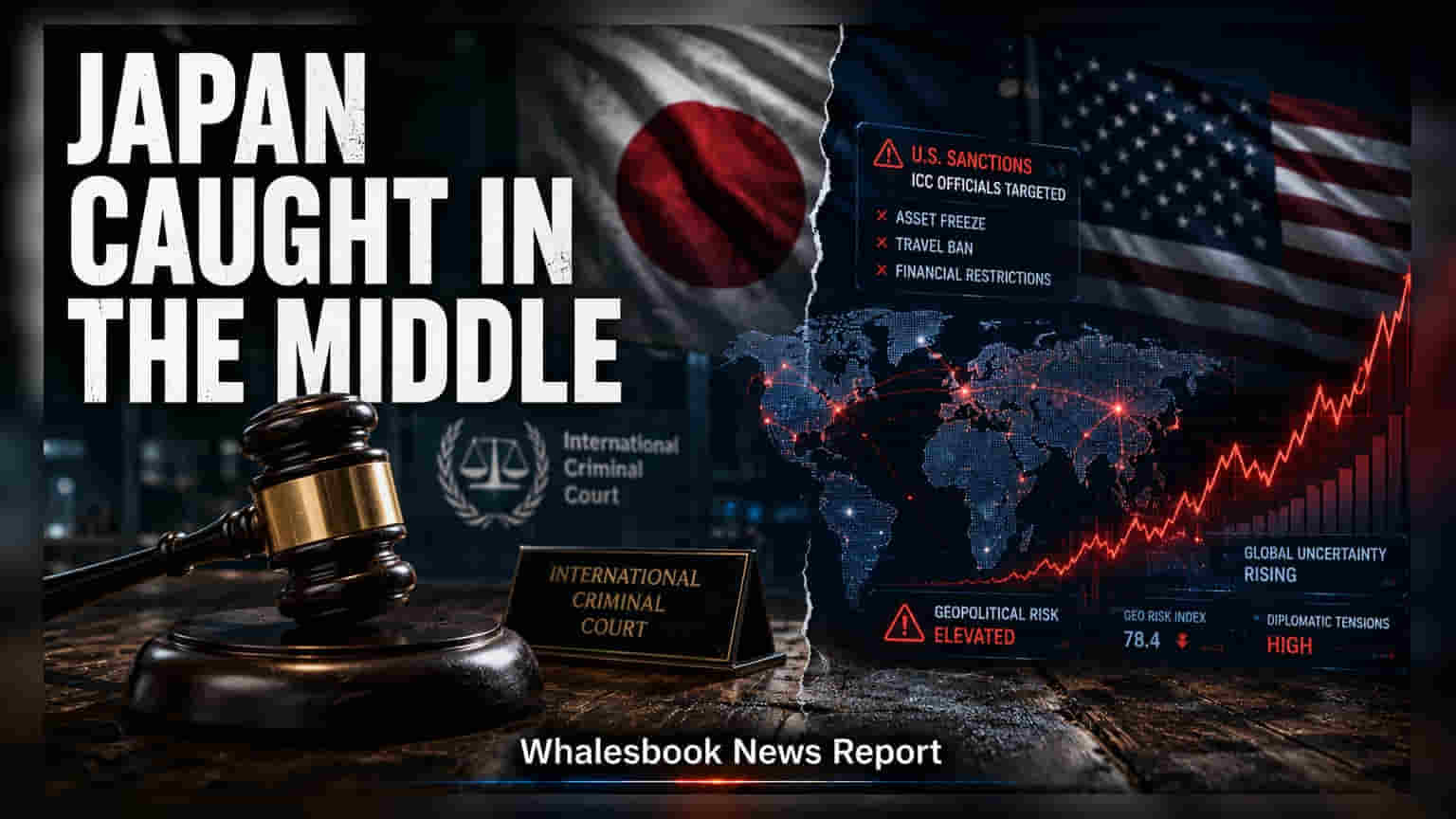
ICC President Tomoko Akane has requested Japanese government intervention following U.S.-imposed sanctions on her and other court officials. The measures, including asset freezes, follow ICC investigations into U.S. and Israeli actions. This geopolitical development highlights rising friction between the international judicial body and the U.S. administration, an event macro-focused investors often track for potential broader stability implications.
International Criminal Court (ICC) President Tomoko Akane is seeking support from the Japanese government to address the recent sanctions imposed on her by the United States. These measures, which took effect in mid-August 2026, target the personal financial access and mobility of Akane and several other senior ICC officials. The U.S. administration implemented these sanctions in response to the court’s ongoing probes into alleged crimes in regions including Gaza and Afghanistan, characterizing the ICC’s actions as politicized and overstepping its jurisdiction.
The Scope of the Restrictions
The sanctions enforced by the U.S. include the freezing of assets held within U.S. jurisdictions, a travel ban, and the restriction of access to essential financial services. Akane, a Japanese national, has confirmed that her personal credit cards were suspended due to these measures. While she has described the experience as an inconvenience, she maintains that these punitive actions will not impede the ICC’s judicial mandates or its commitment to its ongoing investigations.
Japan’s Diplomatic Balancing Act
Japanese Prime Minister Sanae Takaichi is now navigating a complex diplomatic situation. While the Japanese government has publicly stated that the sanctions are incompatible with Japan’s position and has expressed intent to support Akane, it has faced criticism from domestic lawmakers for not taking a more assertive stance against Washington. The administration is balancing its international judicial commitments as a signatory to the Rome Statute with its strategic security alliance with the United States. Foreign Minister Toshimitsu Motegi has been in direct contact with Akane in The Hague to discuss the implications of these measures, acknowledging that the U.S. has hinted at the possibility of further expanding these sanctions if tensions remain unresolved.
Context for Investors
This event is purely diplomatic and geopolitical in nature, with no direct or immediate impact on stock markets, corporate financial results, or specific Indian companies. However, global macro-focused investors often monitor such high-level diplomatic friction between major powers, as it can influence broader international relations, currency stability, and regional security sentiment. The core issue for observers remains the potential for long-term strain on international institutions and the durability of alliances between the U.S. and its partners. Market participants typically watch for whether such diplomatic spats lead to wider regulatory or trade-related policy changes, though no such impact is present in this current situation.