

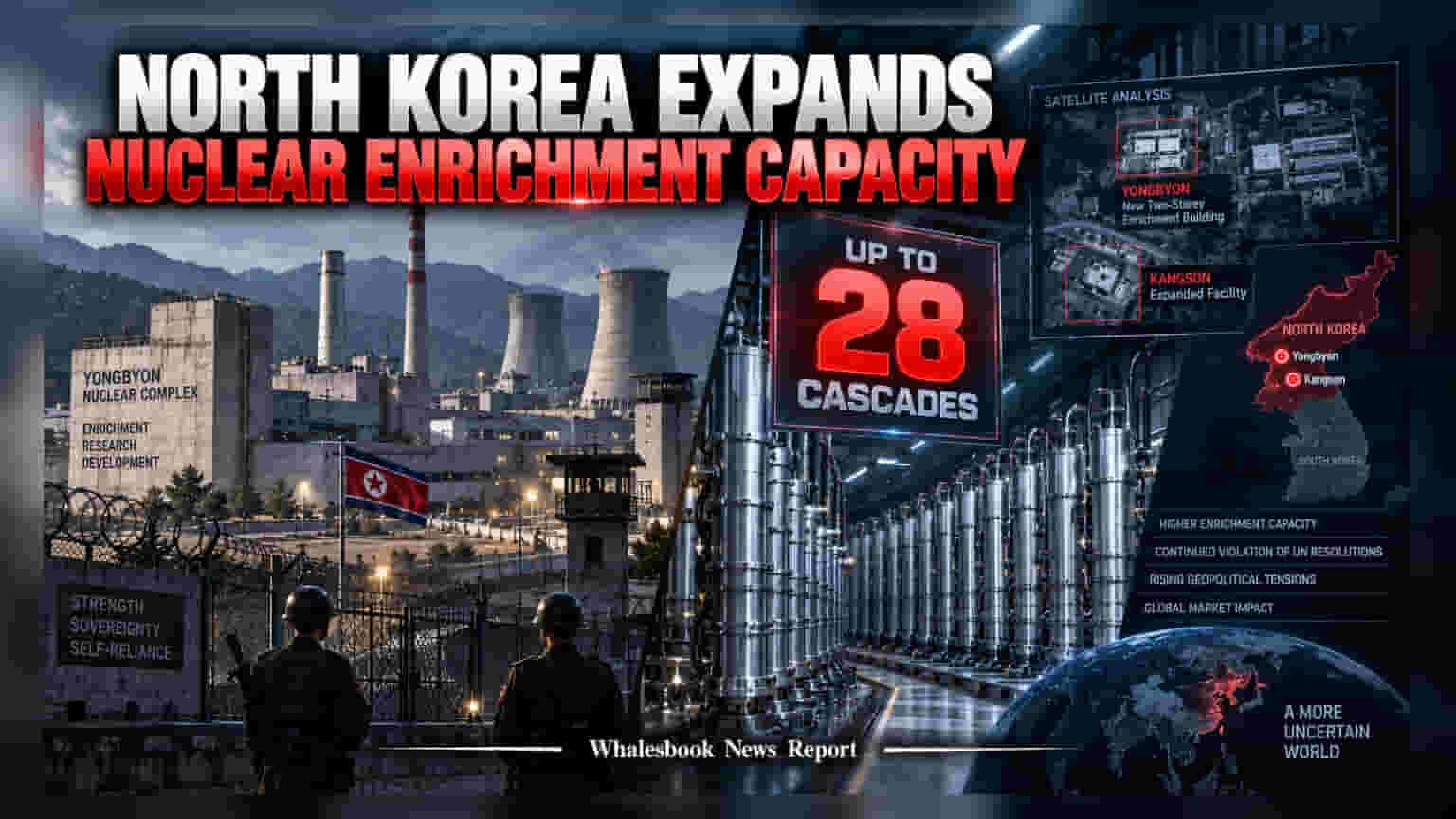
The International Atomic Energy Agency has identified new uranium enrichment facilities at North Korea’s Yongbyon and Kangson sites. While this event has no direct impact on Indian businesses, it heightens geopolitical risks in Northeast Asia. Investors typically monitor such developments for potential effects on global market sentiment, energy prices, and demand for safe-haven assets like gold.
The International Atomic Energy Agency (IAEA) released a report on September 9, 2026, indicating that North Korea has expanded its nuclear enrichment capabilities. The agency identified a new two-storey building at the Yongbyon nuclear complex capable of housing up to 28 centrifuge cascades, as well as an expanded and operational annex at the Kangson facility near Pyongyang.
This assessment relies on satellite imagery and analysis of state media, as the IAEA has not had direct inspectors on the ground in North Korea since 2009. The agency highlighted these developments as serious concerns, noting that the continued enrichment of nuclear material violates various United Nations Security Council resolutions. North Korea has consistently rejected the IAEA's authority, maintaining its stance as a nuclear-armed state outside the Nuclear Non-Proliferation Treaty.
For investors, the immediate impact of this news is geopolitical rather than company-specific. There is no direct link between these facilities and Indian equities or corporate performance. However, historical patterns suggest that rising tensions on the Korean Peninsula can lead to a shift in global market sentiment. When geopolitical uncertainty increases, investors often move toward risk-off strategies. This typically results in increased interest in safe-haven assets such as gold, while potentially adding a risk premium to global energy markets and creating volatility in currencies.
While the current disclosure does not represent a direct disruption to trade or economic policy, it serves as a reminder of the underlying regional risks in Northeast Asia. Market participants will likely track whether these IAEA findings lead to new diplomatic discussions, intensified sanctions, or increased military rhetoric in the region. For the average investor, the development is best viewed as a macro factor that contributes to the broader global risk environment, which can indirectly influence market fluctuations, especially in sectors sensitive to global stability and commodity pricing.