

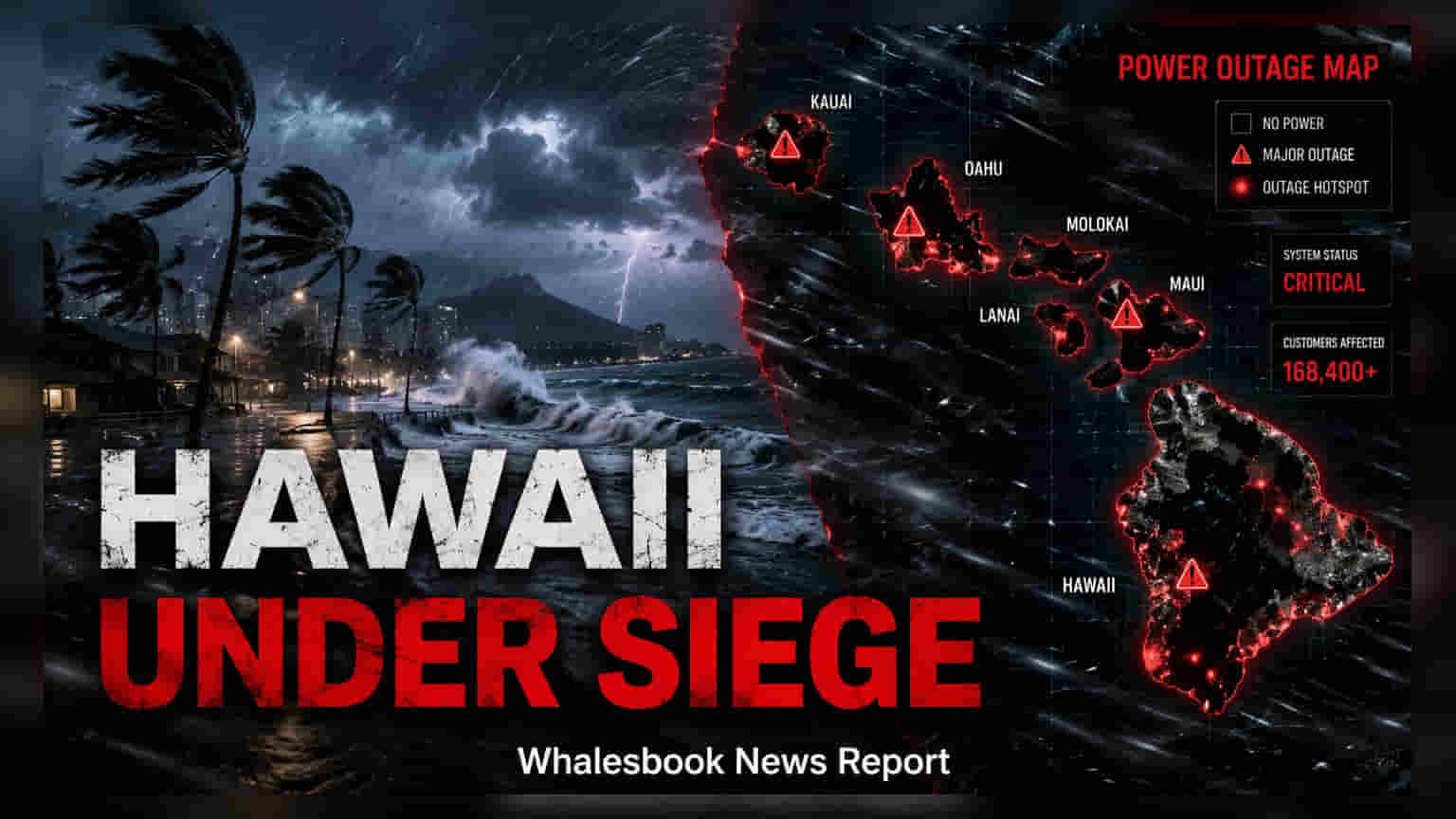
Category 1 Hurricane Lala has made landfall in Hawaii, knocking out power for over 42,000 customers and forcing airport closures. The storm is bringing extreme rainfall, heightening the risk of flooding and mudslides, while utility crews struggle to repair damaged transmission lines amidst hazardous weather conditions.
Hurricane Lala made landfall in Hawaii on August 15, 2026, as a Category 1 storm, bringing sustained winds of 75 mph and intense rainfall. The severe weather has significantly impacted local infrastructure, with power outages affecting more than 42,000 utility customers across the state. The Big Island and Maui County have reported the most substantial disruptions.
Infrastructure and Utility Impact
Hawaiian Electric has mobilized emergency response teams, though efforts to restore power are being hampered by high winds and hazardous conditions. Damage reports indicate downed utility poles and transmission lines, particularly on the Big Island. As the storm moves westward, the company has warned residents to prepare for potentially extended power outages. For the local economy, the disruption is magnified by the closure of key transport hubs, including Hilo International Airport and Ellison Onizuka Kona International Airport at Keahole, which has grounded commercial air travel in the region.
Beyond immediate electrical failures, the National Hurricane Center has issued warnings for extreme rainfall, with some areas forecasted to receive up to 25 inches of rain. This massive accumulation of water poses a severe risk of flash flooding and mudslides, especially in the state's steep, rugged terrain. These conditions complicate ground transportation and recovery logistics, potentially prolonging the time it takes for local businesses and tourism operations to return to normal functioning.
From a broad perspective, the event highlights the vulnerability of regional utility grids to extreme weather events. The immediate focus for local authorities and utility operators is ensuring public safety and stabilizing critical infrastructure. As the storm clears, the key monitorable for the region will be the speed of grid restoration and the total economic impact on the tourism-dependent local economy, which will depend heavily on the duration of airport closures and the extent of damage to roads and other essential facilities.