

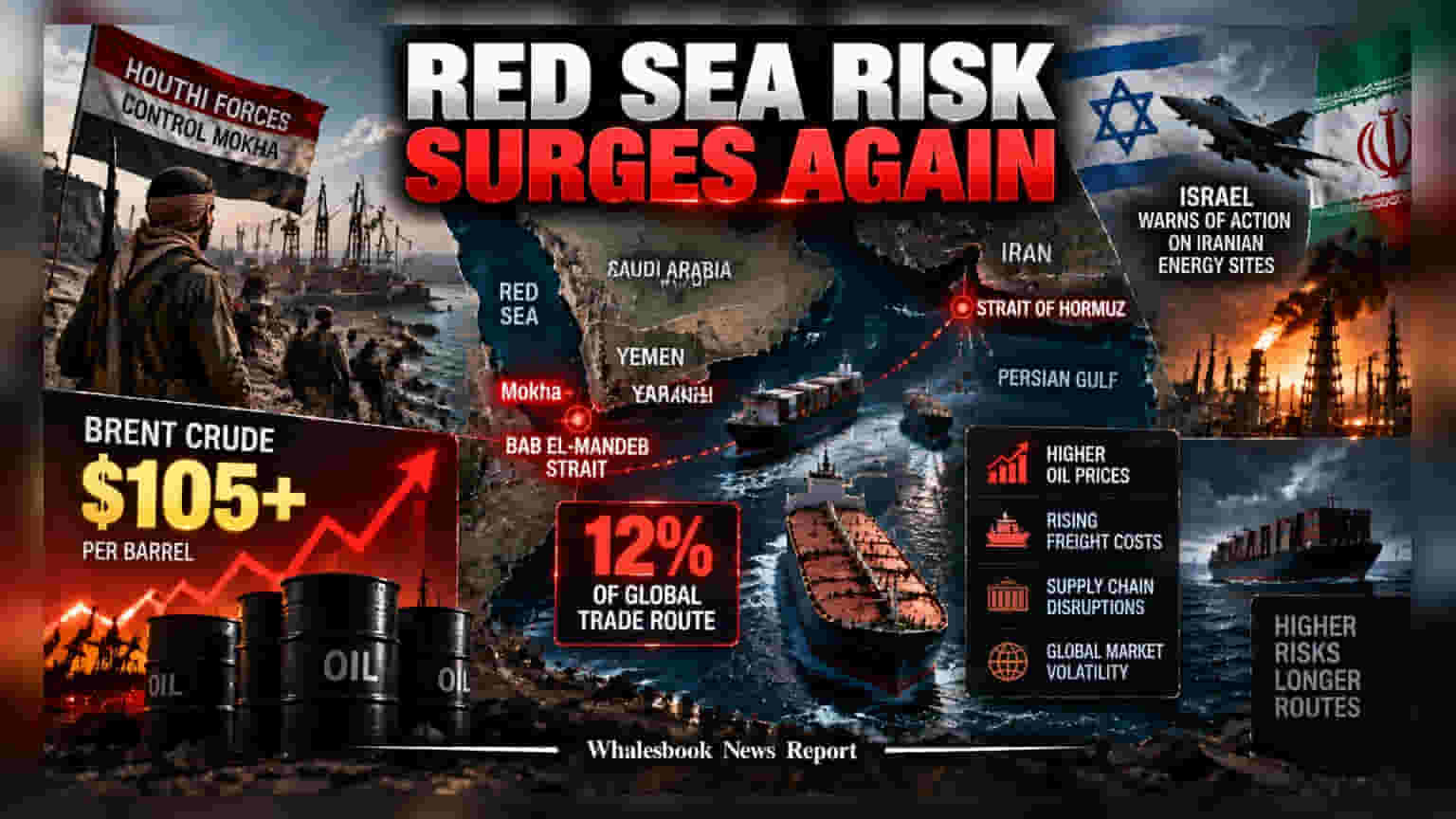
Houthi rebels have seized Yemen's strategic Mokha port, threatening the vital Bab el-Mandeb Strait. With Brent crude oil crossing $105 per barrel, investors are watching for potential inflation risks and margin pressure on Indian airlines and oil refiners.
On September 10, 2026, geopolitical tensions in the Middle East escalated significantly as Houthi rebels seized the strategic port city of Mokha in Yemen. This location is critical because it sits near the Bab el-Mandeb Strait, a narrow waterway that handles approximately 12% of global trade and oil transit. The move has created immediate concerns about the safety of global shipping routes, leading to a spike in energy prices, with Brent crude moving above $105 per barrel.
For Indian investors, this development brings the focus back to energy prices and their broader economic impact. India is a major importer of crude oil, and sustained high prices can increase the country's import bill, put pressure on the rupee, and lead to higher retail inflation. These factors are primary concerns for the market as they influence everything from company profit margins to consumer spending power.
Specific sectors may face direct challenges if the situation continues to disrupt trade. Oil Marketing Companies (OMCs) and refiners often face profit margin pressure when crude oil costs spike rapidly, especially if those costs cannot be fully passed on to consumers. Similarly, the aviation sector is highly sensitive to fuel costs, as Aviation Turbine Fuel (ATF) is a significant expense for airlines. Higher fuel prices can quickly erode operating profits in this industry.
Beyond energy, shipping, logistics, and export-dependent businesses are also at risk. If vessels are forced to bypass the Red Sea or if insurance premiums for cargo moving through the region increase, companies may face higher freight costs and delays. This can disrupt supply chains and lower the competitiveness of Indian exports in international markets.
The situation is further complicated by rising regional friction. Israeli Defense Minister Israel Katz has warned that Israel would target Iranian energy infrastructure if attacked. The possibility of such actions has added a layer of uncertainty to the energy market, as any direct hit to production or export capacity could cause further volatility in crude prices.
Investors may monitor the trajectory of global crude oil prices, as they are a key indicator of potential cost pressures for domestic companies. The next important updates will likely center on shipping activity around the Bab el-Mandeb Strait, potential government policy responses regarding fuel prices, and any further statements regarding regional stability. For now, the combination of high oil prices and geopolitical uncertainty remains a factor that market participants are evaluating carefully.