

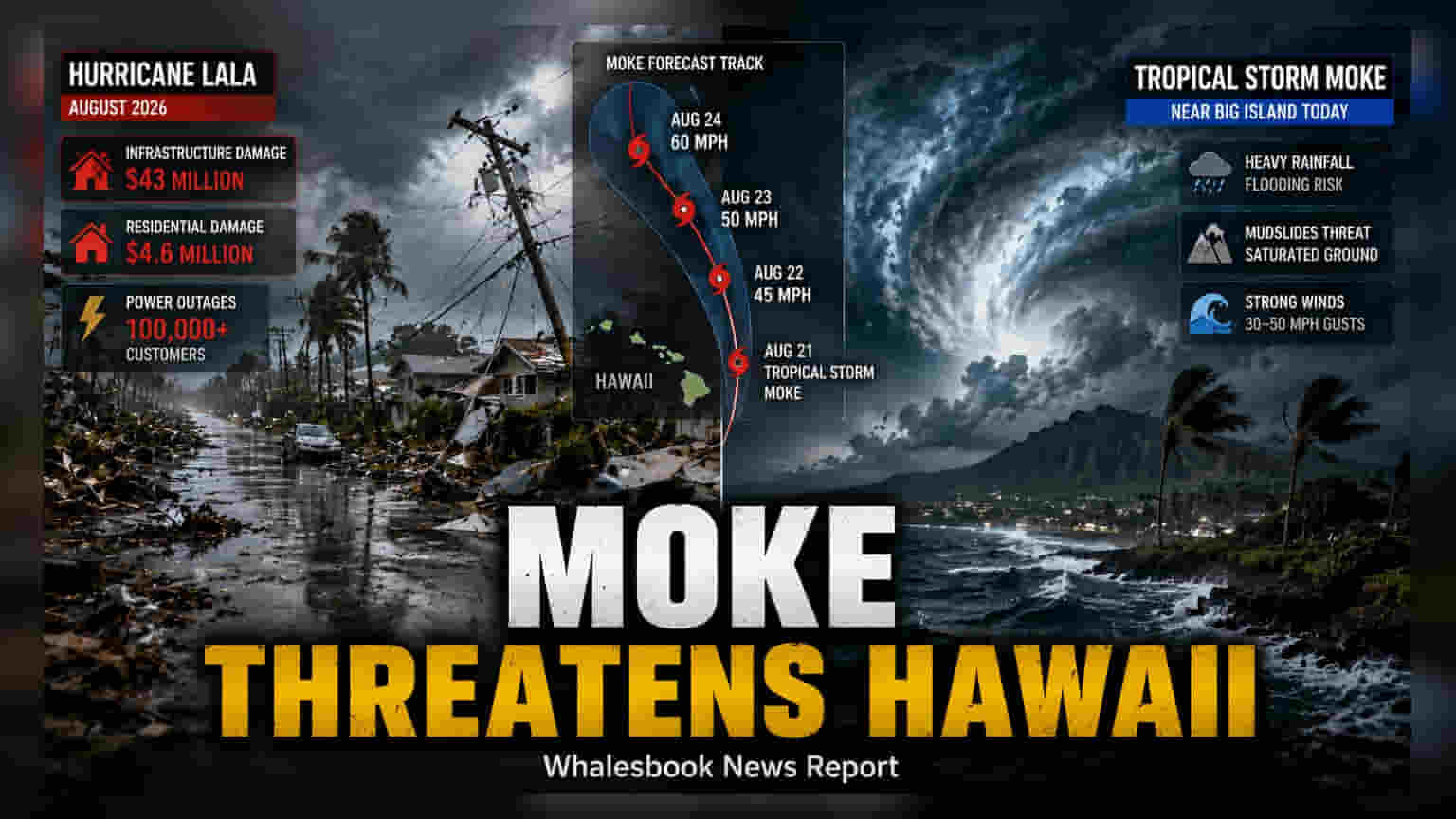
Tropical Storm Moke is approaching Hawaii’s Big Island, threatening to worsen flooding after Hurricane Lala caused over $47 million in infrastructure and home damage. With recovery efforts underway and power grids still fragile, authorities warn that additional rainfall could trigger severe mudslides. The storm highlights the ongoing vulnerability of critical local infrastructure as the region attempts to rebuild.
Tropical Storm Moke is tracking near Hawaii’s Big Island today, placing immediate pressure on recovery efforts already strained by the recent impact of Hurricane Lala. While the new storm is not expected to make landfall, it brings significant rainfall risks to areas where the ground is already saturated, threatening to complicate a recovery phase that has already incurred substantial costs.
Hurricane Lala, which struck the region in mid-August, has left a trail of economic and physical destruction. State authorities have confirmed at least $43 million in infrastructure damage and approximately $4.6 million in damage to residential homes. These figures are preliminary, and government officials expect the total economic burden to rise as damage assessments continue across the hardest-hit areas of the Big Island.
The immediate concern for authorities and local businesses is the stability of critical infrastructure. Lala caused widespread disruption, leaving over 100,000 customers without electricity. While utility crews have been working to restore power, the grid remains fragile. New rainfall from Moke increases the risk of flash flooding and mudslides, which could disrupt logistics, damage repaired roads, and set back the timeline for full utility restoration.
Hawaii Governor Josh Green has emphasized the importance of safety and preparedness, urging residents to secure essential supplies. The dual impact of these back-to-back weather events is testing the resilience of local supply chains and municipal resources. With the ground already waterlogged from the previous storm, the soil's capacity to absorb additional water is severely limited, raising the probability of hazardous flooding in steep and low-lying terrain.
For the local economy, the priority remains stabilizing infrastructure and ensuring public safety. The financial and operational strain on disaster relief organizations and emergency services is also mounting as they manage the aftermath of the first storm while preparing for the arrival of the second. The next critical steps for the region involve monitoring water levels, ensuring the integrity of damaged bridges and roads, and maintaining the stability of the power network as the storm passes.