

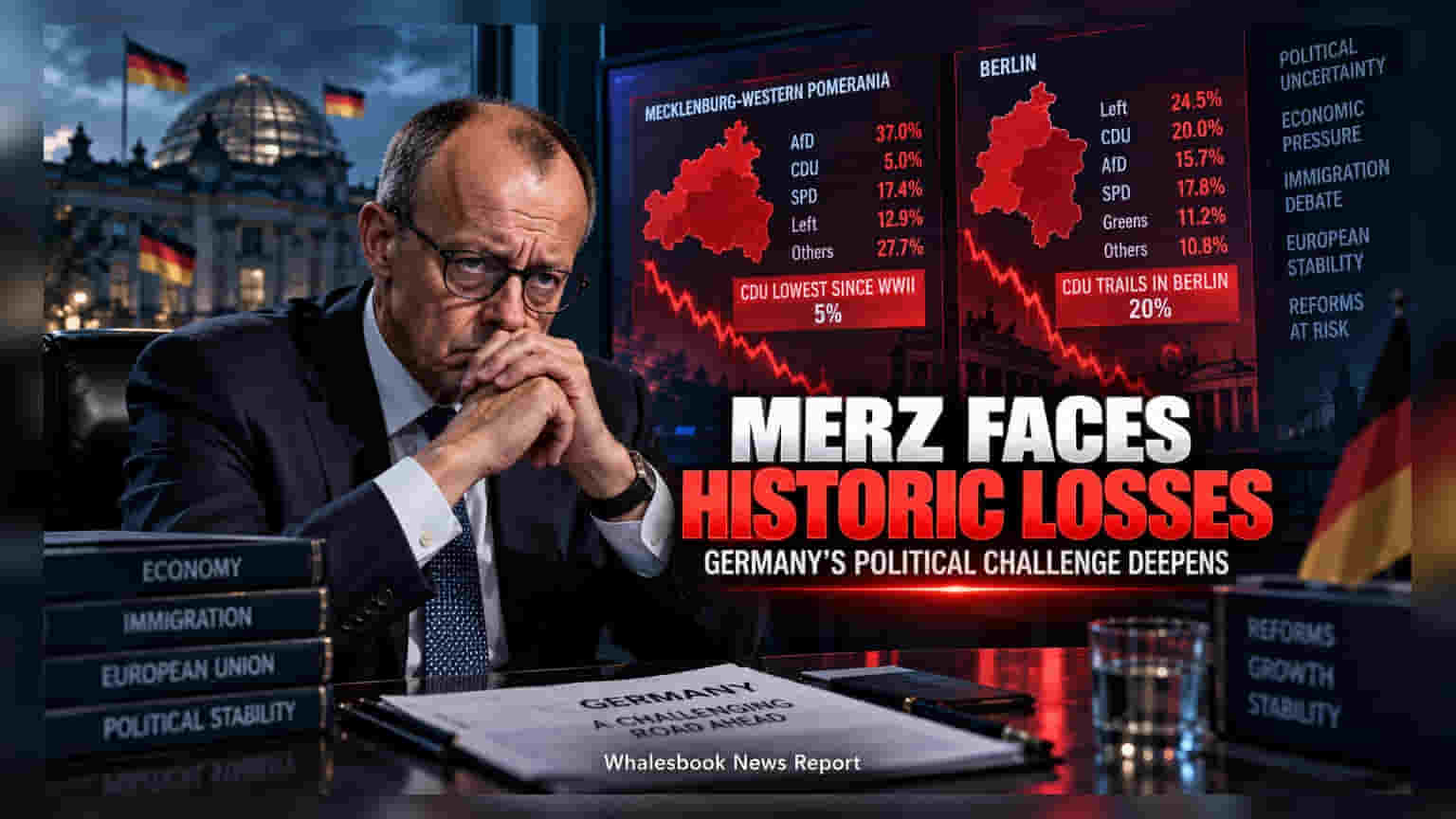
German Chancellor Friedrich Merz faces political instability following historic election defeats for his party, the CDU, in Mecklenburg-Western Pomerania and Berlin. With the populist AfD party gaining significant support, uncertainty now surrounds Germany's policy direction. Investors are monitoring how this political shift in Europe's largest economy might impact regional trade and market sentiment.
German Chancellor Friedrich Merz is dealing with a significant political challenge after his party, the Christian Democratic Union (CDU), saw historic losses in regional elections this weekend. In Mecklenburg-Western Pomerania, the party managed only 5 percent of the vote, its lowest regional performance since World War II. In Berlin, the CDU trailed with 20 percent, behind the Left party which secured 24.5 percent.
Impact of AfD Gains
The electoral results highlight a sharp rise in support for the anti-migration Alternative for Germany (AfD) party. The AfD captured 37 percent in Mecklenburg-Western Pomerania and 15.7 percent in Berlin. While the AfD is currently unable to form a government, their strong showing complicates the governing authority of Chancellor Merz. For global investors, this shift indicates potential policy paralysis in the Eurozone's largest economy, which can influence European market sentiment and the strength of the Euro.
Economic Reform Agenda at Risk
Chancellor Merz has described the election outcomes as a disaster, yet he insists on continuing his current economic reform agenda. He argues that painful measures are necessary to address the country's economic stagnation. However, this stance has met resistance from both opposition parties and internal factions within his own party. The Chancellor has canceled his planned visit to the UN General Assembly in New York to focus on these domestic pressures.
Investor Monitorables
Since Germany is a primary economic engine for the European Union, the stability of its government is closely watched by international businesses and investors. Uncertainty in Berlin often translates into broader volatility for European indices and currency markets. The key monitorable for the coming weeks will be whether Chancellor Merz can maintain his legislative agenda or if political pressure forces a change in leadership or policy. Shareholders of companies with significant exposure to the German market may watch for updates on government policy and potential shifts in trade or economic regulations.