

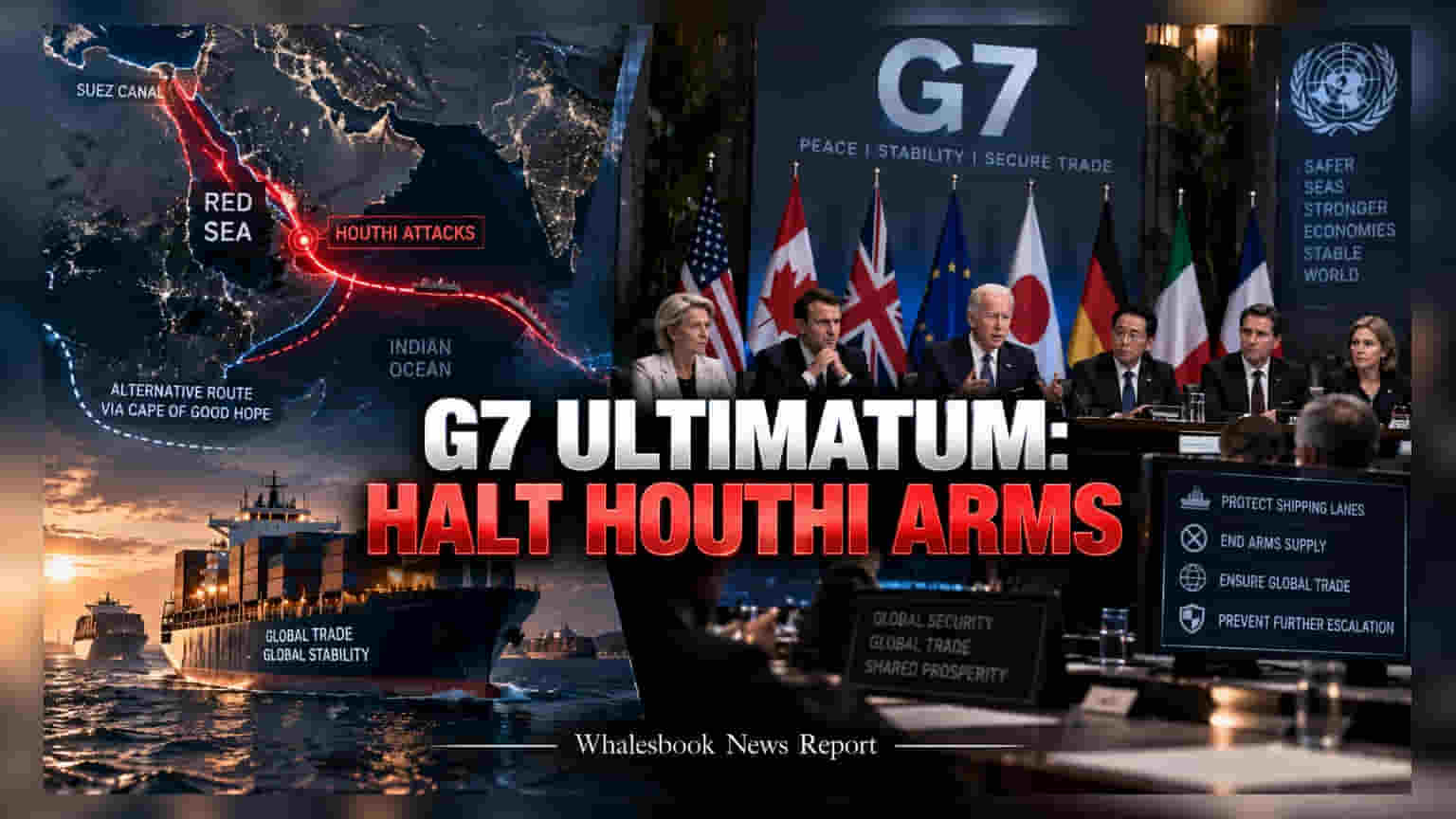
The G7 coalition has formally demanded that Iran stop providing military support to Houthi militants, citing threats to global shipping lanes. This development highlights the ongoing risks for Indian trade, as the persistent crisis in the Red Sea drives up freight costs, delays transit times, and potentially squeezes profit margins for export-oriented sectors and energy-dependent companies.
The G7, a group representing seven major industrialized nations, has issued a direct warning to Iran to cease its military support for Houthi forces. The coalition stated that the ongoing attacks against commercial shipping in the Red Sea are disrupting international trade and creating instability. For Indian investors, this geopolitical issue is not merely a diplomatic update but a signal that the risks to global supply chains remain high.
Impact on India’s Logistics and Trade
The ongoing conflict in the Red Sea has forced many shipping companies to divert vessels away from the Suez Canal and around the Cape of Good Hope. This change adds significant time and distance to journeys between India and Europe. For Indian exporters, particularly in the textiles, engineering goods, and agriculture sectors, this means higher logistics costs and longer wait times for payment realization. When these costs cannot be fully passed on to customers, it puts direct pressure on the profit margins of these companies.
Energy Costs and Inflation Concerns
Beyond shipping costs, the situation in the Red Sea remains a monitorable factor for oil prices and energy security. Higher shipping insurance premiums and fuel consumption due to longer routes can influence the cost of crude oil imports. For Indian oil marketing companies and energy-intensive manufacturing businesses, sustained pressure on fuel costs can weigh on operating performance. If global supply chain disruptions persist, they may also contribute to broader inflationary pressures, which affects the purchasing power and operational costs across many domestic industries.
Investor Monitorables
Investors tracking companies involved in global trade or logistics should watch for updates on freight rate indexes and crude oil price movements. While companies are often able to adjust to higher costs over time, the speed and scale of these changes are critical. The key monitorable for the next few quarters will be whether these higher logistical expenses result in a sustained dip in earnings for export-heavy companies or if they can recover these costs through pricing power or operational efficiency. Market participants will also look for any diplomatic progress that could normalize shipping routes, as a return to standard trade lanes would provide immediate relief to operating costs for affected Indian industries.