

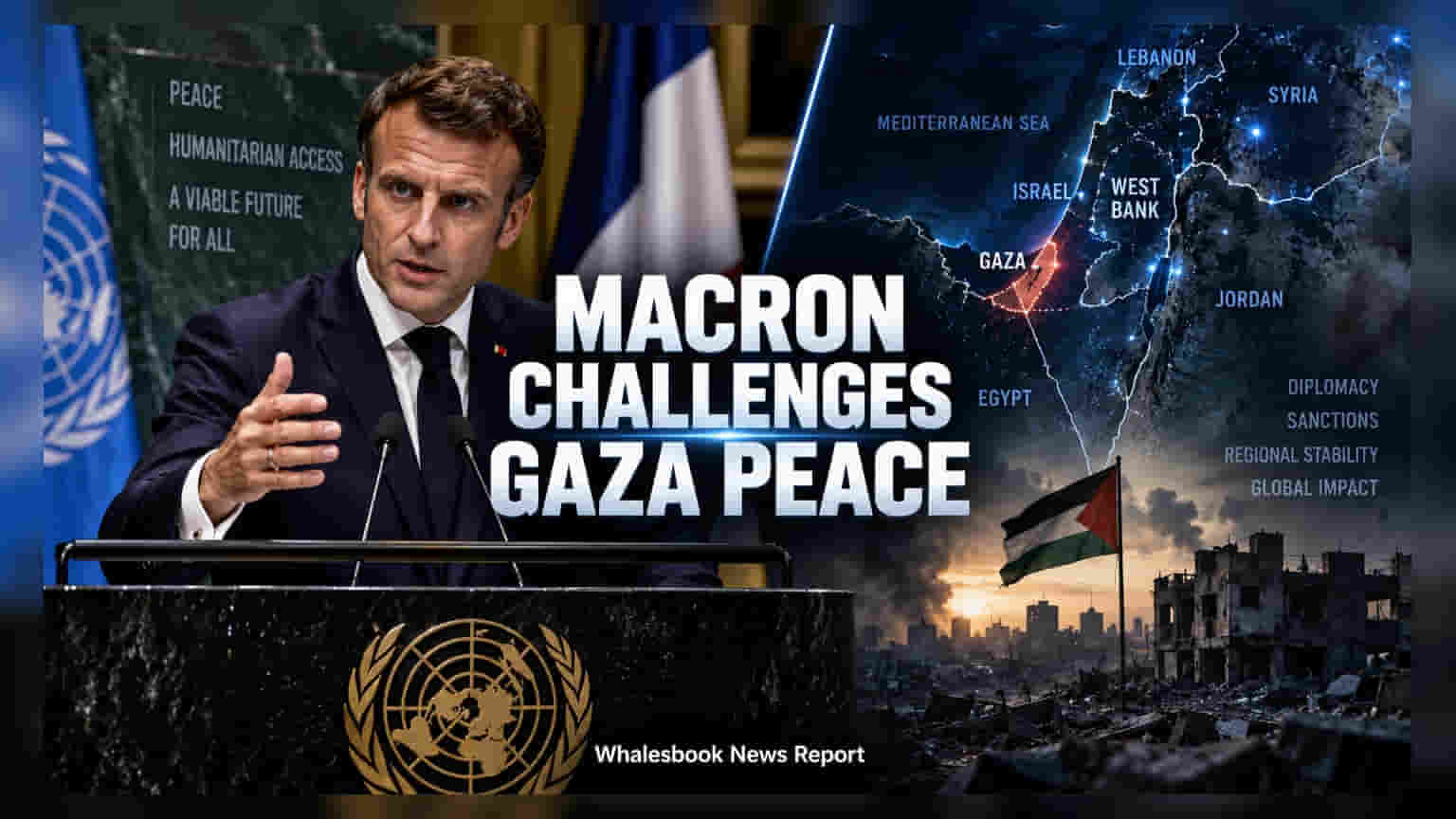
French President Emmanuel Macron has challenged US claims of peace in Gaza, citing ongoing humanitarian crises. Paris is now evaluating potential sanctions on Israeli settlements in the West Bank, signaling a shift in diplomatic policy. This geopolitical rift carries implications for global markets and strategic partnerships for nations like India, which maintains strong ties with both Israel and France.
French President Emmanuel Macron delivered a strong critique of United States diplomatic claims regarding the conflict in Gaza during his final address to the United Nations General Assembly. While the White House has positioned its diplomatic efforts as successful, citing an end to hostilities and the return of hostages, President Macron dismissed these claims as detached from the situation on the ground. He emphasized that the promised humanitarian access has not materialized, leaving the local population in a dire state.
Potential Policy Shift in the West Bank
Beyond Gaza, the French government is moving toward a firmer position on activities in the West Bank. President Macron expressed deep concern over the rise in settler violence, which he argued directly threatens the possibility of a viable Palestinian state. As a potential consequence, France is now evaluating the imposition of national sanctions and a ban on products originating from Israeli settlements. For businesses and international investors, this signal represents a widening diplomatic gap that could complicate trade relations and regulatory environments in the region.
Geopolitical Impact and Indian Context
This confrontation at the United Nations highlights a growing divide between traditional international diplomacy and the unilateral approaches favored by the current US administration. For Indian investors and policymakers, this friction is significant. India maintains critical strategic and defense partnerships with both France—a key provider of advanced aviation and naval technology—and Israel, a major defense and technology collaborator. A formal rift between Paris and Jerusalem, combined with shifting dynamics between France and the US, forces India to navigate a complex diplomatic terrain to maintain these essential alliances without alienating key partners.
From a market perspective, the risk of expanding sanctions or a deterioration in regional stability often leads to increased volatility in global commodities, particularly energy prices. Diplomatic instability can disrupt supply chains and impact the risk premium for international investments. While the direct economic impact of French sanctions on Israeli settlements would be specific to that trade corridor, the broader message is a reminder of the rising geopolitical risk factors that can influence global market sentiment.
What Investors Should Monitor
Investors may monitor the progress of these potential trade restrictions and the rhetoric from other European nations, as similar moves could be adopted by other countries, creating broader trade barriers. The humanitarian situation in Gaza remains a sensitive issue that frequently triggers market reactions in commodities and defense-related sectors. Additionally, the evolution of India's stance in balancing these relationships as these international divisions widen will be a critical factor for long-term strategic and economic planning.